Home Safety Resources to Share With Older Clients: What Each One Does
Start with three free resources: CDC's Check for Safety checklist, NIA's room-by-room guide and AARP's HomeFit Guide. Add the Eldercare Locator for local help and an occupational therapist after a fall. For a plan the client keeps up between your meetings, use SeniorThrive.
By Brian Fluhr
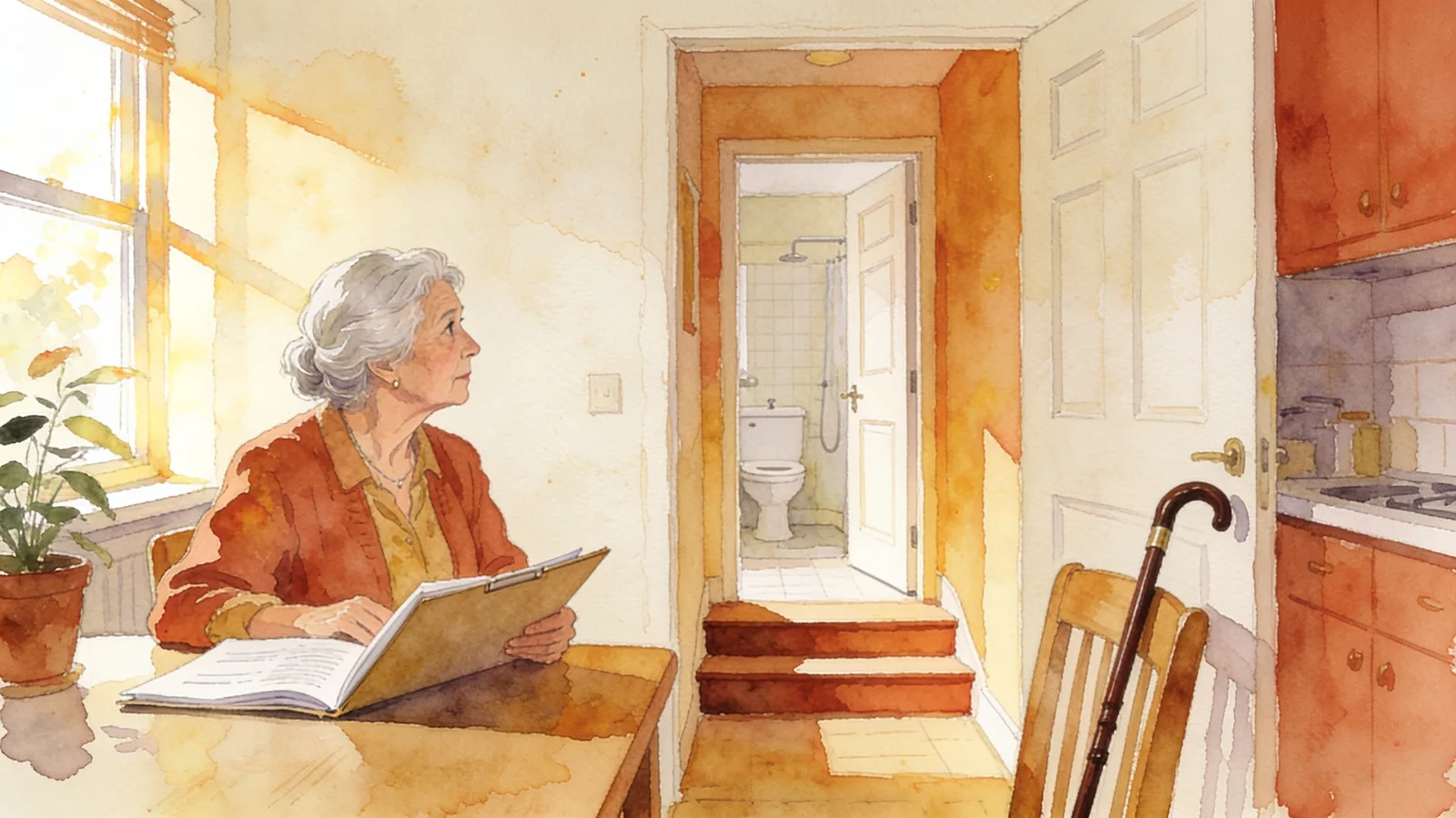
Your client says, "We plan to stay in the house." You write it down. It shapes the plan, the documents, the budget.
Then nobody looks at the house.
That is not a criticism. Advisors, attorneys and doctors are not home inspectors, and nobody wants to be. But the stay-home plan rests on the stairs, the bathroom and the hallway at night. This page is a short, honest list of what you can hand a client to cover that part, what each resource actually does, and which one to start with.
Why the house belongs in your client conversation
A fall can undo a careful plan in an afternoon, and less than half of older adults who fall tell their doctor. The professional who hears first may be you.
- More than one in four people 65 and older fall each year. Less than half tell their doctor, and falling once doubles the chance of falling again (CDC).
- Older adult falls lead to about 4.5 million emergency department visits and 1.4 million hospitalizations a year, and nearly 319,000 hip fracture hospitalizations (same source).
- CDC counts home hazards, such as broken or uneven steps, throw rugs and clutter, among the fall risk factors that can be changed (same source).
- About three in four adults 50 and older want to stay in their current homes or communities for as long as possible (AARP).
If your client does not tell the doctor, the near miss may come up somewhere else. A comment in a review meeting that the upstairs is "mostly storage now." A signing where someone mentions the shower. Those are the moments to have a resource ready.
The resources, side by side
Public resources from CDC, NIA, AARP and NCOA are free, credible and quick to share. Local programs and clinicians handle repairs and evaluations. Each does one job well, so match the resource to the client's situation.
| Resource | Who publishes it | Cost | What the client does | Best for |
|---|---|---|---|---|
| Check for Safety | CDC (STEADI) | Free | Works through a two-page, room-by-room checklist | A first look at any home |
| Preventing Falls at Home: Room by Room | National Institute on Aging | Free | Reads plain tips for stairs, bathroom, bedroom, kitchen and outdoors | Clients who want to fix things themselves |
| HomeFit Guide | AARP | Free | Reads a 36-page illustrated guide, with worksheets, in five languages | Planning changes before they are urgent |
| Falls Free CheckUp | National Council on Aging | Free | Answers a few quick questions about fall risk and gets a report to share with a health care provider | Clients who will not raise falls with their doctor on their own |
| Eldercare Locator | Administration for Community Living | Free | Calls or texts 1-800-677-1116 to reach the local Area Agency on Aging | Local home modification and repair programs |
| Safe at Home | Rebuilding Together | No cost to eligible homeowners; eligibility varies by local affiliate | Applies for preventive repairs such as grab bars, handrails, ramps, lighting and smoke and carbon monoxide detectors | Clients who need a repair they cannot pay for |
| Occupational or physical therapist home visit | A licensed clinician, often on a doctor's suggestion (NIA) | Varies | Has the home and their needs evaluated in person | After a fall, a surgery or a change in mobility |
| Certified Aging-in-Place Specialist | NAHB credential held by remodelers, builders, contractors and occupational therapists | Project pricing | Hires a credentialed professional for home modifications | A planned remodel or bigger change |
| SeniorThrive | SeniorThrive | Emergency Card and My Daily Check-In free; ongoing Room Safety Checks in Essential. Essential covers the older adult and one family member; more people are added seats. | Keeps a living plan for the home, the person and the family, and updates it at home | Keeping the plan current between your meetings |
You can also point clients to an occupational therapist directory and a CAPS directory on our site.
What the free resources do well, and the gap they leave
The public checklists are excellent and free. They are also one-time and on paper. Nobody sees whether the loose rug was fixed, and the home keeps changing after the checklist goes in a drawer.
Hand a client the CDC brochure and you have done something useful. But three months later, you do not know if they used it. Neither do their children. A new rug arrives. A bulb burns out on the stairs. The checklist does not know.
You also should not become the person who tracks it. That is not your job, and most clients would not want it to be. The gap is a plan the client owns and keeps up at home, with the family in the loop on the client's terms.
Which resource to hand over first
Match the resource to what the client just told you. A healthy client gets a checklist and an Emergency Card. A client after a fall gets a clinician. A client with a repair they cannot afford gets the Eldercare Locator.
- "We're fine. We just want to stay put." CDC Check for Safety, plus a free Emergency Card with conditions, medications and who to call.
- "Mom just came home from the hospital." An occupational or physical therapist visit, through her doctor. For more, see home safety after hospital discharge.
- "The bathroom needs grab bars and money is tight." Eldercare Locator at 1-800-677-1116, then Rebuilding Together's Safe at Home if there is a local affiliate.
- "We're thinking about redoing the bathroom." HomeFit Guide first, then a Certified Aging-in-Place Specialist.
- "My kids live three states away and keep worrying." SeniorThrive, so the family sees what the client chooses to share without calling every day. Essential covers the older adult and one family member; more people are added seats.
What to say in the meeting
One sentence is enough. Name the house, offer one resource, and leave the decision with the client. Each line below fits a different profession.
- Financial advisor: "Your plan assumes you stay in this house. Here is a free checklist to make sure the house agrees." See how advisors put the house in the plan and SeniorThrive for financial advisors.
- Elder law attorney: "Your documents say you want to stay home. This helps the home keep up with them." See the trust says stay home and SeniorThrive for elder law attorneys.
- Physician, PT or OT: "Before our next visit, walk the path from your bed to the bathroom at night and tell me what you see." See SeniorThrive for doctors and SeniorThrive for PT and OT.
- Care manager or aging services: "Call the Eldercare Locator for local programs, and start a plan your family can see." See SeniorThrive for aging services.
Where SeniorThrive fits
SeniorThrive gives the client a living plan for home safety, health basics, an Emergency Card and family check-ins. The client keeps it up at home. You see inside only if they invite you, and you stay the professional they come back to.
- The home. The client takes a photo of the room. SeniorThrive looks at the house and shows what deserves attention. A Room Safety Check returns findings and a Home Safety Score, with a short list of fixes for that check.
- The person. Daily check-ins and medications, entered by the older adult at home.
- The connection. The client decides who is in their Circle in SeniorThrive. Essential covers the older adult and one family member; more people are added seats. You see inside only if they invite you, and they can remove anyone at any time.
- It sends people back to you. At the moment it matters, the app points people to their professional. On a Room Safety Check it says: "For a clinical home safety evaluation, talk with an Occupational Therapist."
SeniorThrive is not a clinical assessment and does not replace your judgment. It keeps the stay-home plan current between meetings.
See what your client gets, or book a 15-minute walkthrough from that page. If you want families to find you, join the Professional Network. It is free to join.
Frequently asked questions
What home safety resources can I share with older clients?
Start with CDC's Check for Safety checklist, NIA's Preventing Falls at Home: Room by Room, and AARP's HomeFit Guide, all free. Add the Eldercare Locator at 1-800-677-1116 for local programs, and an occupational therapist after a fall or surgery.
Is there a free home safety checklist for older adults?
Yes. CDC's Check for Safety is a free two-page checklist that goes room by room. NIA publishes free room-by-room tips, and AARP's HomeFit Guide is a free 36-page guide with worksheets in five languages.
Who can do a professional home safety evaluation?
An occupational therapist, physical therapist or nurse can visit the home and advise on changes, often after a doctor suggests it. For remodeling, a Certified Aging-in-Place Specialist, a credential from the National Association of Home Builders, can plan bigger modifications.
How can older clients get help paying for home safety repairs?
Start with the Eldercare Locator at 1-800-677-1116, which connects to the local Area Agency on Aging and its home repair programs. Rebuilding Together's Safe at Home offers no-cost repairs to eligible homeowners through local affiliates.
Should a financial advisor talk with clients about home safety?
Yes, briefly. If the plan assumes the client stays home, the house is part of the plan. Hand over one free resource, and leave the decision with the client and their family.
How does SeniorThrive work with professionals?
Your client keeps a living plan for home safety, health basics, an Emergency Card and family check-ins. You see inside only if they invite you into their Circle in SeniorThrive. The Professional Network is free to join.
Sources
- CDC, Facts About Older Adult Falls (reviewed Sept. 8, 2026). https://www.cdc.gov/falls/data-research/facts-stats/index.html
- AARP, 2021 Home and Community Preferences Survey. https://www.aarp.org/pri/topics/livable-communities/housing/2021-home-community-preferences/
- CDC STEADI, Check for Safety: A Home Fall Prevention Checklist for Older Adults. https://stacks.cdc.gov/view/cdc/59197
- National Institute on Aging, Preventing Falls at Home: Room by Room. https://www.nia.nih.gov/health/falls-and-falls-prevention/preventing-falls-home-room-room
- AARP HomeFit Guide. https://www.aarp.org/livable-communities/housing/info-2020/homefit-guide/
- National Council on Aging, Falls Free CheckUp. https://www.ncoa.org/tools/falls-free-checkup/
- Administration for Community Living, Eldercare Locator. https://eldercare.acl.gov/
- Rebuilding Together, Safe at Home. https://rebuildingtogether.org/safe-at-home
- National Association of Home Builders, Certified Aging-in-Place Specialist (CAPS). https://www.nahb.org/education-and-events/credentials/certified-aging-in-place-specialist-caps
SeniorThrive is not affiliated with or endorsed by any organization named here. References are to their public materials. A Room Safety Check and the Home Safety Score describe the house. They are not a medical device, a home inspection or a clinical assessment.