What Is a Room Safety Check?
A Room Safety Check looks at the house, not the person living in it.
Two people at one kitchen table
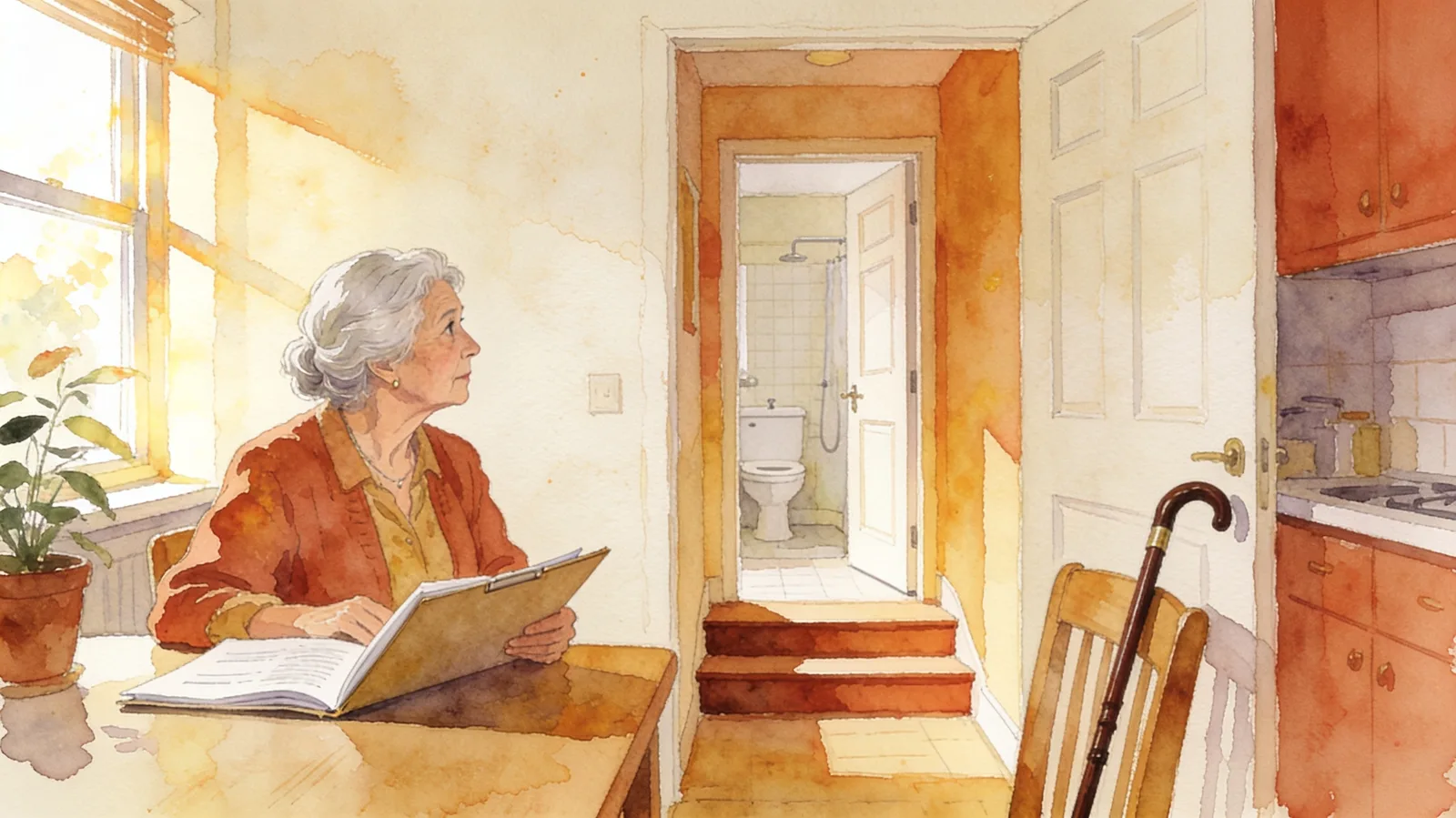
Picture Nancy and her daughter Sophia sitting at Nancy's kitchen table.
Nancy wants to stay in her own home. She has lived there a long time. She knows where every light switch is, and she does not want anyone telling her she can't manage.
Sophia is afraid that today is the day Nancy falls. Every unanswered phone call feels heavier than it should.
Both of them are right. And both of them want the same thing: for Nancy to keep living her life, in her house, on her terms.
The trouble is that the conversation usually turns into a conversation about Nancy. Her balance. Her eyesight. Whether she "should" still be on the stairs.
A Room Safety Check changes the subject. It talks about the house.
Blame the house, not the person
Most homes were not built for a slick tub, a low sofa, or a 2 a.m. walk to the bathroom. A step down into the living room, a glossy floor with a lamp reflecting off it, a doorway threshold that catches a slipper: these are features of the house. They are not failures of the person.
When you look at the rooms instead of at Nancy, the question shifts from "Is Mom okay?" to "Is this hallway okay?" That second question is easier to answer, easier to fix, and much easier to talk about at the kitchen table.
How do I check if my parent's home is safe?
You can walk the home slowly, one room at a time, and look at it the way it is actually used. Not the way it looks when company is coming. The way it works on a tired evening.
In SeniorThrive, a Room Safety Check is simpler than a clipboard tour. Take a photo of the room. SeniorThrive looks at the house and shows what deserves attention. The short list of fixes and the full report belong to that check.
Here is a simple room-by-room list of what to notice, whether you are walking it yourself or reviewing what the check found. It is a starting point, not a complete checklist.
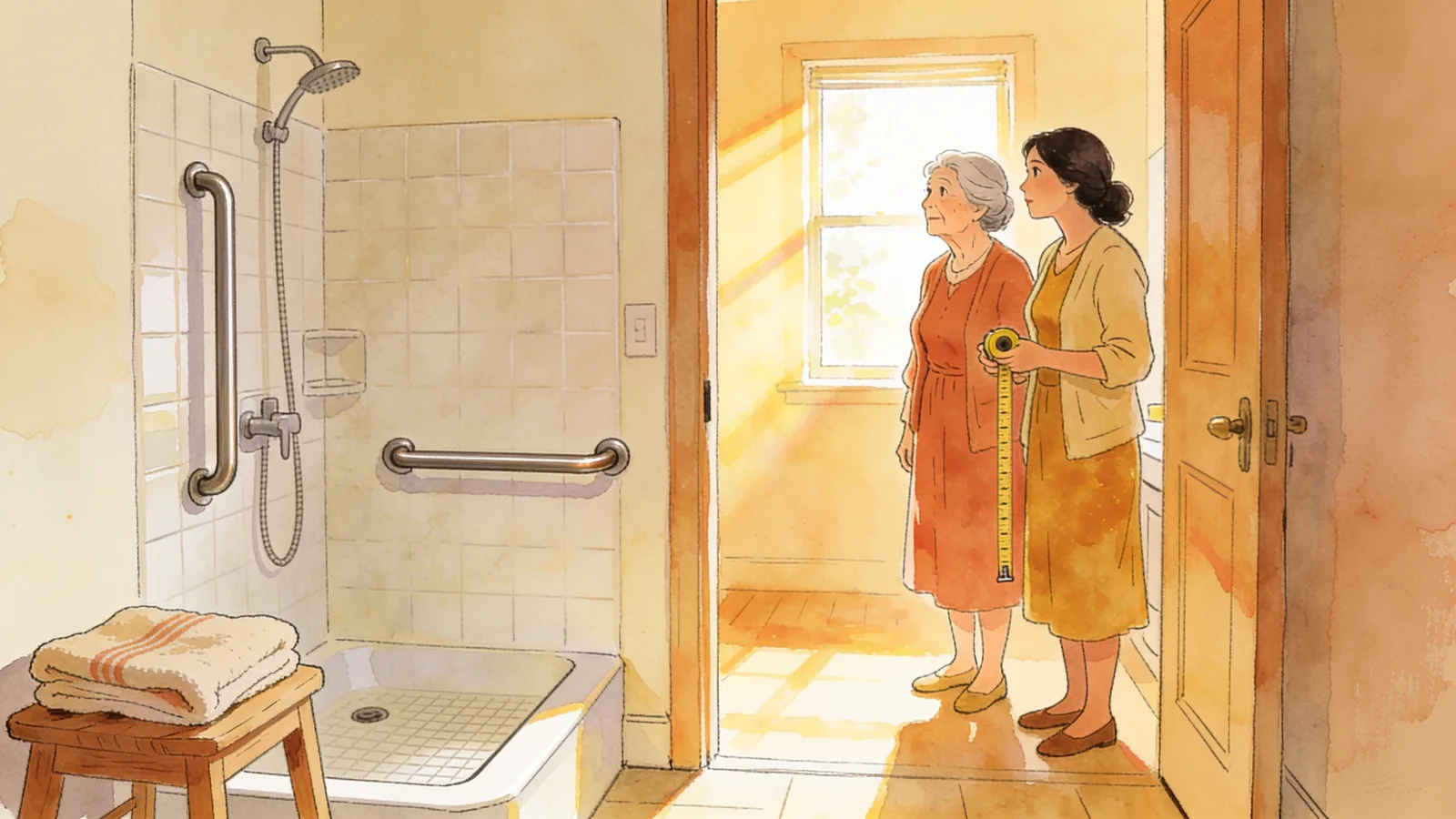
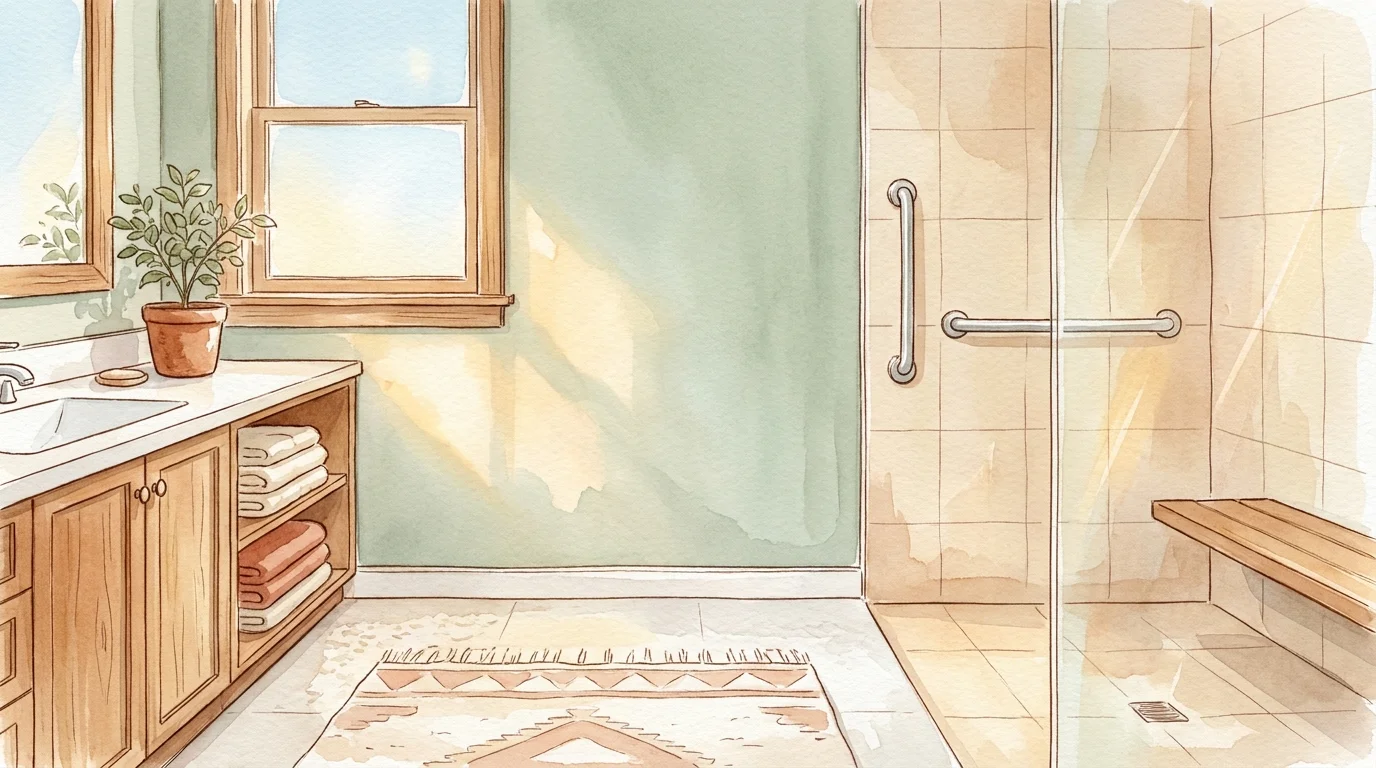
- Bathroom: Is there something solid to hold when stepping in and out of the tub or shower? Is the floor slick when wet? Is the toilet low enough that standing up is a strain? (More detail in our post on bathroom fall hazards.)
- Kitchen: Are everyday dishes and food stored between waist and shoulder height, or does reaching them mean a step stool? Is there good light over the counter and stove?
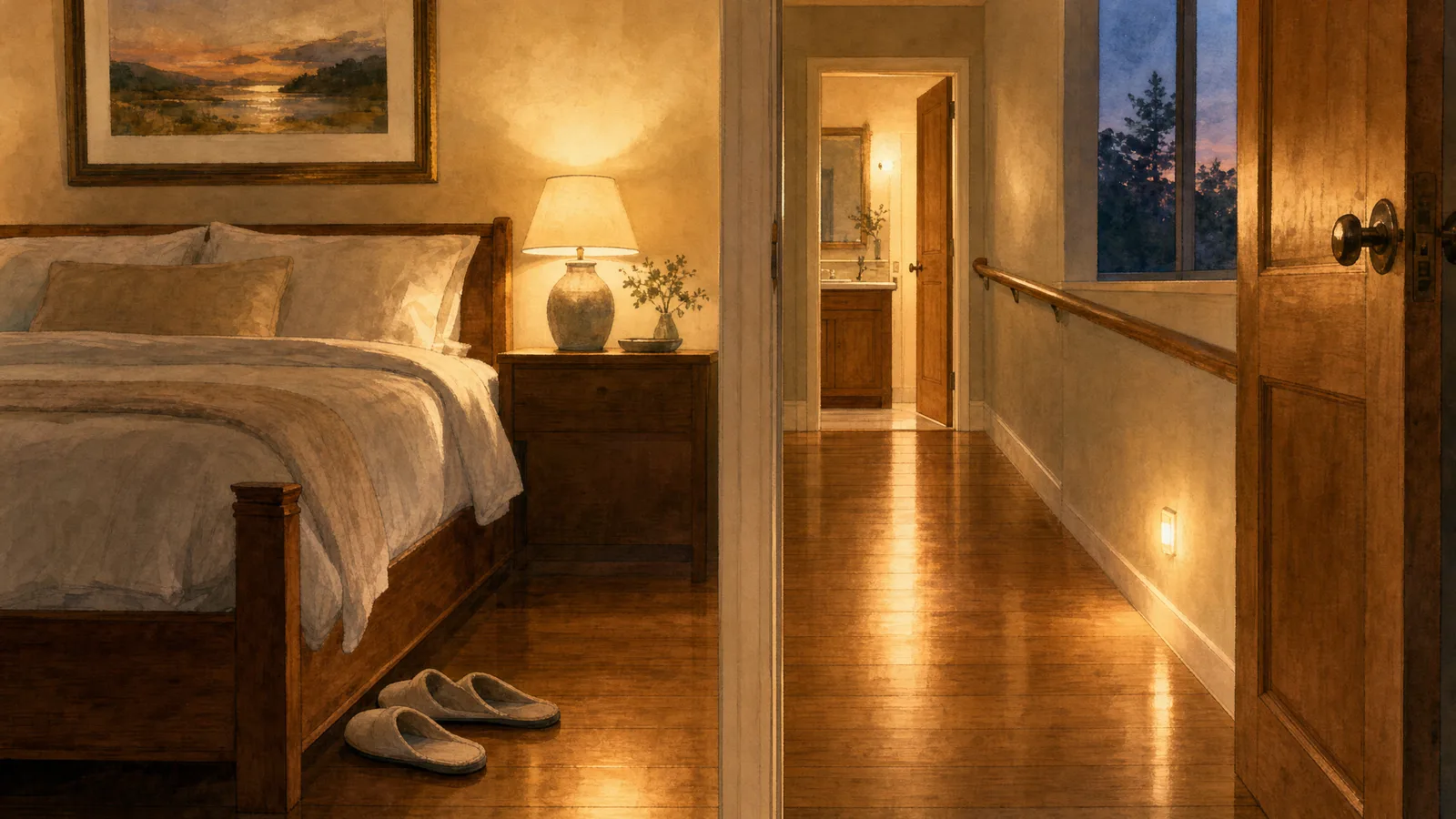
- Bedroom: Can the path from the bed to the bathroom be walked safely in the dark? Is there a light within reach of the bed? Is the bed a comfortable height to sit on and stand up from?
- Stairs: Is there a sturdy handrail, ideally on both sides, running the full length? Can each step edge be seen clearly? Is anything stored on the steps?
- Hallway: Is it lit at night? Are there cords, baskets, or small rugs along the way?
- Living room: Is there a clear path around the furniture? Is the favorite chair easy to get out of? Are rugs secured or gone?
- Garage: Are the steps into the house lit and steady? Are tools, bins, and hoses off the walking path? Is anything heavy stored up high?
Notice that none of these questions are about Nancy's health. Every one is about a floor, a light, a rail, or a shelf.
What a Room Safety Check is not
It is not a home inspection. A home inspection looks at the building itself: the roof, the wiring, the plumbing, the foundation. A Room Safety Check answers a different question: "Where in this house could someone slip, trip, or overreach during an ordinary day?"
It is not a medical assessment. A Room Safety Check is not a medical device, not a diagnosis, and not a clinical assessment. It does not measure Nancy's balance, strength, memory, or health. It says nothing about her as a person.
It is not a fall alarm. Knowing that someone fell is different from making a fall less likely in the first place. We wrote about that in fall detection is not fall prevention. This post is about the second part: seeing the house clearly so you can fix it.
It is not My Home Plan. My Home Plan (in the app: My Home, Step by Step) is a different Free feature. It does not turn Room Safety Check findings into the fix list. The short list of fixes and the full report belong to the Room Safety Check itself.
Room safety check vs home safety assessment
A home safety assessment is usually done in person by a professional, such as an occupational therapist. It looks at how a specific person moves through their home: getting out of a chair, stepping into the shower, climbing the stairs. That is valuable, especially after a hospital stay or a change in mobility. Our guide on what a home safety assessment is covers it in detail.
A Room Safety Check is simpler. It looks at the rooms, not at how a person moves. If something it points out needs a professional, that is a good reason to call one.
Think of it this way: the Room Safety Check shows you the house. A professional assessment looks at the person in the house.
What you get from it
In SeniorThrive, a Room Safety Check feeds the Home Safety Score, which describes the home room by room. Each room stands on its own, so a clean living room never hides a risky bathroom. You can read how that works in our post on the Home Safety Score.
The Home Safety Score is about the house only. It is separate from Thrive Progress, which is a simple, un-gamified record of what Nancy has chosen to do. The two are never combined. A safer bathroom does not make Nancy "score" better as a person, and using the app more does not mean anyone is healthier.
A check she already did stays available. A new Room Safety Check is part of Essential.
Nancy decides
The home is Nancy's. The Room Safety Check is hers. She decides whether to do it, which rooms to look at, and what to fix first.
Sophia sees the results only if Nancy says so. If Nancy chooses to share, she can add Sophia to her Circle. Nancy decides what Sophia can see, and she can change that at any time.
And on data, plainly: Nancy owns her data. We do not sell it. She decides who sees it. Nothing watches her.
So go back to the kitchen table. Instead of "Mom, I'm worried about you," try "Let's look at the bathroom together." It is a smaller question. It is about the house. And it leaves the big decision exactly where it belongs: with Nancy.