What Is a Home Safety Score? A Room-by-Room Look at the House
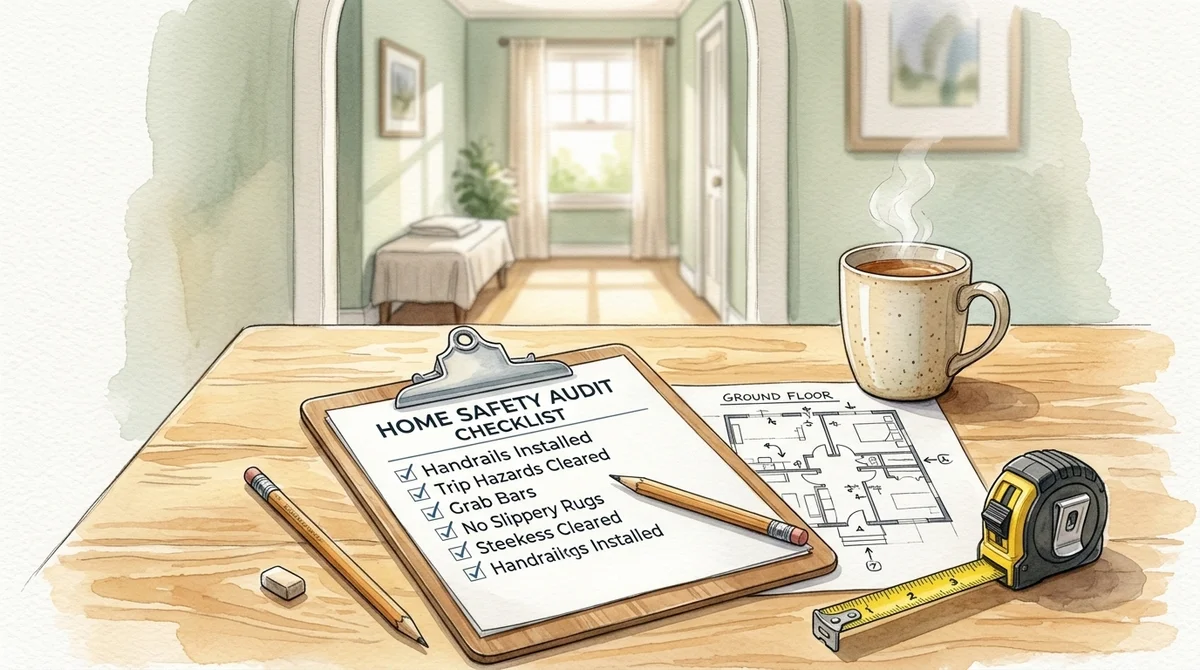
Walk through your parent's home and ask, "Is this house safe?" Your eyes will probably tell you yes. The carpet is clean. The counters are tidy. The armchair is comfortable. But most fall hazards at home are not dramatic. They are small, quiet, and easy to walk past every day: a rug that slides, a hallway that goes dark at night, a towel rack someone grabs because there is no grab bar.
A lot of checklists try to sum all of this up in one tidy number, like a grade for the whole house. The trouble is that one number can hide the room that matters most. A house that looks "mostly safe" is not safe if the one room left unaddressed is a slippery tub with nothing solid to hold. That one spot is where a bad fall happens.
The Home Safety Score takes a different approach. It looks at the house one room at a time, so each room tells its own story. Below is how that works, why the room that deserves attention comes first, and how to start clearing hazards.
The ground rule: we look at the house, not the person
The Home Safety Score is about the house. It never scores a person. It does not measure memory, health, or how independent someone is. It looks at physical things: floor transitions, lighting, how high things are stored, and whether grab bars are anchored. A house can be made safer. A person should never be graded.
It is also separate from Thrive Progress. The two are never combined, averaged, or added together, and how often anyone opens the app says nothing about anyone's health.
How it works: one room at a time
Instead of blending every room into one number, where a clean dining room can cancel out a risky bathroom, the Home Safety Score looks at each room on its own.
Not every hazard carries the same weight. A missing grab bar in a wet shower matters more than a doorknob that is hard to turn. These four words are a way to sort a hazard. They are not the score. The score says what deserves attention, what is worth a look, and what looks fine. Here is a simple way to think about severity:
| Severity | What it means | Examples |
|---|---|---|
| Critical | A slip or trip risk during everyday moves, with a real chance of serious injury | No grab bars in a wet shower; a broken stair edge; no handrail on the stairs |
| High | A spot that gets harder when someone is tired or moving around at night | A throw rug with no rubber backing; a coffee table in the walking path; a dark hallway |
| Moderate | Something that forces twisting, stretching, or reaching up on tiptoe | A microwave mounted above shoulder height; a loose toilet seat; a tall doorway threshold |
| Low | A smaller barrier or maintenance item that adds strain over time | A round doorknob that needs a strong grip; clutter along the walls |
The weakest room comes first
Picture four rooms: a living room, bedroom, and kitchen in good shape, and a bathroom that needs work. Average them together and the house looks fine. That average is misleading.
Falls do not happen "on average." They happen at the riskiest spot in the house. Nobody stays steady in the bathroom because the dining room was tidy. Bathrooms and stairs deserve a close look in almost every home, because that is where wet floors, tight turns, and steps add up.
That is why the Home Safety Score shows a room-by-room breakdown and points you to the room that needs the most help. If the bathroom is the room that deserves attention, start there, before spending money on anything for the other rooms.
13 common hazards worth looking for
These are the patterns that come up again and again in homes. None of them are anyone's fault. They are just how a lot of houses were built and furnished.
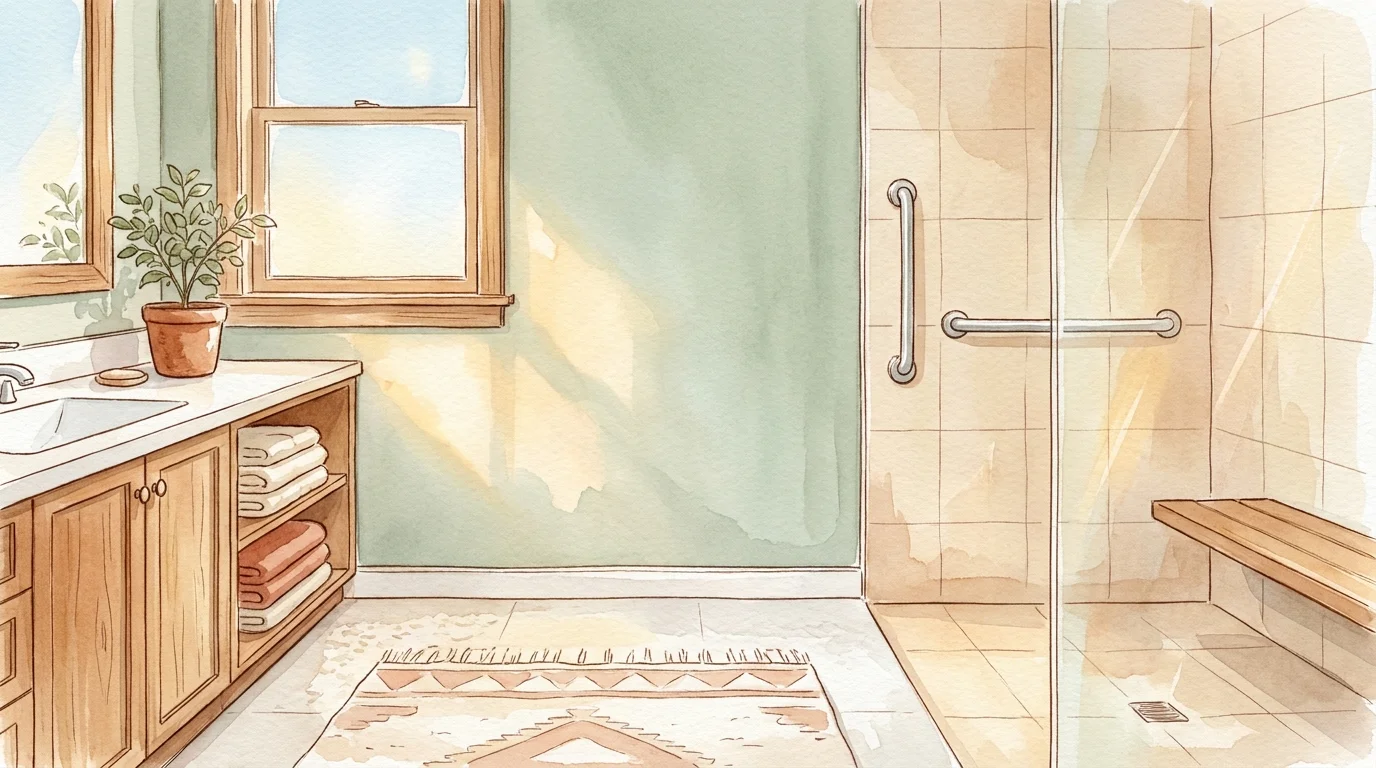
- Nothing solid to hold in wet areas. No grab bar anchored into the wall inside the shower or beside the toilet. Towel racks do not count. They are not built to hold a person's weight.
- A raised threshold. A lip between hardwood, tile, or carpet that can catch a foot that does not lift high.
- A throw rug that slides. Rugs without a non-slip backing or tape that bunch up or shift underfoot.
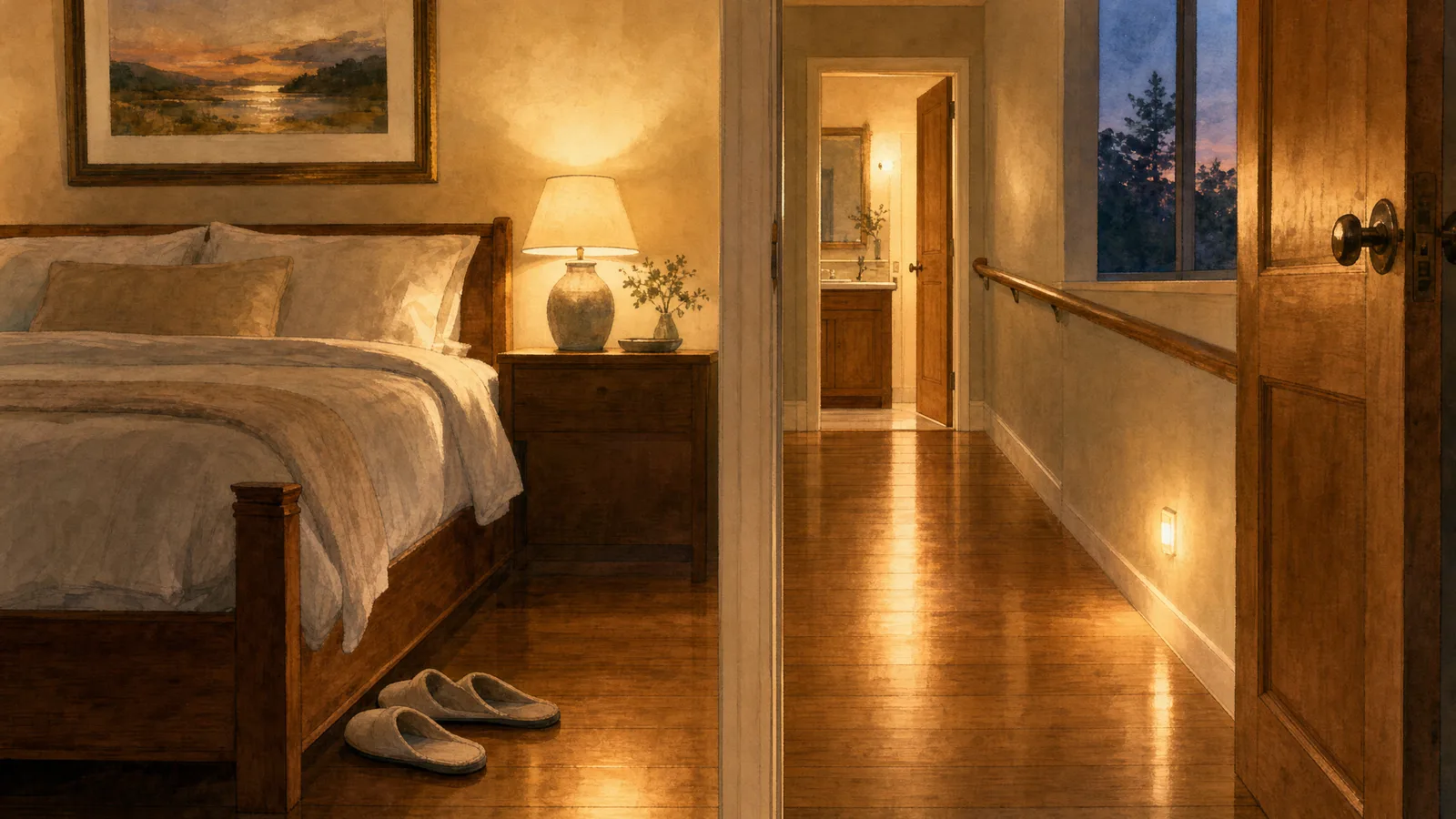
- A dark path at night. A hallway or bathroom route that is too dark to see the floor between bedtime and morning.
- Stairs with one rail, or none. Stairs without sturdy handrails on both sides that run past the top and bottom steps.
- A low, soft seat. A chair or sofa so low and soft that hips sink below the knees, which makes standing up hard.
- Glare. Shiny floors or bare bulbs that throw bright patches and hide the floor.
- The high shelf. Everyday dishes, food, or clothes stored above eye level, which invites climbing on a step stool.
- A cord across the path. Extension cords or lamp wires crossing a walkway or tucked under a rug edge.
- A low toilet. A low toilet with no riser or frame to push up from, which asks for a deep knee bend.
- A tall tub wall. A tub edge that means balancing on one leg to step in.
- A round doorknob. A knob that is hard to turn with sore or wet hands, especially in a hurry.
- A soft bed edge. A mattress that sinks at the edge, so sitting down to put on shoes feels unsteady.
To find out which of these show up in your home, start with our free 2-minute home safety quiz. It needs no account. It does not feed the Home Safety Score.
The score itself comes from a Room Safety Check. Take a photo of the room. SeniorThrive looks at the house and shows what deserves attention. That check produces the Home Safety Score for the rooms you look at. The newest photo of a room replaces the prior one for that room. A new Room Safety Check, the tasks, and the full report are part of Essential. A check already done stays available on Free.
Status is words, not a grade: what deserves attention, what is worth a look, and what looks fine in the rooms checked. There is no household total.
Fixing a hazard does not change the score by itself
Marking something fixed does not change that room's score. A later Room Safety Check of that same room is what changes it. Here are a few common hazards and what fixing them looks like:
| Hazard | What to do |
|---|---|
| No grab bar in the tub | Install two stainless grab bars anchored into wall studs: one vertical at the tub entry, one horizontal along the wall |
| A runner rug that slides | Add non-slip rug tape around the edges, or take the rug out |
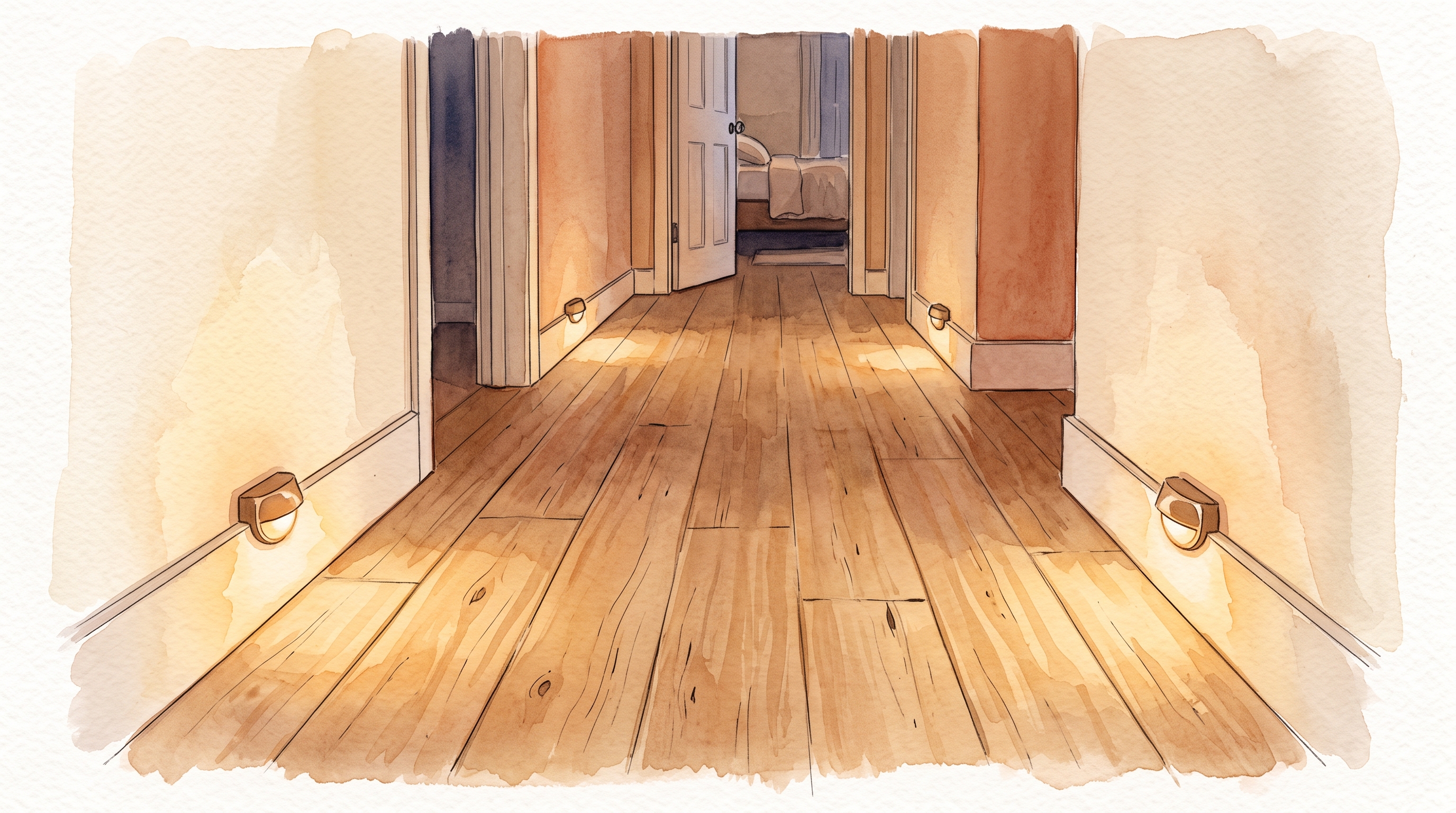
| A dark hallway to the bathroom | Plug in two motion-sensor nightlights with a warm, amber glow |
| Pantry items stored up high | Move everyday cans and cookware to shelves between waist and shoulder height |
Home Safety Score vs. an in-person assessment
How does a Home Safety Score compare to a visit from an occupational therapist (OT) or a contractor trained in home modification?
They work well together:
- Home Safety Score (a first look): A quick, easy way to spot obvious problems in the house, like lighting, rugs, and missing grab bars, that a family can fix right away without waiting weeks for an appointment.
- In-person home assessment (a professional look): Done by an OT or physical therapist. They watch how a specific person moves through their own home and recommend changes that fit that person. Read our guide, What Is a Home Safety Assessment?, to learn what that visit involves.
Many of the most useful fixes are inexpensive, and they cost far less than recovering from a fall. To weigh the numbers for your own family, try our Value Calculator.
Where to begin: three steps
- Start with the bathroom. Look at the tub or shower entry, whether the grab bars are anchored, and how steady it feels to sit down on and stand up from the toilet. If the bathroom is the room that deserves attention, put your effort and budget there first.
- Walk the night route. After dark, turn off the lights and walk the exact path your parent takes from bed to the bathroom. If there is any spot where you cannot see the floor, add a plug-in motion nightlight.
- Get the family on the same page with specifics. "Mom's house feels cluttered" tends to make people defensive. "The hallway has two raised thresholds and gets too dark at night" gives everyone a clear to-do list and keeps the focus on the house. Our 5-Question Framework can help siblings stay aligned.
Frequently asked questions
What is a good Home Safety Score?
There is no grade and no household total. Each room is described in words: what deserves attention, what is worth a look, and what looks fine in the rooms checked. Start with any room that deserves attention, especially the bathroom, bedroom, stairs, and kitchen.
Why doesn't the Home Safety Score combine everything into one number?
Because one number can hide the room that matters most. If three rooms are in great shape and the bathroom has a slippery tub and no grab bars, an average would look reassuring while the real hazard goes unaddressed. Room by room keeps that bathroom in plain sight.
Does the Home Safety Score measure health or memory?
No. It looks at the house, never the person. It covers things like floor transitions, lighting, grab bars, and clear walking paths. It is not a medical tool and does not diagnose anything.
Is the Home Safety Score part of Thrive Progress?
No. They are separate and are never combined, averaged, or added together.
How much does it cost to fix the most common hazards?
Many helpful fixes are inexpensive: plug-in motion nightlights, non-slip rug tape, a non-slip shower mat, and moving everyday items down to waist height, which costs nothing. Having grab bars professionally installed into wall studs costs more, and prices vary by area, so it is worth getting a quote.
Can grab bars be mounted with suction cups?
We do not recommend it. Suction-cup bars can lose their grip from grout lines, temperature changes, and steam, and can pull free right when someone leans on them. Choose grab bars that screw into wall studs or into anchors rated for that use.
How often should we take another look?
Plan to look again every 6 to 12 months, and right away after any change: new trouble getting around, a new medication that causes dizziness, a hospital stay, or the darker winter months.