What Is a Home Safety Assessment? A Plain Guide for Families (2026)
When a parent starts to seem unsteady, or has a near-miss on the stairs, families often jump straight to the hardest conclusion: "Mom can't live here anymore." Often, though, the problem is not the person. It is the house.
Many homes were built and furnished with younger, steadier bodies in mind. Sunken living rooms, tall tub walls, narrow doorways, dim hallways, and steep front steps are all common. A home safety assessment is a careful walk-through by a trained professional that finds these barriers and lays out a plan, in order of priority, to fix them, so your parent can keep living safely and with dignity in the home they know.
Below is how an assessment works, who does it, what it may cost, how Medicare fits in, how it relates to the Home Safety Score, and what you can do before anyone knocks on the door.
What a home safety assessment is
A home safety assessment is a structured visit that looks at three things together: what a person can comfortably do, their daily routine, and the layout of their home. It is different from a real estate home inspection, which checks the roof, wiring, and plumbing. A safety assessment looks at how a specific person gets on and off the toilet, climbs the stairs in low light, or reaches for food in the fridge, and how the house could make those moves easier.
Who does home safety assessments
Different professionals bring different strengths. Which one you call depends on whether you mainly need advice about daily movement or about construction.
| Professional | Credential | What they focus on | Typical cost (varies by area) |
|---|---|---|---|
| Occupational therapist (OT) | OTR/L; some hold a specialty certification in environmental modification | How a person handles everyday tasks at home, plus balance, vision, and memory as they relate to the space | A few hundred dollars privately; may be covered by Medicare Part B when part of a therapy plan of care |
| CAPS-certified contractor | Certified Aging-in-Place Specialist (CAPS) | Remodeling, removing barriers, universal design, and what is practical to build | Often lower; some contractors credit the fee toward the work |
| Physical therapist (PT) | PT, DPT; some are board-certified in geriatrics (GCS) | Walking, getting around with a walker or cane, and using stairs | A few hundred dollars privately |
| Environmental access consultant | CEAC (Certified Environmental Access Consultant) | Ramps, platform lifts, stair lifts, and accessible home design | Varies |
Tip: Many families get the best result by pairing an OT with a CAPS contractor. The OT figures out what your parent needs to move safely, and the contractor figures out how to build it.
What happens during an in-home assessment
A visit often takes about 90 minutes to two hours. Most follow five steps.
Step 1: Getting to know the routine
The visit usually starts with a conversation at the kitchen table. The evaluator may ask about:
- Health and medications: Some medications can cause dizziness, a drop in blood pressure, or urgent trips to the bathroom.
- Past falls: Any falls, near-misses, or habits like steadying themselves on walls and furniture while walking.
- Daily patterns: Where your parent spends the morning, who cooks, and how often they get up at night to use the bathroom.
Step 2: The way in
The evaluator often starts outside, at the driveway or curb, and looks at:
- The walkway: slope, cracks, roots, and traction.
- Porch steps: step height, landing size, and cover from rain and ice.
- Outdoor lighting from where the car is parked to the main door.
- Doorway thresholds that could catch a foot.
Step 3: Room by room
Next, the evaluator goes through each room:
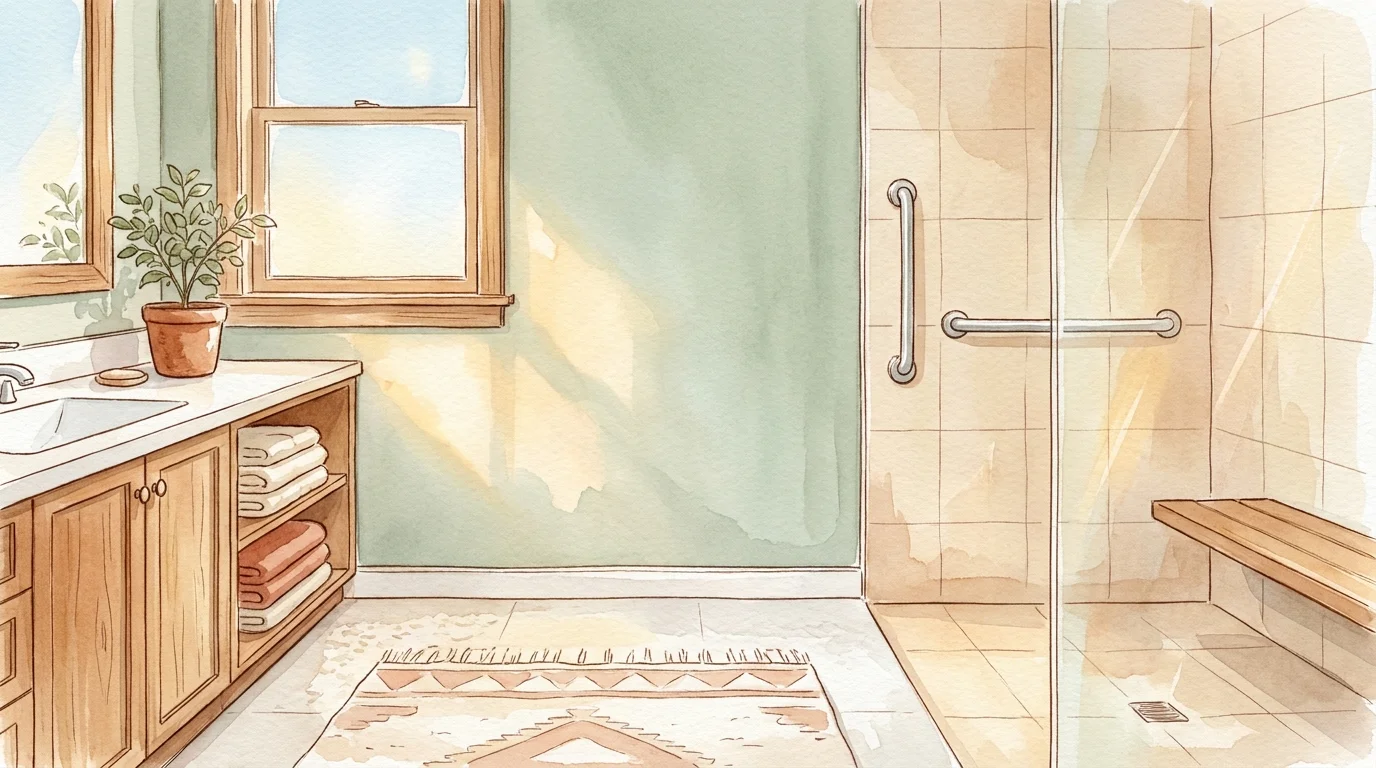
- Bathrooms: Whether grab bars are anchored into studs, how high the tub wall is, toilet height, and how slippery the floor is.
- Stairs: Sturdy handrails on both sides that run past the top and bottom steps, step edges that are easy to see, and good lighting.
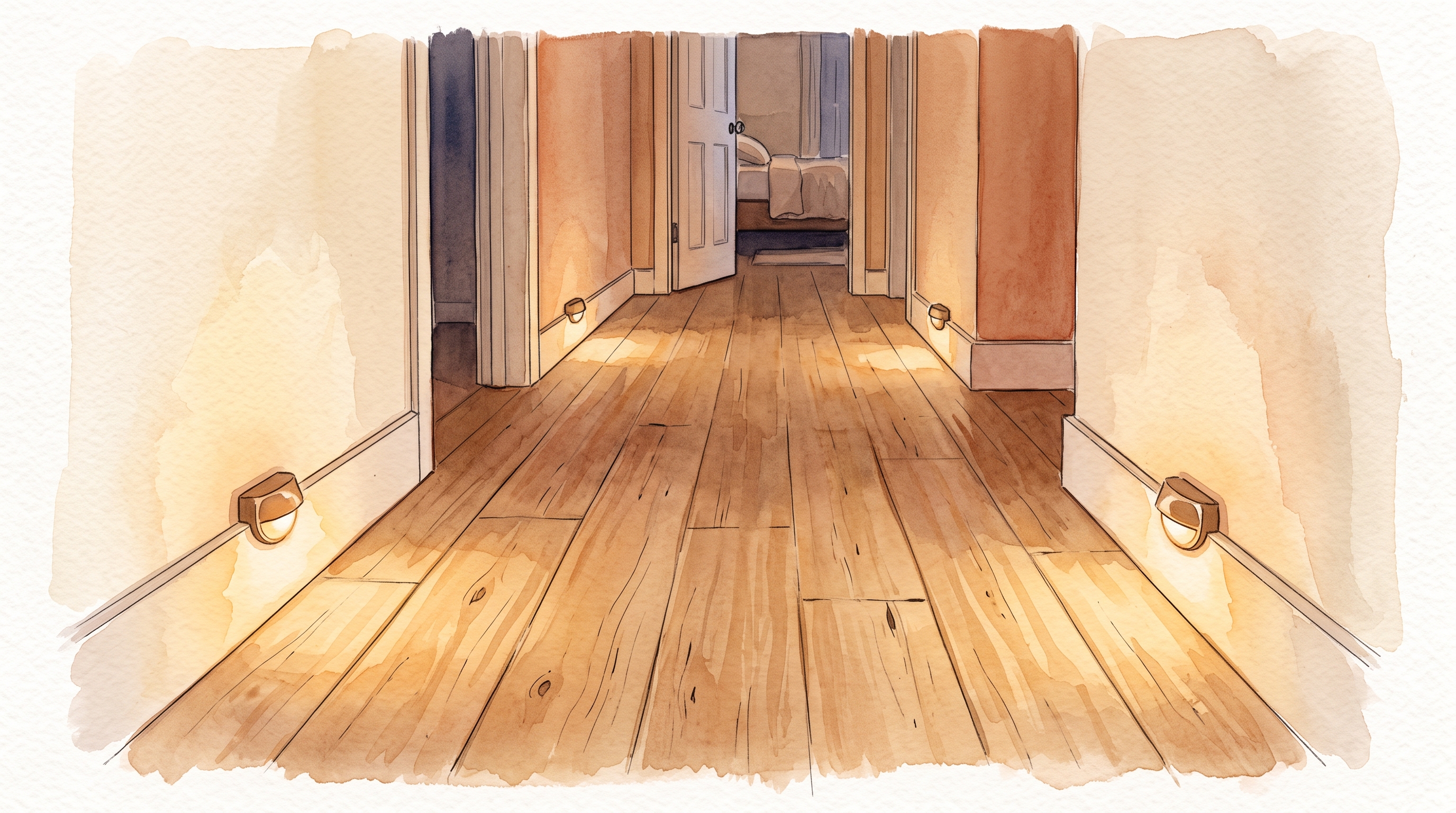
- Bedrooms: Bed height, lighting near the bed, and a clear path to the bathroom at night.
- Kitchens: Keeping everyday items between waist and shoulder height, stove safety, and good light over work areas.
Step 4: Watching everyday moves
This is what sets an assessment apart from an inspection. The evaluator asks your parent to show how they handle normal moves, such as:
- Getting up from a favorite armchair.
- Walking down the hallway while carrying a cup of water.
- Stepping in and out of the shower.
- Reaching for a dish they use every day.
Step 5: The written plan
Often within about a week, the evaluator sends a written report that sorts recommendations into tiers, usually something like:
- Quick, low-cost fixes: Take up throw rugs, add plug-in motion nightlights, move everyday pantry items down.
- Key hardware: Grab bars anchored into studs, a toilet seat riser, handrails on both sides of the stairs.
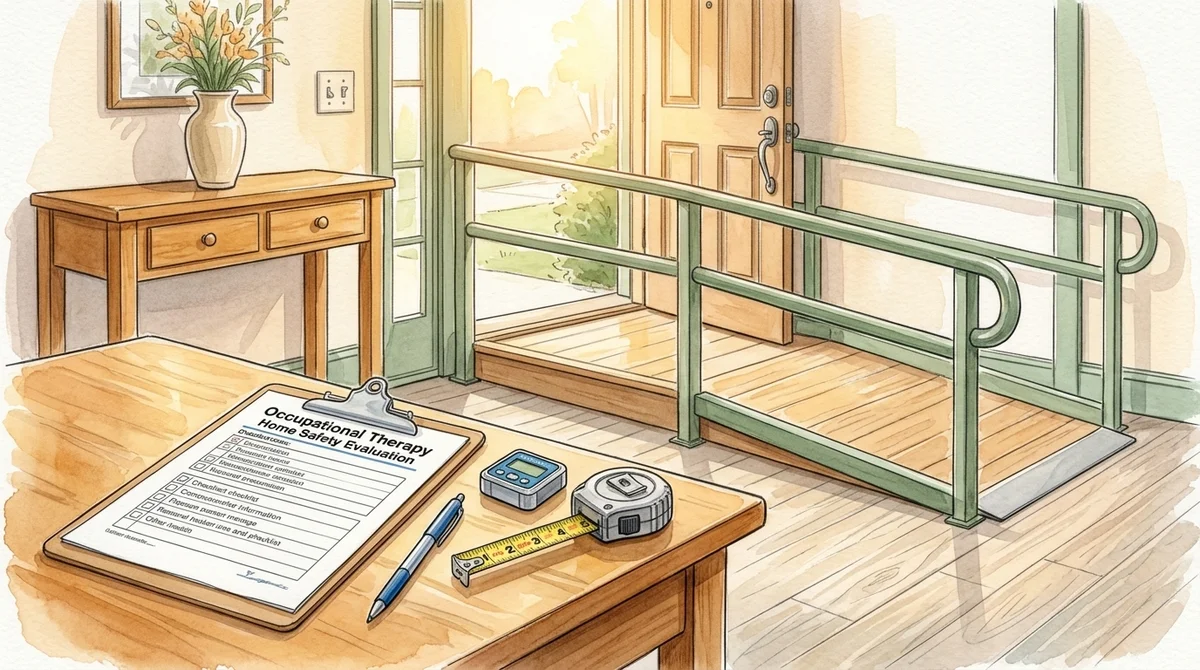
- Bigger projects: An entrance ramp, a tub cut-out or curbless walk-in shower, or a stair lift.
Cost and insurance
Does Medicare pay for a home safety assessment?
Original Medicare Part B can help pay for medically necessary outpatient occupational therapy when a doctor or other provider certifies the need, often as part of a therapy plan of care after a hospital stay, a fall, or a diagnosis such as a stroke or Parkinson's disease. After the Part B deductible, you pay 20% of the Medicare-approved amount and Medicare pays the other 80%. That is Original Medicare, not Medicare Advantage. See occupational therapy services and Medicare Coverage of Therapy Services. Check with your parent's doctor and plan for the details that apply to them.
What Medicare usually does not pay for: Even when the evaluation is covered, Medicare generally does not pay for the changes themselves, such as grab bars, ramps, stair lifts, or walk-in tubs, or for the labor to install them.
Other ways to pay
- Medicaid home and community-based services (HCBS) waivers: Many states offer funds for home modifications for people who qualify. Amounts and rules vary by state.
- VA HISA grants: The Home Improvements and Structural Alterations grant helps eligible veterans pay for medically necessary changes like bathroom and entryway updates. The VA sets a higher lifetime limit for service-connected conditions and a lower one for others. Current rules are on the VA HISA page.
- Long-term care insurance: Some policies include a benefit that can help pay for an assessment or for safety changes. Check the policy.
While you wait: a first look vs. a full assessment
Getting an in-person OT visit can take weeks, and paying privately can cost a few hundred dollars. What can families do in the meantime?
A two-step approach works well:
-
Step 1: Take a first look yourself, today. Start with our free 2-minute home safety quiz. It needs no account. It does not feed the Home Safety Score. For a room-by-room look, use Room Safety Check. Take a photo of the room. SeniorThrive looks at the house and shows what deserves attention. That check produces the Home Safety Score. The newest photo of a room replaces the prior one.
A new Room Safety Check, the tasks, and the full report are part of Essential. A check already done stays available on Free. A first look can bring up throw rugs, dark hallways, and missing grab bars, which you can often fix quickly and cheaply. It is not a medical evaluation and does not replace one. Marking a fix does not change that room's score. A later Room Safety Check of the same room is what changes it.
-
Step 2: Bring in a professional when it makes sense. Call an OT or a CAPS contractor if getting around becomes harder, after a hospital stay, or when the house needs bigger work like a stair lift, a roll-in shower, or a ramp. You can browse specialists SeniorThrive has approved in our Professional Directory. Approval is an application we review. It is not a credential check.
Most safety changes cost far less than the care that can follow a serious fall. To compare the numbers for your family, try our Value Calculator.
Frequently asked questions
How much does a home safety assessment cost?
Paying privately, an in-person assessment by an occupational therapist or CAPS contractor usually costs a few hundred dollars, and prices vary by area. If an OT evaluation is part of a Medicare Part B therapy plan of care, much of the evaluation may be covered, but the changes to the home are usually out of pocket.
Who should get a home safety assessment?
It is worth considering for any older adult who wants to keep living at home, and especially for someone who: (1) has had a fall or stumble in the past year; (2) is coming home after surgery or a hospital stay; (3) has balance trouble, nerve pain or numbness in the feet, vision changes, or Parkinson's disease; or (4) lives in a home with stairs and lots of floor transitions.
How long does a home safety assessment take?
Usually about 90 minutes to two hours on site. The evaluator looks at the outside of the home, the main living spaces, and the lighting, and watches your parent do everyday moves like standing up from a chair, stepping into the shower, and climbing steps.
What is the difference between a home safety assessment and a home inspection?
A home inspection checks the building itself: the roof, electrical panel, plumbing, and foundation. A home safety assessment looks at how a specific person moves through that home, with a focus on preventing falls, comfortable reach, lighting, and getting around easily.
Can families do their own home safety review?
Yes, for a first look. A good checklist, our home safety quiz, or Room Safety Check can help you find common problems like throw rugs, poor night lighting, and items stored too high. Many of these are simple to fix on your own. For bigger changes, or when your parent's needs are changing, bring in an occupational therapist.