The Annual Wellness Visit Asks About Home Safety. The Answer Lives at Home.
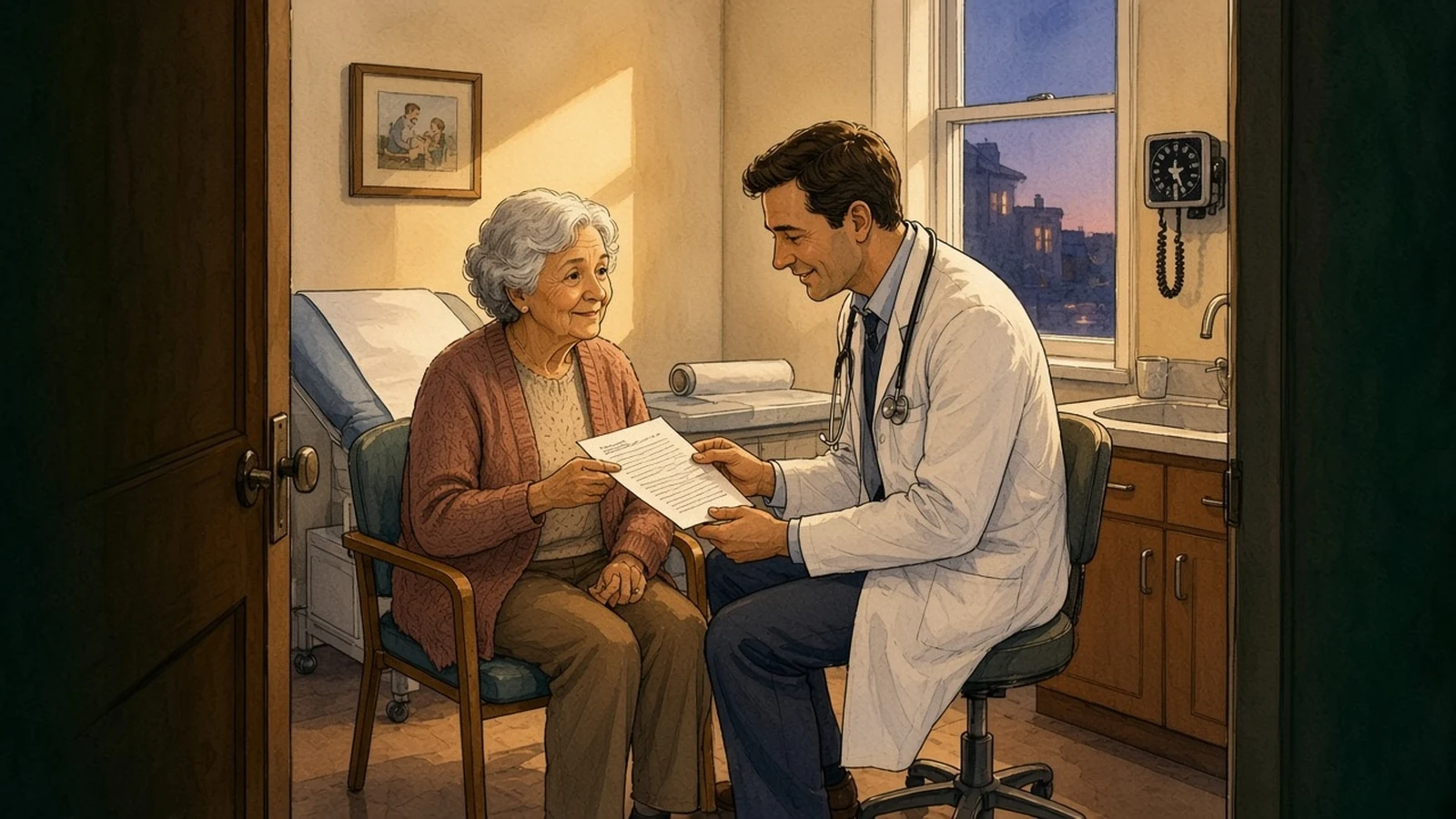
Medicare's Annual Wellness Visit has to review fall risk and home safety, but the house is not in the exam room. Primary care teams get a truer answer when the older adult brings the house with her: her own screening answers, her rooms, and what she has already fixed.
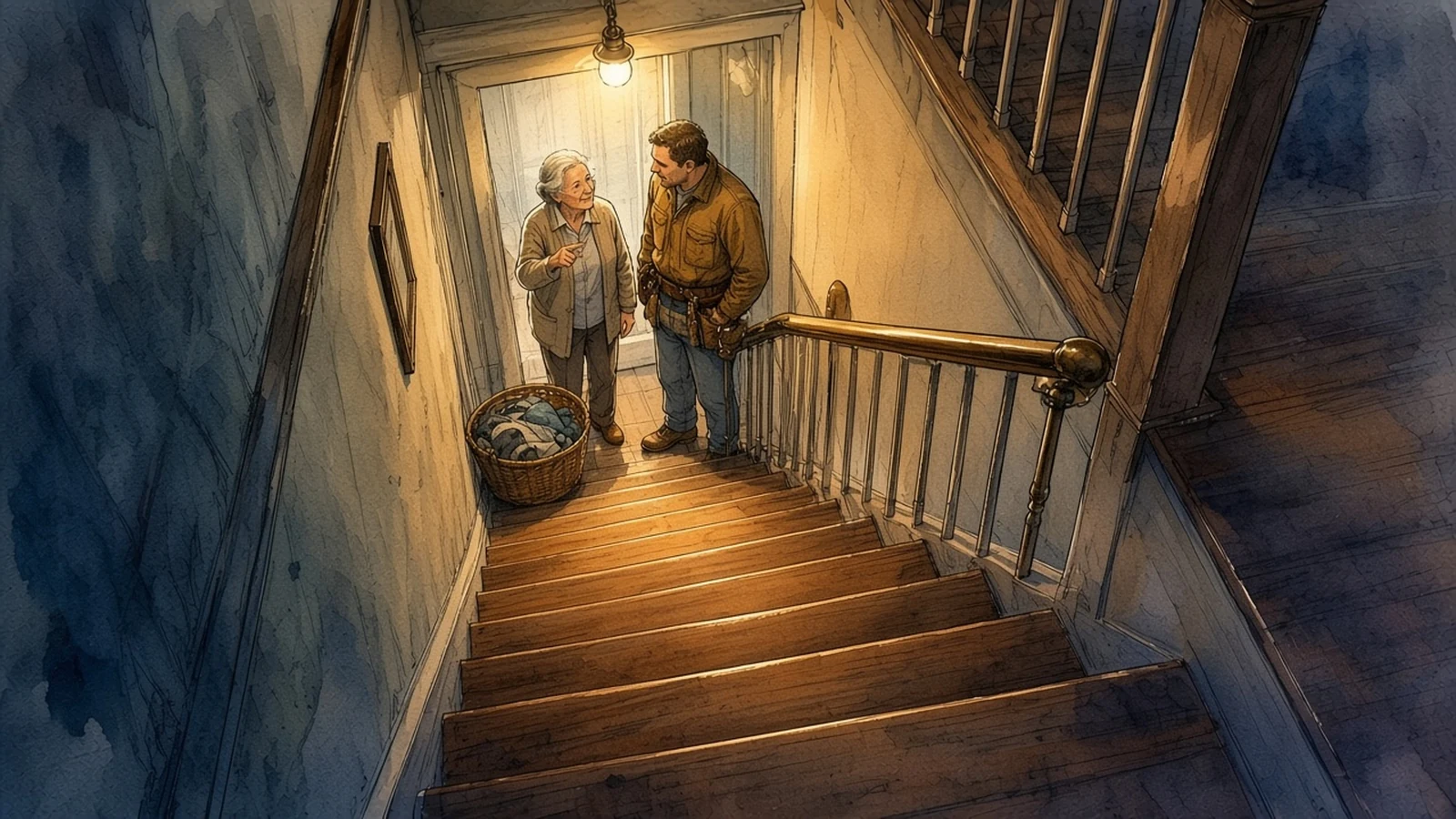
Picture a 79-year-old woman at her wellness visit. Sharp, funny, still driving to her book club. You ask the three questions: has she fallen, does she feel unsteady, does she worry about falling. No, no and no. What she does not mention, because nobody asked about the hallway, is that the bulb outside her bathroom burned out in August. She has been walking that stretch in the dark at 2 a.m. ever since, one hand on the wall.
She is not hiding anything. She answered the question you asked. The problem is the house, and the house did not come to the appointment.
Why the home safety part of the visit is hard to do well
The rule asks for something the clinic cannot see. Federal regulations define the wellness visit's review of "functional ability and level of safety" as covering, at minimum, hearing, activities of daily living, fall risk and home safety, by direct observation or screening questions.
That is the text of 42 CFR 410.15, which sets out what the Medicare Annual Wellness Visit includes. Hearing you can test. Daily activities you can ask about. Fall risk has a validated screen. Home safety is the one item on that list you almost never observe directly, so it usually gets a single question and a single answer from memory.
The stakes are not small. CDC reports that more than one in four older adults falls each year, and less than half tell their doctor. Falling once doubles the chance of falling again. Each year there are about 4.5 million emergency department visits for falls among older adults and about 1.4 million hospitalizations. CDC lists home hazards, such as broken or uneven steps and throw rugs or clutter, among the risk factors that can be changed.
What STEADI already tells you to do about the house
CDC's STEADI algorithm puts the house inside the clinical workflow: screen yearly, ask about potential home hazards as part of the assessment, refer to an occupational therapist when home hazards are likely, and follow up in 30 to 90 days.
The STEADI pocket guide gives two screening options. The three key questions (a yes to any one means increased risk) or the 12-question Stay Independent brochure, where a score of 4 or more means increased risk, and a lower score with a fall in the past year still counts. The pocket guide is blunt about why you have to ask: many people who have fallen do not bring it up at medical appointments.
If she screens at risk, STEADI's assessment step includes "ask about potential home hazards (e.g., throw rugs, slippery tub floor)." Its intervention for likely home hazards is a referral to an occupational therapist to evaluate home safety. Then it asks you to follow up in 30 to 90 days.
Every step there is sound. The weak link is the evidence about the house. "Do you have throw rugs?" gets an honest no from someone who stopped seeing the bath mat years ago.
If your system works within the Age-Friendly Health Systems 4Ms (What Matters, Medication, Mentation and Mobility, from the Institute for Healthcare Improvement and The John A. Hartford Foundation), the house sits where Mobility and What Matters meet. For most of the older adults you see, what matters is staying in their own home. The AARP 2024 Home and Community Preferences survey found that 75% of adults 50 and older want to stay in their current home for as long as possible.
What you can see in the room, and what only the home can tell you
Most of the wellness visit's safety review works in the clinic. Home safety is the exception, so it is the part worth handing back to the older adult before the visit and after it.
| AWV safety element | What you can do in the visit | What lives at home | What helps |
|---|---|---|---|
| Hearing | Ask, or screen in the room | Missed doorbells or smoke alarms | Usually handled in the visit |
| Activities of daily living | Ask about bathing, dressing, toileting, walking | Which tasks she now avoids, and why | Her own rating of daily tasks, done before the visit |
| Fall risk | STEADI three questions or Stay Independent | Near-misses she has stopped counting | The brochure completed at home, with her score |
| Home safety | One or two questions | Lighting, stairs, bathroom, rugs, the path to the toilet at night | Photos of the rooms she uses, and an OT referral when hazards are likely |
How to bring the house into a short visit
Ask her to do three things at home, then spend your minutes on what she found. It moves the home safety review from memory to evidence without lengthening the visit.
- Before the visit, send the Stay Independent brochure. It is CDC's own 12-question screen, and CDC lists it among the brochures it writes for older adults themselves. At home, at her own table, she has time to think about the curb she now avoids.
- Ask one question about rooms, not about her. "Which room in your house do you use least now, and why?" Avoidance is often the first sign the house is working against her. It is also an easier question to answer honestly than "Are you unsteady?"
- Ask for photos of the rooms she uses most. The bathroom, the stairs, the hallway to the bedroom, the kitchen. A two-minute look at six photos tells you more than a yes or no about rugs.
- Refer to an occupational therapist when hazards are likely. That is STEADI's own intervention, and an OT home evaluation is the clinical standard for the house. The occupational therapist directory lists approved OTs in the SeniorThrive network. It is small and growing, so readers can also search AOTA's Find an OT.
- Follow up in 30 to 90 days. Ask what got fixed. A burned-out bulb is a ten-minute repair. A second stair rail takes longer. Both are worth asking about by name.
Notice that none of this treats her as the problem. Blame the house, not the person. When you ask about the hallway instead of her balance, people tell you more.
Where SeniorThrive fits
SeniorThrive gives the older adult a living plan for her home that she keeps up herself, so she can bring her own screening answers and her own rooms to your visit. The clinical judgment, and any referral, stay with you.
Here is what the person gets, in the words of our live SeniorThrive for doctors page:
- My Home and Balance Summary. One printed page with her answers to the CDC STEADI Stay Independent checklist and her score, her medicines that fall into STEADI's fall-risk medication classes, her falls and near-misses from the past year, the top open items from her Room Safety Checks, and questions to ask you. It quotes CDC's threshold rather than giving a verdict, and it says it is self-reported.
- Room Safety Check. She photographs a room. SeniorThrive reads the photos and shows what deserves attention: a short list of fixes and a score for the room, which feeds her Home Safety Score. Every Room Safety Check result includes this line: "For personalized recommendations, ask your doctor for an occupational therapy referral, or search for a licensed occupational therapist through AOTA." A family member can try a free preview Room Safety Check of their own home. It shows on screen and is not saved. Saved Room Safety Checks of her home are part of Essential.
- Balance & Fall Notes. It records each fall, slip or dizzy spell in a few taps: the room, what she was doing, the lighting and how she got up, with space to add her own words.
- Doctor Visit Notes. After the visit, she writes down what you told her, what to do next and when to come back.
- Emergency Card, free. Her medicines, allergies, conditions and who to call, on her phone and on the fridge.
- My Daily Check-In, free, and Morning Peace of Mind: she picks a time and who in her Circle in SeniorThrive to tell. If she has not checked in by then, the people she picked get a gentle note in the app. It is part of every plan, including Free. She can remove anyone from her Circle at any time.
Nothing is sent to your practice. She brings what she chooses to bring.
One line for the end of the visit
The best moment to share is when you hand over the after-visit summary. It takes one sentence and sets up a better conversation next year.
Try: "Before next year, take photos of the rooms you use most and bring me the one-page summary. Then we can talk about your house, not just your balance."
If you are a geriatrician, a primary care physician or a nurse practitioner who runs wellness visits, see what the people you care for get, and join the Professional Network, free, so families who need you can find you. If a PT or OT on your team sees her at home, SeniorThrive for PT and OT shows what they get. If she wants a two-minute place to start before anything else, the Home Safety Quiz is free. If you also handle discharges, our guide to home safety after hospital discharge covers the week after she gets home. For a short list of public tools to hand out, see home safety resources to share.
Brian Fluhr, Founder, SeniorThrive
Frequently asked questions
Does the Medicare Annual Wellness Visit include home safety?
Yes. Federal rules define the visit's review of functional ability and level of safety as covering, at minimum, hearing, activities of daily living, fall risk and home safety, through direct observation or screening questions (42 CFR 410.15).
How should primary care screen older adults for fall risk?
CDC's STEADI recommends screening adults 65 and older yearly, using three key questions or the 12-question Stay Independent brochure. A yes to any key question, or a brochure score of 4 or more, means increased risk.
What does a Stay Independent score of 4 mean?
A score of 4 or more on CDC's Stay Independent brochure means the person may be at increased risk of falling. STEADI adds that a lower score with a fall in the past year also counts as at risk.
When should a doctor refer to occupational therapy for home safety?
CDC's STEADI algorithm recommends referring to an occupational therapist to evaluate home safety when home hazards are likely, after asking about hazards such as throw rugs or a slippery tub floor, then following up in 30 to 90 days.
How can I learn about home hazards without a home visit?
Ask the older adult to photograph the rooms she uses most and to name the room she avoids. Photos and her own completed screening answers turn a single yes or no about rugs into something you can actually review.
Is SeniorThrive a clinical tool?
No. SeniorThrive is a plan for living well at home. It describes the house and what the older adult reports, marks self-reported information, and points people to their doctor and an occupational therapist. It does not diagnose.
Sources
- Electronic Code of Federal Regulations, 42 CFR 410.15, Annual wellness visits providing Personalized Prevention Plan Services (definition of "review of the individual's functional ability and level of safety"). https://www.ecfr.gov/current/title-42/chapter-IV/subchapter-B/part-410/subpart-B/section-410.15 (text read 2026-11-10 through the eCFR renderer)
- CDC, Facts About Older Adult Falls (reviewed Sept. 8, 2026). https://www.cdc.gov/falls/data-research/facts-stats/index.html
- CDC STEADI, Pocket Guide: Preventing Falls in Older Patients (algorithm for screening, assessment and intervention). https://www.cdc.gov/steadi/media/pdfs/steadi-pocketguide-508.pdf
- CDC STEADI, Clinical Resources. https://www.cdc.gov/steadi/hcp/clinical-resources/index.html
- Institute for Healthcare Improvement, Age-Friendly Health Systems (the 4Ms). https://www.ihi.org/networks/initiatives/age-friendly-health-systems
- AARP, 2024 Home and Community Preferences Among Adults 18 and Older. https://www.aarp.org/content/dam/aarp/research/topics/livable-communities/housing/2024-home-community-preferences-report.doi.10.26419-2fres.00831.001.pdf
SeniorThrive is not affiliated with or endorsed by CDC, CMS, IHI, AARP or any organization named here. References are to their public materials. A Room Safety Check and the Home Safety Score describe the house. They are not a medical device, a home inspection or a clinical assessment.