After Discharge, the Home Keeps Working Against Recovery. Here Is How Clinicians Can Change That.
The risk that sends an older adult back to the hospital often lives in the house, not the chart. Clinicians can address it by adding the home to discharge: a room-by-room check, an OT referral when warranted, and a way to keep looking.
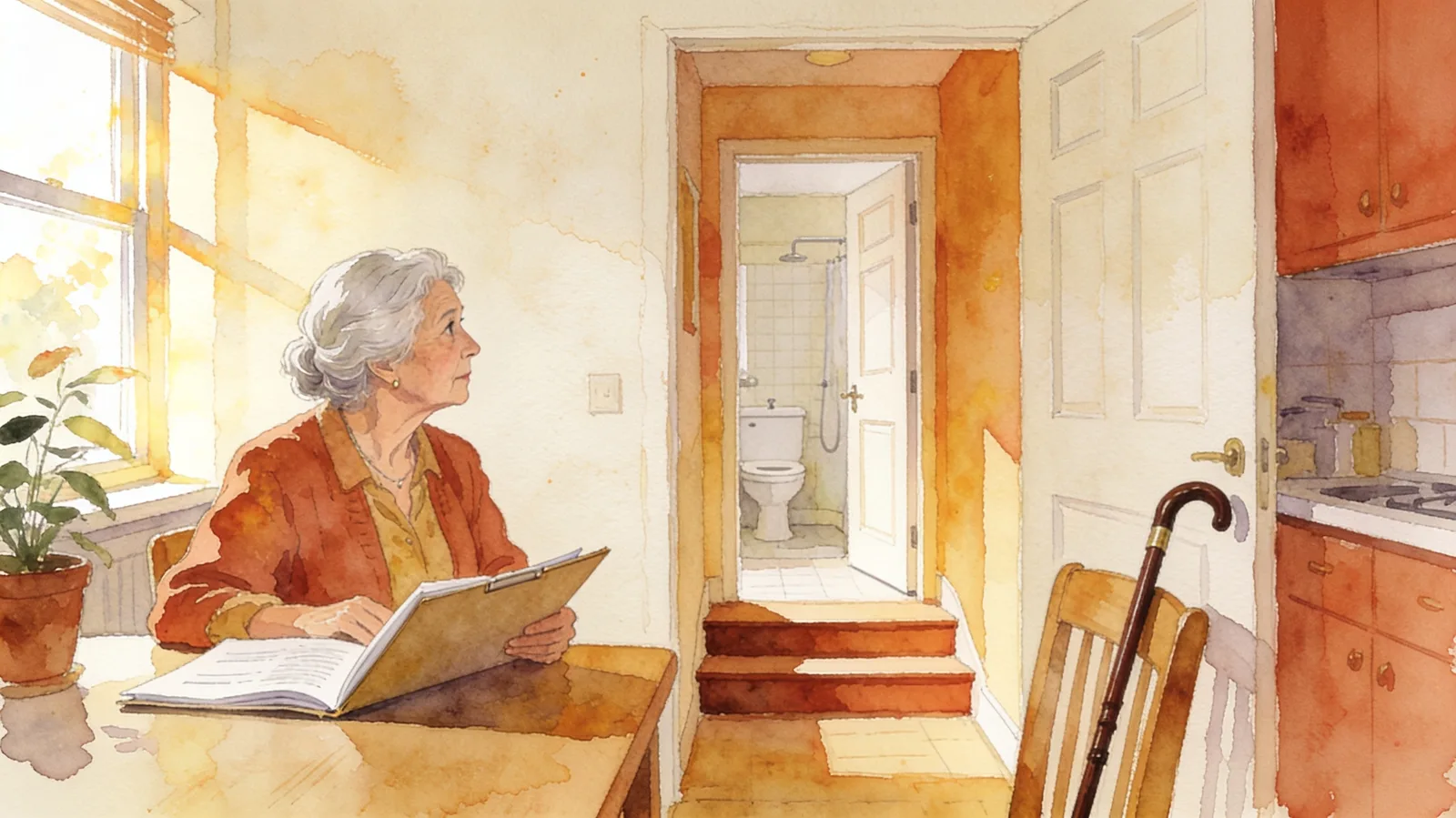
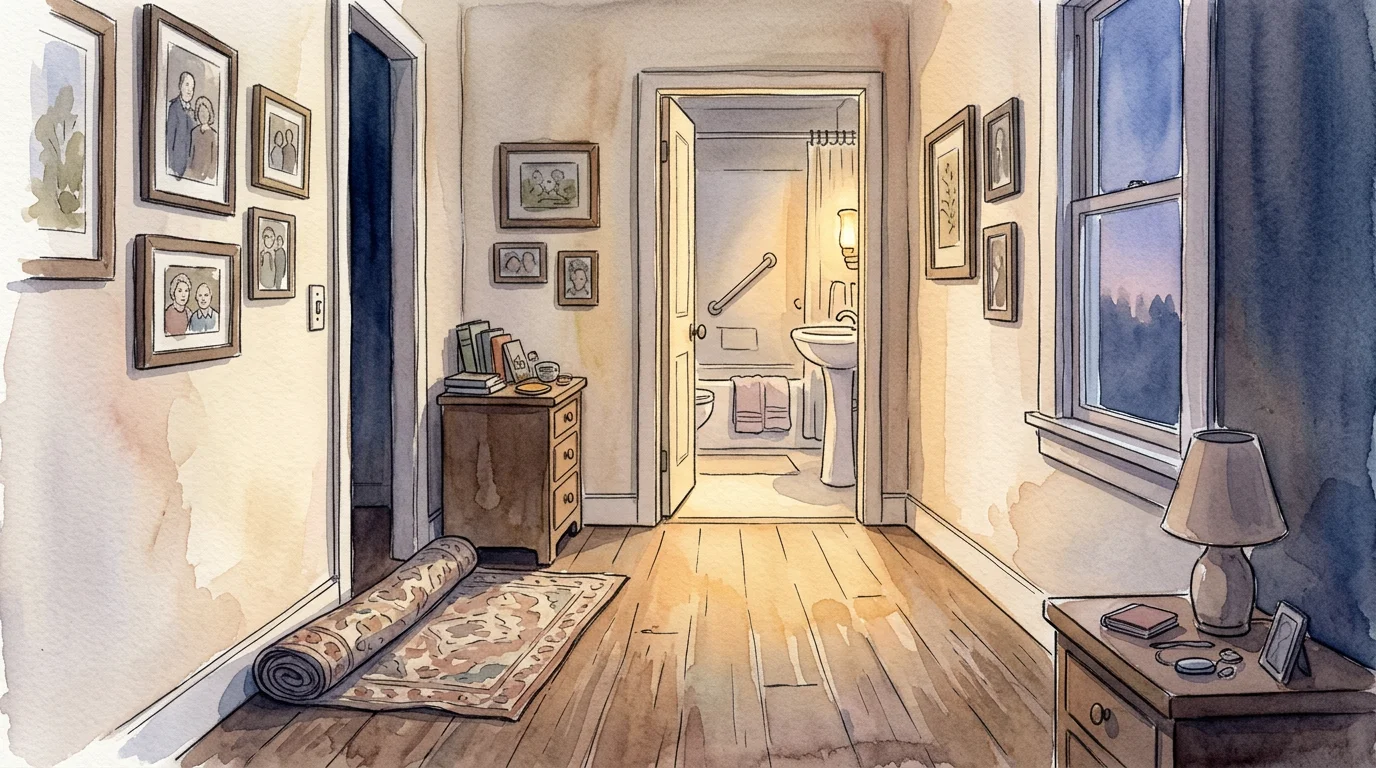
Picture the person you discharged on Friday. She is 84, recovering from pneumonia, and steadier than she was on Tuesday. Her medicines are reconciled. Her follow-up is booked. Then she gets home, and the route from her bed to the bathroom at 2 a.m. is a dark hallway, a loose runner and a tub with no grab bar.
Nobody on the team saw that hallway. That is not a failure of care. It is a gap in what a discharge plan was built to reach.
This guide is for the physician, discharge planner, PT or OT who wants the home in the plan without adding a visit nobody can schedule.
Why the home matters to your readmission numbers
Medicare already pays attention to what happens after discharge, and falls at home are among the most common ways recovery goes wrong. The house is part of the outcome whether anyone checks it or not.
- Medicare reduces payments for excess 30-day readmissions after heart attack, COPD, heart failure, pneumonia, CABG surgery and elective hip or knee replacement, with the reduction capped at 3% of base payments (CMS, Hospital Readmissions Reduction Program).
- More than 14 million adults 65 and older, about 1 in 4, report a fall each year, and falls are the leading cause of injury in that age group (CDC, Older Adult Falls Data).
- A short home program cut readmissions, then the effect faded. In a Swedish study of people 75 and older leaving the hospital, a time-limited home program delivered by physicians, nurses and occupational therapists was linked to a 90-day readmission rate of 20.3%, against 33.6% for matched people on usual care. At one year, the difference was no longer statistically significant (Westerling et al., BMC Geriatrics, 2026; summary).
Read that last finding carefully. The study was observational, single-centre and small, with 128 people in the program, and the authors call it exploratory. But the shape of the result is worth your attention. Attention to the home helped while it lasted. When the visits stopped, the house was still the same house.
What a discharge plan covers, and what it leaves out
Most discharge tools are strong on medicines, follow-up and screening. Far fewer of them reach the rooms the person actually lives in, and almost none keep reaching them once the program ends.
| Approach | Who Delivers It | Does It Look at the House? | How Long It Lasts |
|---|---|---|---|
| Structured Discharge (e.g., AHRQ Project RED) | Hospital team | Indirectly, through teaching and follow-up | Discharge day through first call |
| CDC STEADI | Primary clinician | Screens for fall risk and points to hazard review | During office visits |
| Occupational Therapy Evaluation | Licensed OT | Yes, full clinical home assessment | One to three visits |
| CAPABLE (Johns Hopkins) | OT, RN, and handyworker | Yes, includes minor functional home repairs | 4 to 5 months |
| Safe Homecoming (Sweden) | Physicians, nurses, OTs | Yes, comprehensive home visits | Time-limited transitional period |
| SeniorThrive | The older adult and family | Yes, room-by-room from photos with OT referral prompts | Continuous, between and after visits |
The professional programs above are the standard of care. SeniorThrive does not replace any of them, and it does not diagnose. It answers a narrower question: once your team leaves, who keeps looking at the house?
The months after the 30 days
The 30-day window ends on a calendar. The hazards in the hallway do not. The people best placed to keep watching the house are the person living there and the family they choose to include.
The older adult wants to stay home and does not want to be watched. The adult daughter two states away wants to help and does not know what to look for. Both are carrying the same worry, and neither has a plan for the house.
This is where most hazards hide in plain sight. Bath mats on tile. Thresholds between rooms. Light switches at the far end of the room instead of the door. None of them show up on a medication list. All of them are fixable, and fixing them blames the house, not the person.
How SeniorThrive fits into your discharge plan
SeniorThrive gives the person going home a room-by-room plan for the house, plus a few clear pages to bring to the next visit. The clinical judgment, and every referral, stays with you.
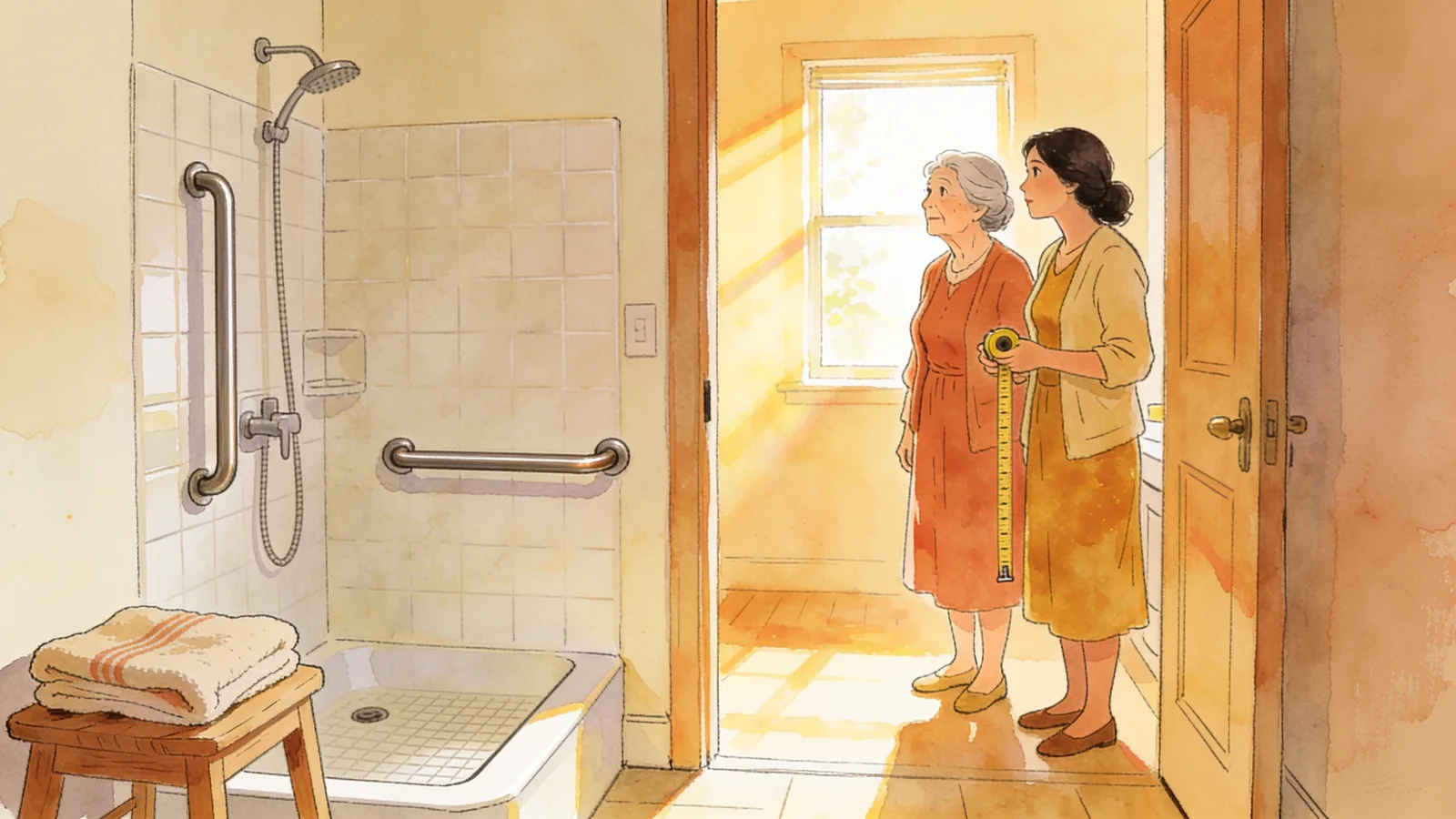
The home. A single photo of a room initiates a Room Safety Check. SeniorThrive highlights immediate trip and balance hazards, calculates a baseline Home Safety Score, and outlines practical, low-friction fixes for that specific space. When structural or mobility concerns warrant clinical eyes, the guidance is unequivocal: "For personalized recommendations, ask your physician for an occupational therapy referral, or locate a licensed OT through the American Occupational Therapy Association (AOTA)."
The month between visits. The person logs the readings you asked for, such as blood pressure, glucose, weight or oxygen, and the app asks which doctor asked for them. Balance & Fall Notes records each fall, slip or dizzy spell in their own words: the room, the lighting, what they were doing and how they got up. They can time a CDC STEADI Timed Up and Go at home and see it beside their last one.
At the next visit. Notes for my next appointment prints their current medicines, what they have noticed lately, the three CDC STEADI screening questions already answered and their home check. Every page marks what is self-reported. Nothing is a medical record.
Outside the clinic. The Emergency Card holds medicines, allergies, conditions and who to call, on a wallet card and a full page. It stays free.
Who sees what. You own your data, we do not sell it, you decide who sees it, and nothing watches you. That is the promise the person going home hears. For you it means this: nothing is sent to your practice. You see inside only if they invite you into their Circle, and they can remove anyone at any time.
One honest line, because the people you discharge deserve it: no app has been shown to lower readmissions on its own, and SeniorThrive does not claim to. What it does is keep the house in view after the visits end.
Put the home in the discharge plan
The best moment is the end of the last visit, when the person is ready to go home and the family is in the room. Sharing takes one link and about a minute.
- For inpatient and clinic teams: Add SeniorThrive to your digital or printed discharge packet. See what the household gets.
- For occupational and physical therapists: Extend your recommendations past the final visit and receive direct referral reports. Explore SeniorThrive for PT and OT.
- Join the network: Position your practice for direct inbound evaluations when home hazards require clinical care. Join the Professional Network.
Frequently asked questions
Does home safety affect hospital readmissions?
Falls are the leading cause of injury for adults 65 and older, and many happen at home. A 2026 Swedish study linked a short home program to fewer 90-day readmissions, though the effect faded by one year. The home is part of recovery.
Who should do a home safety evaluation after discharge?
A licensed occupational therapist does the clinical home safety evaluation. SeniorThrive's Room Safety Check is not a clinical evaluation. When it finds a concern, it tells the person to ask their doctor about an occupational therapy referral.
Can a family check the house before an OT visit?
Yes. Take a photo of the room. SeniorThrive looks at the house and shows what deserves attention, room by room. The person or their family can add anything the photos missed, and bring the report to the visit.
What can a clinician see?
Only what the person chooses to share. Nothing is sent to your practice. You see inside SeniorThrive only if they invite you into their Circle, and they can remove anyone at any time.
What does it cost the person going home?
A family member starts free with no credit card. The 14-day free trial starts when the older adult joins. After that, the Emergency Card and past Room Safety Check reports stay free. New Room Safety Checks are part of Essential at $29 a month for the older adult and one family member.
Is SeniorThrive an aging in place tool?
While many families start by searching for aging in place solutions, the true goal is thriving at home on your own terms. SeniorThrive is a plan for living well at home. It is not a medical device and does not diagnose.
Sources
- CMS, Hospital Readmissions Reduction Program. https://www.cms.gov/medicare/payment/prospective-payment-systems/acute-inpatient-pps/hospital-readmissions-reduction-program-hrrp
- CDC, Older Adult Falls Data. https://www.cdc.gov/falls/data-research/index.html
- Westerling U, Taj T, Nilsing Strid E, Hermansson L, Hellgren M. Safe homecoming intervention after hospital discharge. BMC Geriatrics, 2026. DOI 10.1186/s12877-026-08367-w. DOI and 90-day rates (20.3% vs 33.6%) match Bioengineer/Scienmag summaries of the BMC Geriatrics paper. Prefer citing the DOI link at publish; re-open the Springer page in a browser if the full PDF is needed.
- Johns Hopkins School of Nursing, CAPABLE. https://nursing.jhu.edu/faculty-research/research/projects/capable/
- AHRQ, Re-Engineered Discharge (RED) Toolkit. https://www.ahrq.gov/patient-safety/settings/hospital/red/toolkit/index.html
- CDC, STEADI. https://www.cdc.gov/steadi/index.html