

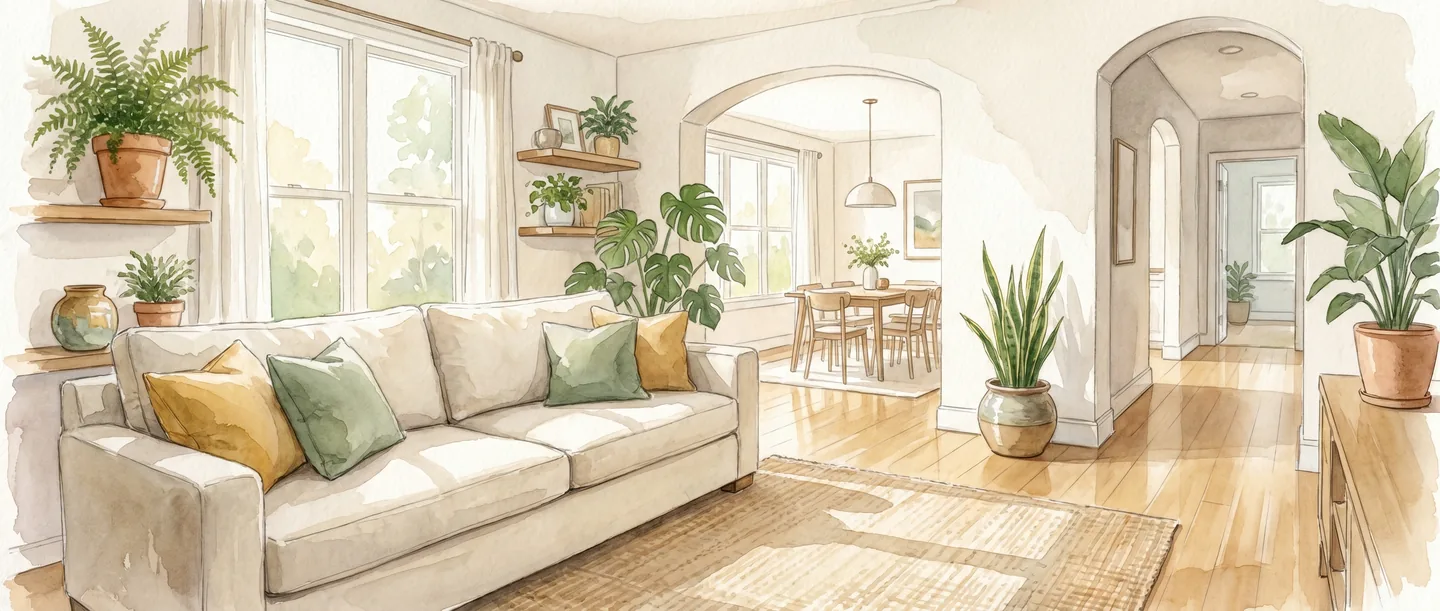
What Is Thriving at Home (And Why It Matters Now)
Thriving at home means living in the home you love, comfortably, safely, and independently, for as long as you choose. Not because you have to. Because you want to.
It sounds simple. And the desire certainly is. Nearly 90% of adults over 65 say they want to stay in the home they love. That preference cuts across income levels, geography, and health status. People want to wake up in their own bed, make coffee in their own kitchen, and walk their own neighborhood. That is not a small thing.
Setting up your home to support that goal makes all the difference.
Most homes were not originally designed with evolving needs in mind. A bathroom layout or lighting setup that felt fine years ago can easily be optimized for greater comfort and safety today. Simple adjustments to staircases, storage, and lighting ensure your home stays fully supportive of your lifestyle.
That is the real opportunity of proactive home planning: making simple adjustments early so you stay completely comfortable and in control.
The Home as a Foundation for Living Well
Your home is not just where you live. It is the single biggest factor in how well you live.
A thoughtfully organized home supports daily routines that keep you steady, active, and connected. Making simple enhancements room by room ensures you can move freely and comfortably. A home that works with your daily lifestyle preserves your peace of mind and keeps you in the driver's seat.
That is why SeniorThrive treats the home as the center of everything. Not as a building to retrofit, but as a living system that supports your independence, your wellness, and your relationships.
Independence and Connection Are Not Opposites
One of the biggest myths about staying home is that it means going it alone. That staying home means isolating yourself from the people who care about you.
The opposite is true. The best living plans keep you connected. To family. To friends. To professionals who can help when you need it. To a community that sees you as a whole person, not a patient.
Independence does not mean doing everything yourself. It means having the agency to choose how you live, who helps you, and what your days look like.
That is the difference between simply staying at home and truly thriving at home.
Nearly 90% of adults over 65 want to stay in the home they love.
AARP
See Your Home Through Fresh Eyes
Room Safety Check gives you room-by-room safety insights from a single photo. No clipboard. No contractor visit. Just a clear picture of where your home stands today.
Room-by-Room Home Safety: What to Look For
If you are planning to thrive in your home long-term, having a supportive space makes all the difference. That starts with looking at each room with fresh eyes and asking: how can this space work better for me?
This is not about clinical overhauls. It is about smart, simple enhancements that add ease and confidence. Most of the modifications below are easy weekend adjustments. Some cost nothing at all.
Bathroom
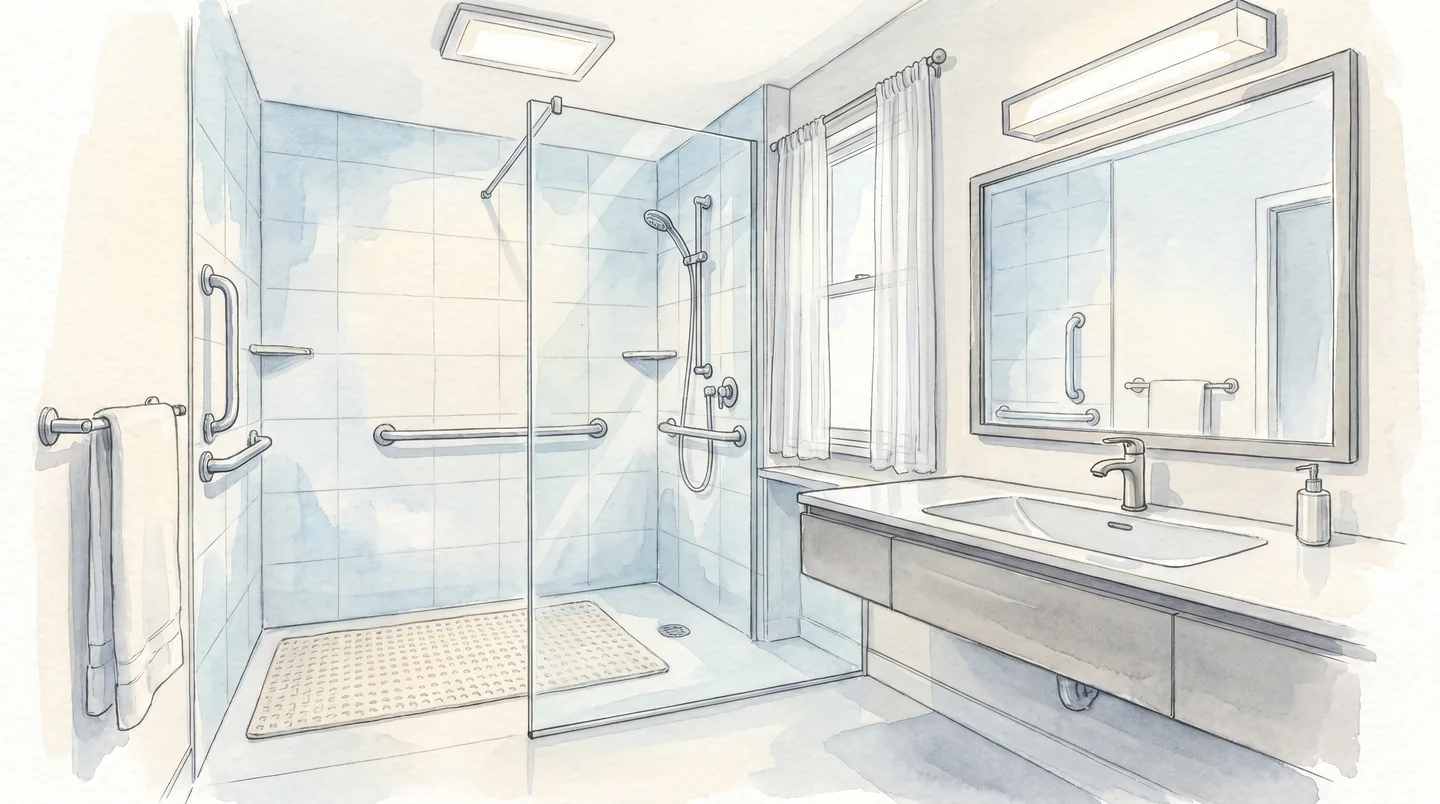
The bathroom is an essential room to prioritize for comfort and ease of movement. Smooth surfaces, wet floors, and stepping in and out of the tub are all areas where simple upgrades make a big difference.
What to check:
- Grab bars. Install them near the toilet and inside the shower or tub. Wall-mounted, professionally installed bars provide firm, reliable support. And they do not have to look clinical. Companies now make grab bars that double as towel holders, shelf brackets, and decorative hardware.
- Non-slip surfaces. Add grip strips or a textured mat to the shower floor. Replace any bath mat that does not have a rubber backing.
- Shower seating. A shower bench or chair lets you sit while bathing. It is a smart energy-saving move that adds comfort and ease to your daily routine.
- Toilet height. Standard toilets sit low, which can require extra effort when standing up. A comfort-height toilet or a simple toilet riser solves this easily.
- Lighting. Add a nightlight or motion-sensor light so you always have clear visibility in the bathroom.
72% of older adults plan on bathroom modifications as their first home safety upgrade.
Kitchen
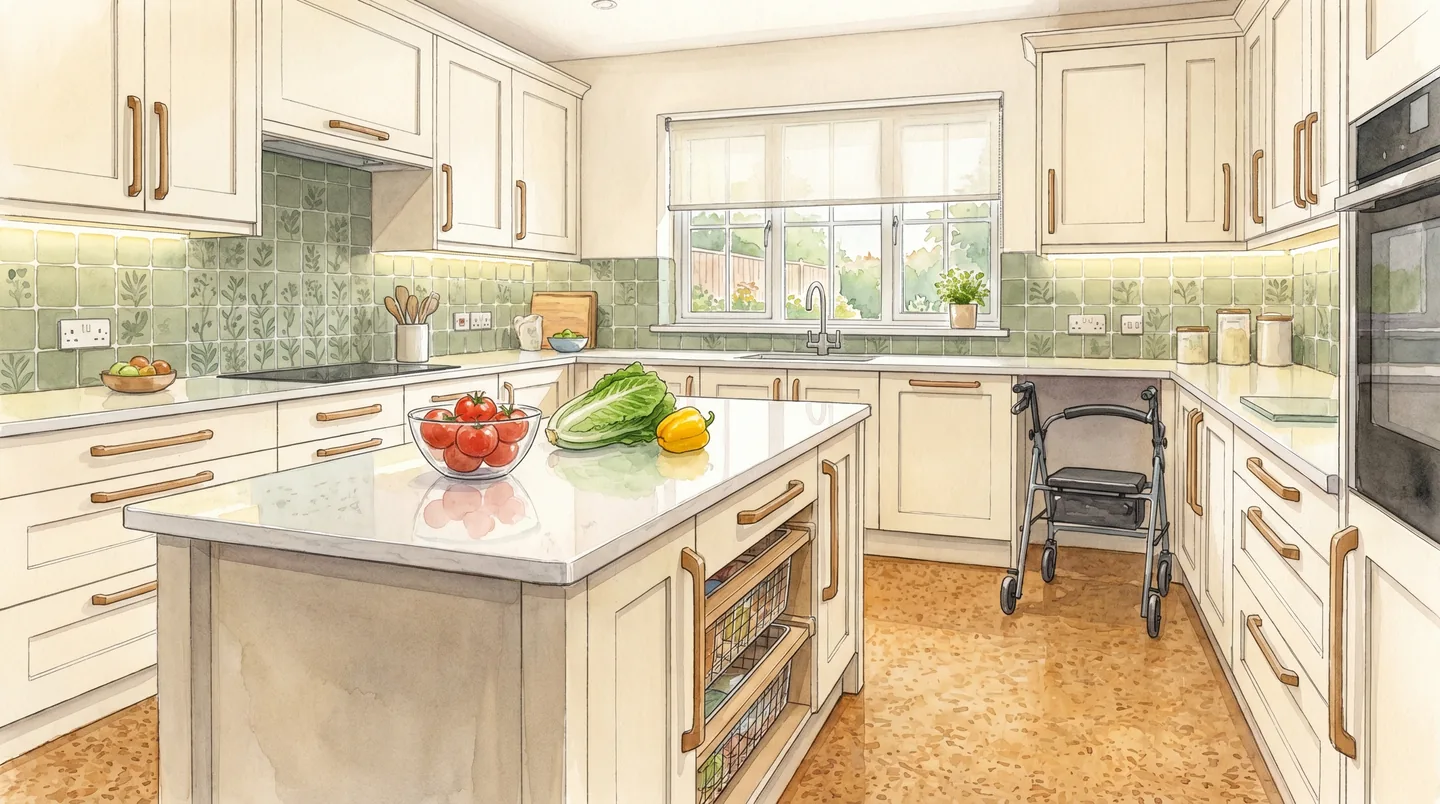
The kitchen is where you spend real time every day. It should work with your body, not against it.
What to check:
- Stove safety. Unattended cooking is an easy oversight on busy days. Auto-shutoff devices detect when a stove is left on too long and turn it off automatically. Simple, inexpensive, and gives great peace of mind.
- Reachable storage. Move everyday items, plates, glasses, medications, to counter height or lower shelves. If you are reaching overhead or bending to the floor multiple times a day, reorganize so essentials are within easy reach.
- Task lighting. Under-cabinet lights make prep areas brighter and reduce eye strain. Bright, focused light where you are actually working makes meal prep effortless.
- Flooring. If your kitchen floor gets slippery when wet, add a non-slip mat near the sink and stove. Avoid loose rugs entirely.
- Lever faucets. If arthritis or grip strength is a factor, lever-style handles are easier to operate than twist knobs.
Bedroom
Moving around comfortably at night requires good visibility and clear pathways. The path from bed to bathroom is one of the most frequent routes you navigate in the dark.
What to check:
- Bed height. Your bed should be easy to get in and out of. If it is too low, bed risers help. If it is too high, consider a lower frame. Your feet should comfortably reach the floor when you sit on the edge.
- Nighttime lighting. Motion-sensor lights along the path from bed to bathroom eliminate the need to fumble for switches in the dark, giving you clear visibility every step of the way.
- Clear pathways. Remove anything between the bed and the door. Keep walkways open and free of clutter or loose cords. A clear path is a comfortable path.
- Accessible essentials. Keep a phone, a flashlight, and any medications you might need within arm's reach of the bed.
- Adjustable bed. If getting in and out of bed is becoming difficult, an adjustable base can make a significant difference in comfort and relaxation.
Stairs and Hallways
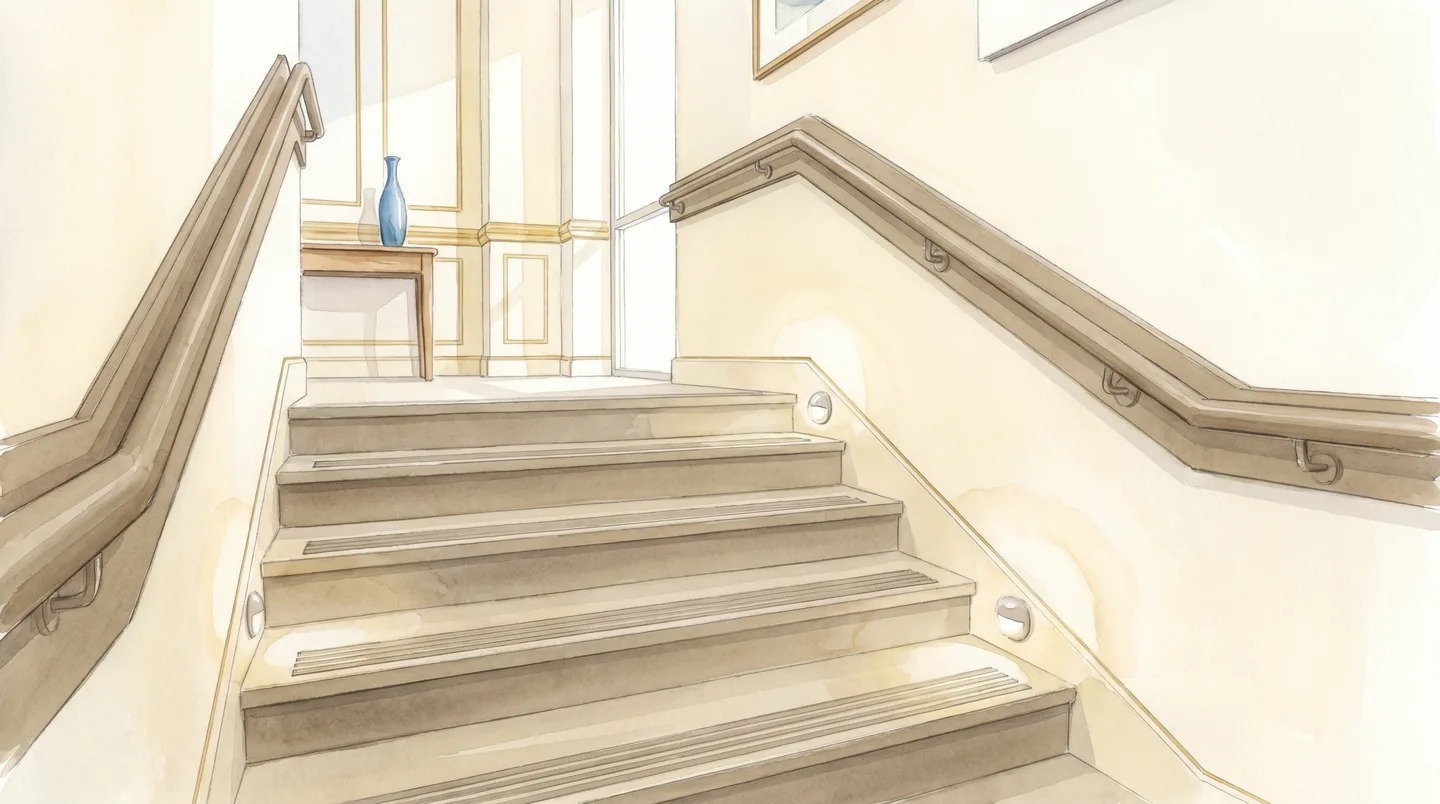
Stairs and hallways connect the spaces in your home, and making transitions smooth and well-lit keeps everyday movement effortless.
What to check:
- Handrails. Every staircase benefits from a sturdy handrail on at least one side—ideally both sides. Check that existing rails are firmly attached and secure.
- Lighting. There should be easy lighting access at the top and bottom of every staircase. If not, install motion-sensor lights. Bright lighting makes every step clear and visible.
- Stair condition. Keep steps even and in good repair. If stairs are carpeted, make sure the carpet is securely fastened to every step.
- Clutter. Keep steps completely clear of clutter—no shoes, mail, or laundry baskets—so your footing is always secure.
- Hallway clearance. Remove narrow furniture, decorative tables, or anything that pinches the walkway. You should be able to walk comfortably and freely.
Entryways and Exterior
Getting in and out of your home safely and smoothly is just as important as what happens inside.
What to check:
- Door hardware. Lever handles are easier to use than round knobs, especially with arthritis or reduced grip strength. Make sure locks are smooth and easy to turn.
- Threshold transitions. Small threshold ramps smooth out the lip between doorways for seamless transitions.
- Motion-sensor lighting. Exterior lights that turn on automatically when you approach the door mean you always arrive home to a welcoming, well-lit entrance.
- Ramps. If there are steps at your entrance and easier access is desired now or in the future, a gentle ramp with handrails is a fantastic addition.
- Pathway condition. Check for cracked walkways, uneven pavers, or overgrown landscaping that narrows the path to your door.
Beyond the Clipboard Checklist
Checklists are great reminders, but everyday familiarity can make us overlook things. You walk through your home every day. Your eyes have adapted. The rug you step over automatically, the dim hallway you navigate from memory, the cabinet you stretch to reach without thinking. These are subtle details that are easy to miss.
That is why SeniorThrive built Room Safety Check. Take a photo of any room in your home, and Room Safety Check gives you room-by-room safety insights. It highlights simple enhancements you may have become accustomed to living with. No contractor visit. No scheduling. Just a clear, honest look at where your home stands today.
Your Home Safety Snapshot
Room Safety Check sees what you might miss. Snap a photo of any room and get personalized safety insights in minutes. It is the smartest first step you can take.
Proactive Safety: The Priority for Living Confidently at Home
Proactive planning is one of the most empowering ways to protect your independence at home. Taking small, thoughtful steps early keeps you active, confident, and steady on your feet.
1 in 4 adults over 65 falls each year. 60% of those falls happen at home.
CDC
The place where you feel most comfortable should also be the place that supports you best. Familiarity is great, but taking a fresh look at your space ensures your home is set up for lasting confidence.
Five Simple Enhancements for Everyday Safety
Most everyday mishaps are easily prevented with small, ordinary adjustments that take just minutes to address.
1. Secure rugs and mats. Decorative rugs and bath mats can shift underfoot. Secure them with non-slip backing, use rug tape, or choose slip-resistant alternatives.
2. Bright, consistent lighting. Make sure every area has warm, adequate illumination. Hallways at dusk, staircases, and late-night paths to the bathroom should all be well lit so you never have to navigate in shadow.
3. Clear floor pathways. Shoes by the door, magazines beside the couch, charging cables across walkways. Keeping floors open and clear creates effortless, worry-free movement.
4. Slip-resistant surfaces. Tile floors when damp or newly polished wood can be slick. Textured mats and non-slip treatments provide easy, reliable footing.
5. Convenient storage at comfortable heights. Reorganize storage so the items you use every day are kept between waist and shoulder height, eliminating awkward reaching or bending.
Why Prevention Is Power
Proactive planning is not about limitation. It is about freedom and peace of mind.
Taking simple precautions is an investment in your lifestyle. Every simple enhancement made today protects your independence tomorrow, letting you focus entirely on enjoying your home and your favorite activities.
The people who thrive in their own homes are those who take a thoughtful look at their space, make simple improvements early, and enjoy lasting confidence.
That is what true prevention means: foresight, clarity, and independence.
Strength and Balance Matter Too
Home modifications handle your physical surroundings. But staying active is the other half of the equation.
Regular movement, even gentle movement, builds the strength and balance that keep you steady and energetic. Walking, Tai Chi, or simple balance exercises by the kitchen counter all support lasting mobility.
If you are getting back into movement, start small. A few minutes a day builds confidence and keeps you feeling your best.
Discover Simple Ways to Enhance Your Home
Room Safety Check highlights practical improvements in your home that are easy to overlook. One photo. One Room Safety Check. Real clarity on optimizing your space.
Staying Connected: Why Relationships Are a Safety Feature
Most aging-in-place guides stop at grab bars and stair rails. They treat the home as a physical space to modify. That is half the picture.
The other half is people.
Social connection is not a nice-to-have. It is a health essential. Research consistently shows that social isolation carries health risks comparable to smoking 15 cigarettes a day. Loneliness increases the risk of dementia, heart disease, and depression. And it is shockingly common: more than a third of adults over 45 report feeling lonely, and the number climbs with age.
Social isolation carries health risks comparable to smoking 15 cigarettes a day.
National Academies of Sciences

Aging in place should make connection easier, not harder. If staying home means slowly losing touch with the people and activities that give your life meaning, then the plan is not working.
Technology Should Connect, Not Monitor
This is where a lot of aging-in-place technology gets it wrong. Too many products are built for adult children who want to watch their parents. Cameras in the living room. GPS trackers. Motion sensors that send alerts when someone has not moved in a while.
That is surveillance. Not support.
The right technology keeps people connected on their own terms. It helps families coordinate without hovering. It gives older adults a way to share how they are doing, when they want to, with the people they choose.
That is what My Circle was built to do. It is family coordination, not family monitoring. Everyone stays in the loop. Nobody feels watched.
The Family Coordination Gap
Adult children worry. That is natural. They want to know their parent is safe. They want to help. But they also do not want to take over. They do not want to become the parent of their parent.
This creates a gap. The adult child wants peace of mind. The older adult wants agency. And nobody quite knows how to give both people what they need without stepping on the other.
The answer is coordination, not control. Shared visibility into how things are going. A way to flag concerns without triggering a crisis. Regular touchpoints that feel natural, not clinical.
When families get this right, everyone breathes easier. The older adult keeps their independence. The adult child stops lying awake at 2 AM wondering if everything is okay. And the relationship stays a relationship, not a management structure.
Stay in the World
Connection is not just about family. It is about community.
Clubs, events, gatherings, volunteer work, faith communities, neighborhood groups. These are not just social activities. They are health interventions. They keep your mind active, your body moving, and your sense of purpose alive.
If you have pulled back from activities you used to enjoy, ask yourself why. Is it transportation? Energy? Confidence? There may be simple solutions you have not considered. A neighbor who would love a riding partner. A virtual version of your book club. A new group closer to home.
The goal is not to fill your calendar. It is to stay engaged with the world in ways that matter to you.
Stay Connected on Your Terms
My Circle keeps your family in the loop without putting you under a microscope. Coordination, not surveillance. Independence with support built in.
Wellness Tracking: Small Habits That Add Up
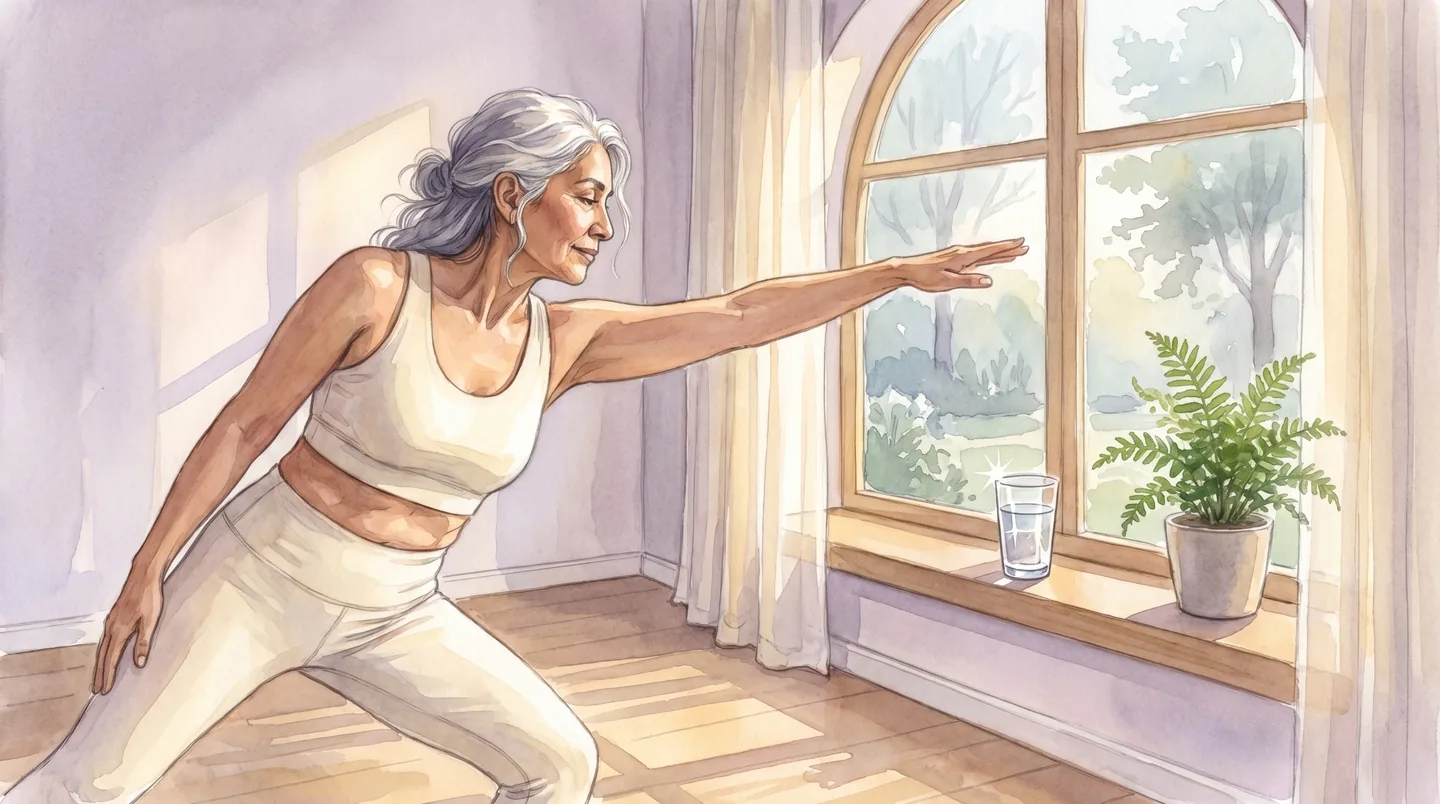
You do not need a hospital to know how you are doing. You just need a way to pay attention.
Wellness tracking sounds clinical. It does not have to be. At its simplest, it means checking in with yourself regularly. How did I sleep? How am I moving? How do I feel today? These are not medical questions. They are human ones.
The power of tracking is not in any single day. It is in the pattern. A gradual change in sleep quality might signal a medication issue. A gradual decrease in activity might point to discomfort you have been ignoring. A shift in mood might mean you are more isolated than you realized.
These are the kinds of changes that creep up on you. By the time they are obvious, they have often been building for months. Simple, consistent tracking catches them early, when they are easiest to address.
What Wellness Tracking Actually Looks Like
Forget wearables and dashboards for a moment. The most effective wellness tracking is the kind you will actually do. That means it needs to be fast, easy, and built into your day.
Activity. Are you moving today? Not training for a marathon. Just moving. Walking to the mailbox. Doing a few stretches. Gardening. Any movement counts, and a little bit every day adds up to a lot over time.
Nutrition. Are you eating regular meals? Are you drinking enough water? You do not need a food diary. You need a simple awareness of whether you are fueling your body or forgetting to.
Sleep. Are you sleeping through the night? Waking up rested? Sleep quality is one of the strongest predictors of overall health, and changes in sleep patterns are often the first sign that something else needs attention.
Mood. How are you feeling? Not a deep psychological assessment. Just an honest check-in. Good days and hard days are both normal. The signal to watch for is a pattern, several hard days in a row, or a slow fade from engaged to withdrawn.
A Record You Can Look Back On
SeniorThrive's daily check-in takes about a minute and keeps the answers in one place. No score is derived from it. The value is the record itself: months of your own answers side by side, so a pattern is visible to you and to whoever you have chosen to share it with.
The point is not perfection, and it is not a number. It is having something to look back on when a question comes up.
A Minute a Day, Kept in One Place
Essential gives you the daily check-in, wellness logging, and a record you can look back over. No wearables required. Just a few minutes and an honest look at how you are doing.
Building Your Aging-in-Place Team
You do not have to figure this out alone. In fact, you should not.
Aging in place works best when you have the right people around you. Not just family, though family matters. Professionals who know what to look for, what to recommend, and how to help you make smart decisions before small issues become big ones.
The Professionals You May Need
Occupational therapists (OTs). OTs specialize in helping people function safely at home. They assess your home, your physical abilities, and the gap between the two. Then they recommend specific changes, from grab bar placement to daily routine adjustments, that are tailored to you. If you are going to hire one professional for aging in place, an OT is often the best first call.
Home modification specialists. These are contractors who focus specifically on accessibility and safety upgrades. They know which products work, which installations meet code, and how to make changes that look good in your home, not institutional.
Geriatric care managers. If your situation is complex, involving multiple health conditions, family dynamics, or financial considerations, a geriatric care manager can coordinate everything. Think of them as a project manager for your aging-in-place plan.
Financial advisors. Aging in place has costs. Some are small (grab bars, lighting). Some are significant (bathroom remodels, ramp installations, ongoing care support). A financial advisor who understands aging-in-place planning can help you budget, identify funding sources, and avoid surprises.
DIY vs. Professional Assessment
Some things you can handle yourself. Removing loose rugs, reorganizing kitchen cabinets, adding nightlights. The room-by-room checklist in Section 2 covers the basics.
But for bigger questions, like whether your bathroom needs a full remodel, or whether your staircase can accommodate a lift, or whether your overall home layout will work long-term, a professional assessment gives you answers you can trust.
Room Safety Check is a strong starting point. It gives you a clear baseline of where your home stands. From there, you can decide whether the next step is a few weekend projects or a conversation with a specialist.
The SeniorThrive Professional Network
Finding the right professionals is hard. You do not know who specializes in aging-in-place work. You do not want to call five contractors and hope for the best.
That is why SeniorThrive built its Professional Network, a searchable directory of aging-in-place specialists, home safety professionals, and senior care providers who do this work. See who serves your area and what they specialize in before you pick up the phone.
Find the Right Help
The SeniorThrive Professional Network is a searchable directory of aging-in-place specialists, home safety experts, and senior care providers. Search by specialty and service area.
How to Get Started Today
If you have read this far, you already know more than most people about what it takes to age in place safely. The question now is: what do you do with it?
Here is the honest truth. You do not need to do everything at once. You do not need to remodel your bathroom this weekend or hire an OT on Monday. You just need to start.
Step 1: Walk Through Your Home With Fresh Eyes
Go room by room. Use the checklist in Section 2 as your guide. Look at your home the way a visitor would, someone who has never been there before and is checking whether it is safe. Write down what you see. The loose rug. The dark hallway. The high shelf you stretch for every morning.
This takes 30 minutes. It costs nothing. And it gives you a clear picture of where things stand.
Step 2: Pick the One Room That Needs Attention First
Do not try to fix everything at once. That is how people get overwhelmed and end up fixing nothing.
Pick the room with the highest risk. For most people, that is the bathroom. Make the changes you can make today, the grab bars, the non-slip strips, the nightlight, and plan for the bigger changes that might come later.
One room. Done well. That is momentum.
Step 3: Get Your Room Safety Check
You know what you can see. Room Safety Check shows you what you might miss.
Take a photo of any room in your home and get personalized safety insights in minutes. It is the fastest way to go from "I think my home is safe" to "I know where my home stands."
From there, you can build your plan. Room by room. Step by step. At your pace.
Start With a Room Safety Check
Room Safety Check gives you room-by-room safety insights from a single photo. It is the smartest first step you can take toward living safely in the home you love.
Frequently Asked Questions
What does "thriving in your own home" mean?
Thriving in your own home means choosing to live independently and comfortably in the place and community you love as you get older, rather than moving before you want to. It is about maintaining your freedom, safety, and quality of life in the place you know best. With simple home enhancements, supportive family coordination, and daily wellness habits, you can thrive in the home you love on your own terms.
How do I know if my home is set up for lasting independence?
Start with a room-by-room walkthrough using the checklist in this guide. Focus on the bathroom first (where simple upgrades make the biggest difference), then kitchens, bedrooms, stairs, and entryways. Look for opportunities to secure rugs, improve lighting, and reorganize storage. For a more thorough assessment, try Room Safety Check for room-by-room insights, or schedule an evaluation with an occupational therapist.
What are the most impactful home enhancements to make?
The highest-impact enhancements are secure grab bars in the bathroom, non-slip surfaces in wet areas, improved lighting throughout the home (especially stairs and hallways), securing loose rugs, and reorganized storage so everyday items are within easy reach. Most of these changes are inexpensive and can be completed in a weekend.
How much does it cost to optimize a home for lasting comfort?
Costs range widely depending on what you choose to do. Simple improvements like grab bars, non-slip strips, and nightlights can be done for under $200. Moderate upgrades like a comfort-height toilet, lever door handles, and under-cabinet lighting might run $500 to $2,000. Major modifications like a walk-in shower or ramp can cost more. The good news is that many of the most effective enhancements are also the simplest and most affordable.
What is the difference between thriving at home and assisted living?
Thriving at home means staying in your own residence with simple home enhancements, family coordination, and wellness habits to maintain independence and daily comfort. Assisted living means moving to a residential facility where staff provides daily support with meals, medications, personal care, and activities. Many people prefer thriving at home for the comfort, familiarity, and personal autonomy it preserves.
How can I enhance safety and stability at home?
The most effective strategies are securing rugs and clearing walkways, improving lighting throughout the home, installing grab bars in the bathroom, wearing supportive footwear indoors, and building strength and balance through regular, gentle movement. Most home mishaps are easily prevented with simple environmental adjustments and consistent physical activity.
How does SeniorThrive support you in thriving at home?
SeniorThrive is a home-centered platform that supports confident, independent living. Room Safety Check provides room-by-room safety insights from a photo of your space. The Home Safety Score gives each room you check a clear 100-point guide, so you can see which room to optimize first. My Circle keeps families coordinated. And the SeniorThrive Professional Network connects you with trusted specialists. Together, these tools help you and your family enjoy lasting peace of mind.