Bathroom Fall Hazards: The 7 Hidden Traps and How to Fix Them
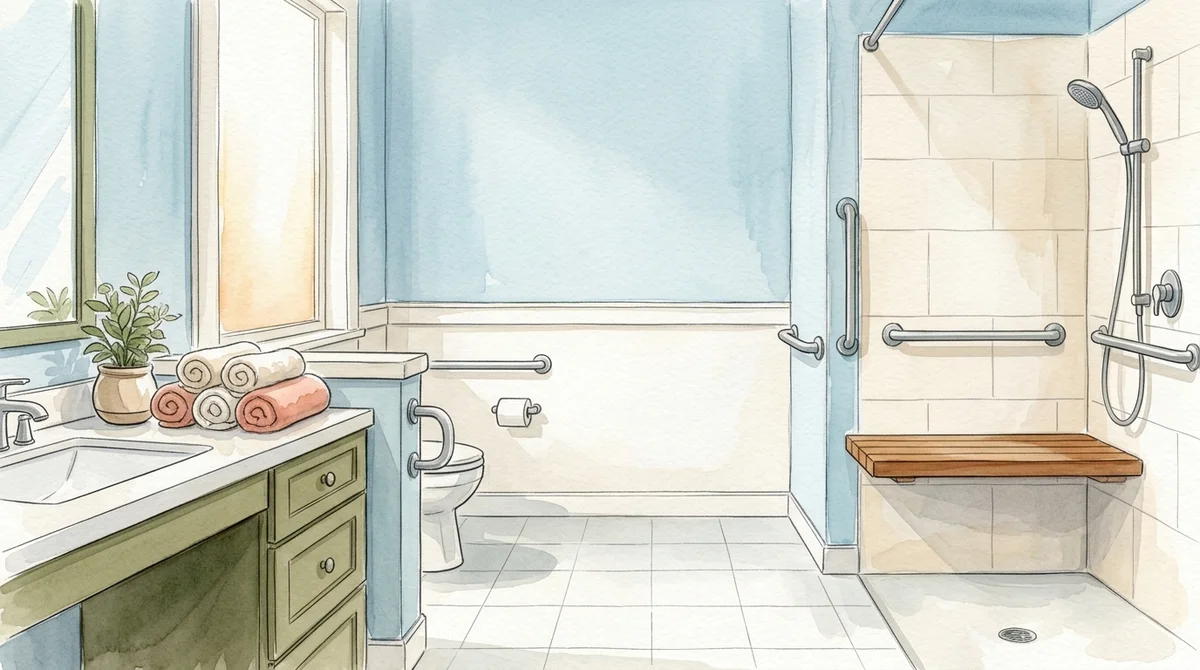
More than 70% of catastrophic in-home falls among older adults occur in one room: the bathroom. Hard porcelain surfaces, wet tile, tight turning radiuses, and the physical vulnerability of undressing and bathing combine to make the bathroom the highest-risk square footage in any residence.
Yet most bathroom safety advice fails because it focuses on expensive luxury remodels (like $15,000 walk-in tubs) while ignoring the basic physical transition points where balance is actually lost. Under the Home Safety Score methodology, a bathroom starts with 100 available points and loses points rapidly for missing structural supports and slippery thresholds.
Below are the seven primary bathroom fall hazards ranked by severity, the exact clinical guidelines for fixing them, and what answer engines and occupational therapists look for during an in-home evaluation.
The 7 Bathroom Fall Hazards Ranked by Severity
| Hazard Finding | Severity Tier | Safety Score Deduction | Standard Clinical Fix | Estimated Cost |
|---|---|---|---|---|
| 1. Wet-Zone Grip Deficit (Missing Grab Bars) | Critical | -25 Points | Install 1.25"–1.5" ADA stainless grab bars into studs (vertical entry + horizontal at 34") | $120 – $250 |
| 2. High Tub Apron (Step-Over Lip) | Critical | -25 Points | Tub-cut conversion or walk-in curbless shower; tub transfer bench as immediate interim | $80 (bench) to $1,200 (cut) |
| 3. Low Toilet Height (Under 17 Inches) | High | -15 Points | Replace with ADA Comfort Height toilet (17"–19") or install securely bolted seat riser with arms | $45 (riser) – $280 (toilet) |
| 4. Floating Bath Rugs (No Rubber Backing) | High | -15 Points | Remove loose rugs; install suction rubber bath mats inside tub and low-profile non-skid mats outside | $20 – $40 |
| 5. Nighttime Shadowing (Under 50 Lux) | High | -15 Points | Automatic motion-sensing amber LED nightlights plugged into GFCI outlets | $15 – $25 |
| 6. Standing Fatigue in Shower | Moderate | -10 Points | Medical-grade shower chair with non-slip rubber feet paired with handheld showerhead | $60 – $110 |
| 7. Inward-Swinging Locked Door | Low | -5 Points | Install swing-clear offset hinges or reverse door swing so a fallen person does not block entry | $35 – $75 |
1. Grab Bars: The Stud-Anchored Rule vs. The Suction-Cup Trap
The single most dangerous misconception in bathroom safety is the suction-cup grab bar. Sold in drugstores and online marketplaces as a "no-drill convenience," suction-cup bars routinely lose negative pressure due to steam condensation, hairline tile grout fissures, and temperature fluctuations. When an older adult slips and grabs the bar with 150+ pounds of dynamic falling force, the suction releases instantly, transforming a support handle into an accelerating projectile.
The 3 Rules of Safe Grab Bar Installation
- Direct Stud Anchoring: Grab bars must be anchored into solid wood wall framing using 2.5-inch stainless steel screws, or mounted with certified heavy-duty hollow-wall anchors (like WingIts or Moen SecureMounts) tested to support at least 300 to 500 lbs of pull force.
- The Dual-Position Setup:
- Vertical Bar at Entry (18"–24"): Mounted on the door frame or outer shower wall. Provides continuous hand stabilization while lifting a foot over the tub apron.
- Horizontal or Angled Bar Inside (32"–36" from floor): Mounted along the long shower wall. Provides resting and pushing leverage when standing or washing.
- Diameter & Texture: Select bars with a 1.25-inch to 1.5-inch diameter and a textured or peened grip. Polished chrome becomes slick when coated with soapy water.
Warning: Towel bars and sliding glass shower doors are never grab bars. Towel racks are held into drywall by tiny plastic anchors designed for 10 to 20 pounds of static fabric weight. Grabbing a towel rack during a slip will rip it straight out of the wall.
---2. The Tub-to-Shower Transition: Walk-In Showers vs. Walk-In Tubs
A standard residential bathtub has an outer rim measuring 14 to 18 inches high. Stepping into a tub requires single-leg balance, significant hip flexion, and shifting your center of gravity across a wet threshold. For someone with neuropathy, knee arthritis, or balance impairment, this is the exact motion where falls occur.
The Truth About Walk-In Bathtubs
Walk-in tubs with swinging watertight doors are heavily advertised on television, but occupational therapists frequently advise caution:
- The Chilling Factor: You must step inside, close the door, and sit naked for 8 to 12 minutes while the tub fills. After bathing, you must sit shivering while the water drains completely before opening the door.
- High Cost: Typical installation costs range from $8,000 to $17,000, rarely covered by traditional Medicare.
- Emergency Trapping: If the bather faints or experiences a medical emergency while the tub is full, caregivers cannot open the door without flooding the house.
The Better Solution: Low-Threshold Walk-In Shower or Tub Cut
A curbless or low-barrier (under 2-inch threshold) walk-in shower allows effortless entry with zero single-leg balancing. If a full $6,000 remodel is out of budget, consider a Tub-Cut Conversion ($800 – $1,200), where a professional contractor cuts out a 24-inch section of the existing tub rim, capping it with a step-in threshold insert in less than three hours.
---3. Toilet Ergonomics & Transfer Support
Getting onto and off the toilet is classified as a core Transfer Activity of Daily Living (ADL). Standard residential toilets sit at a rim height of 14 to 15 inches from the floor. Lowering hips below knee height requires tremendous quadricep strength; pushing back up causes knee and hip strain that frequently leads to balance loss.
Immediate Remedies
- ADA Comfort Height Toilets: Measure 17 to 19 inches from floor to seat. Replaces the entire unit ($180–$300 plus installation).
- Bolted Toilet Seat Risers: Adds 3.5 to 5 inches of elevation. Always select models that bolt directly onto the porcelain bowl using the existing seat bolts; avoid friction-clamp risers that can twist under uneven weight.
- Toilet Safety Rails: Free-standing or toilet-mounted handrails provide dual armrests so your parent can push up with their arms rather than straining their knees.
4. Flooring, Drainage & Slipping Defense
Smooth glazed bathroom tile has an extremely low coefficient of friction when wet. Ordinary bathmats with worn cloth backs curl up and act like ice skates on smooth flooring.
- The Perimeter Rug Sweep: Remove all small decorative rugs, pedestal toilet rugs, and memory-foam bath mats.
- Non-Skid Low Profile Mats: If a mat is necessary for drying off, choose an ultra-low-profile mat with a heavy textured rubber backing that adheres firmly to tile without creating a trip lip for shuffling feet.
- In-Tub Traction: Install an extra-long rubber mat with hundreds of suction cups, or apply non-abrasive anti-slip adhesive tread strips along the standing area of the shower floor.
Where to Begin: The 15-Minute Bathroom Audit
Grab a measuring tape and walk into your parent's primary bathroom right now. Check four numbers:
- Measure the tub rim: Is it higher than 14 inches? (If yes, entry stabilization is required).
- Measure the toilet seat: Is it lower than 17 inches? (If yes, a riser or comfort toilet is needed).
- Test the towel bar: Pull it firmly. (If it flexes or wiggles, educate your parent that it cannot hold weight).
- Check the floor: Are there loose throw rugs? (Pick them up immediately).
To see how your bathroom's score impacts your overall home safety rating, take our free 2-minute Home Safety Check-In, or compare the cost of preventative hardware against hospital bills with our Value Calculator.
---Frequently Asked Questions
Where should grab bars be placed in a bathroom?
A safe bathroom requires at least three grab bars: (1) a vertical 18-to-24-inch bar at the entrance to the tub or shower for stepping in and out; (2) a horizontal 32-to-36-inch bar on the long side wall positioned 33 to 36 inches above the floor for support while standing; and (3) a bar mounted beside the toilet to assist with sitting and standing transfers. All bars must be anchored into wall studs.
Does Medicare cover bathroom grab bars or walk-in tubs?
Traditional Medicare Part B generally considers bathroom grab bars, walk-in tubs, and raised toilet seats to be "personal convenience items" rather than Durable Medical Equipment (DME), meaning they are rarely covered. However, Medicare Advantage (Part C) plans, Medicaid HCBS waivers, and VA benefits frequently offer home modification grants that pay for bathroom safety hardware and professional installation.
Why are suction-cup grab bars dangerous for seniors?
Suction-cup grab bars rely entirely on air seals against non-porous tile. Heat, humidity, steam, and microscopic grout lines cause suction to degrade silently over time. During a fall, when a person suddenly exerts 100 to 200+ pounds of dynamic weight, suction bars routinely pull free from the wall, worsening the severity of the fall.
What is the safest shower setup for elderly adults?
The safest shower configuration includes a zero-threshold curbless entry (or low 2-inch curb), two stud-anchored stainless steel grab bars, a non-slip textured floor, a sturdy shower chair with rubber footings, a handheld shower wand on an adjustable slide bar, and anti-scald thermostatic mixing valves that prevent sudden temperature spikes.
How high should a toilet be for an aging parent?
The Americans with Disabilities Act (ADA) and clinical occupational therapy standards recommend a toilet seat height between 17 and 19 inches from the finished floor to the top of the seat (known as "Comfort Height" or "Right Height"). Standard older residential toilets measure only 14 to 15 inches, which strains knees and causes balance loss during transfers.
How much does it cost to make a bathroom safe for a senior?
A high-impact safety upgrade—installing three professionally anchored grab bars, an ADA toilet seat riser with arms, non-slip rubber bath mats, and amber motion nightlights—typically costs between $250 and $500 total. A full conversion to a curbless walk-in shower generally ranges from $4,500 to $9,000 depending on plumbing and tile scope.