The Trust Says Stay Home. Does the House Agree?
Legal papers protect the wish to stay home. The physical house either supports that wish or quietly overrides it. Estate planners and elder law attorneys close that gap by putting room readiness beside the documents.
Your client is 78. Her revocable trust is funded. Her durable power of attorney is signed. Her health care directive is clear: I want to remain in my home.
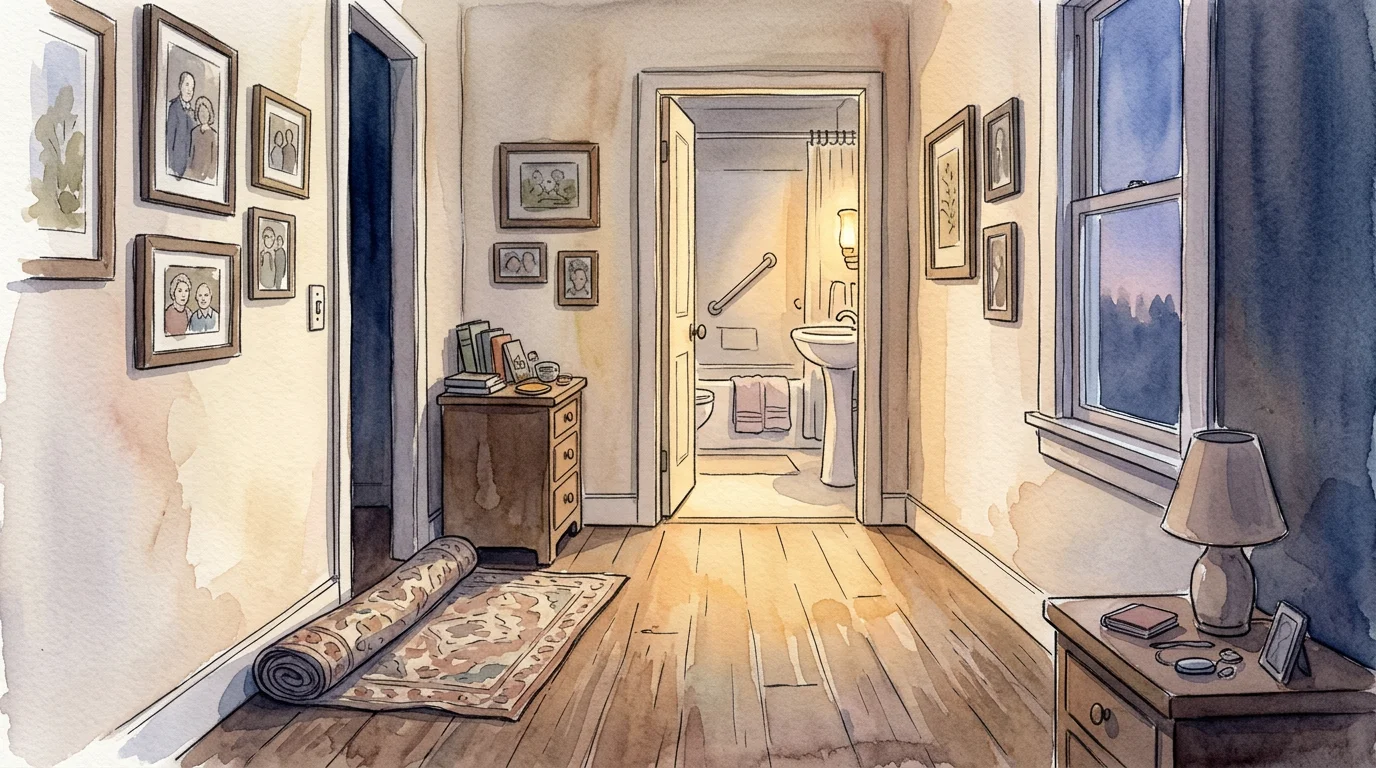
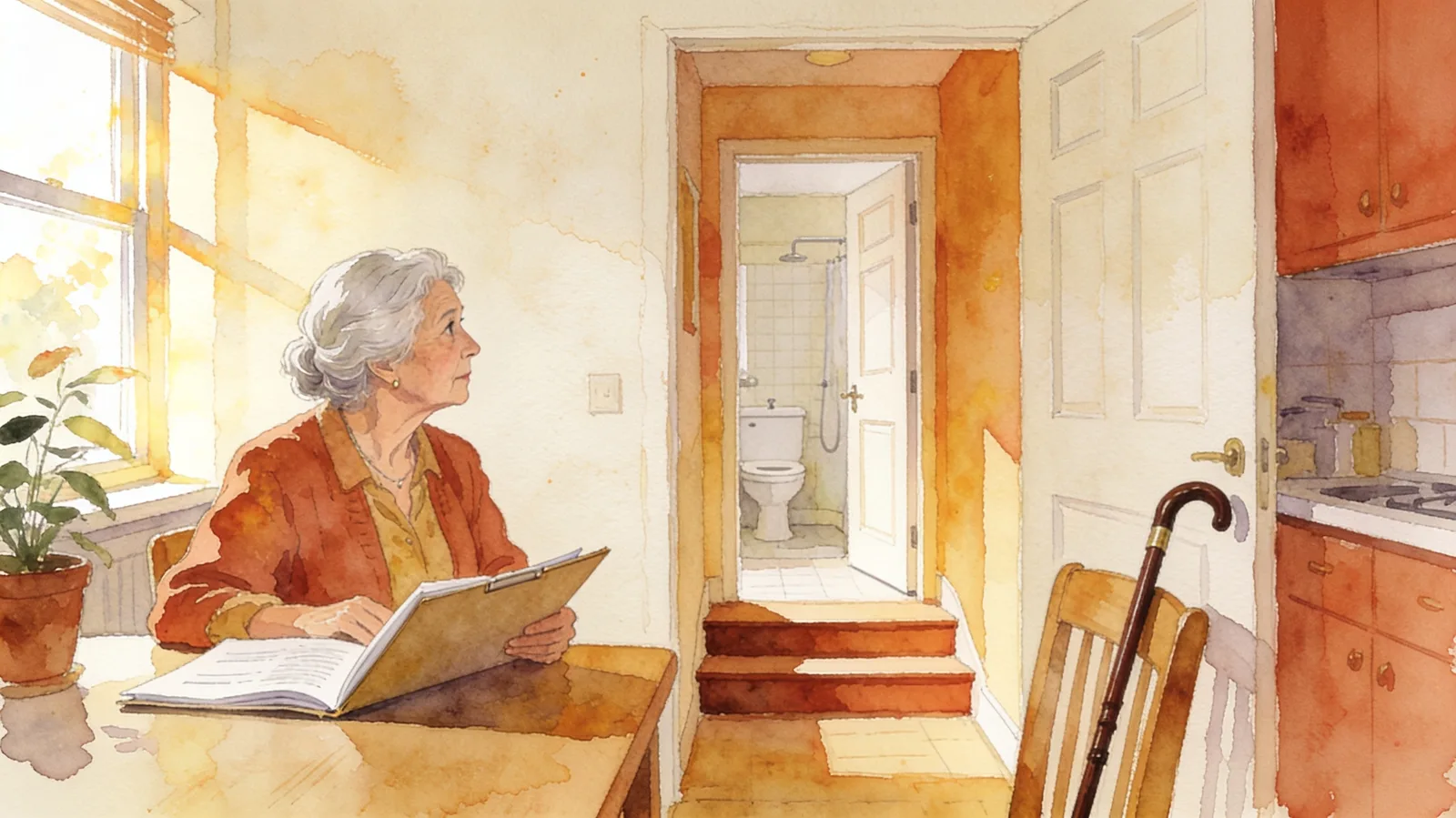
The binder looks complete. The bathroom still has a high tub lip. The only full shower sits at the top of a narrow stair. The daughter named as agent lives two states away and has never walked the floor plan with the documents open.
When the wish is "stay home," the house is either part of the plan or the contingency nobody drafted.
Why this matters now: documents without a house plan
Clients want care at home, and October's professional focus is on services that keep people there. Without a plan for the rooms, a well-drafted directive can still end in an emergency move.
Three public signals line up for counsel this month:
- The preference is clear. Northwestern Mutual's 2026 Planning & Progress Study (released October 5, 2026) found that 73% of Americans would prefer in-home care if a health event required long-term support, rising to 83% of Boomers and older (Northwestern Mutual).
- The planning void is large. In the same study, 54% have not planned financially for their own long-term care, and 60% have not planned for caring for a loved one. An advisor nearly doubles the odds of having a plan (66% versus 34% for one's own care). Counsel sits in the same conversation when the documents name where life should continue.
- Home-based supports are the professional theme of the month. In late September 2026, the National Academy of Elder Law Attorneys (NAELA) and the Special Needs Alliance marked Special Needs Law Month by highlighting Medicaid home and community-based services (HCBS), including personal care, respite, and home modifications that help people remain at home rather than in an institution (NAELA / PR Newswire). Access varies by state. Waiting lists and funding rules are real. That makes early house readiness a practical companion to benefits counseling, not a substitute for it.
Falls make the override concrete. More than 14 million adults 65 and older, about 1 in 4, report a fall each year, and falls are the leading cause of injury in that age group (CDC, Older Adult Falls Data). Many of those events happen in ordinary rooms. A directive cannot grab a towel bar that was never installed.
Document readiness versus home readiness
A complete estate plan covers who decides and what the papers say. Home readiness covers whether the floor plan can carry out those wishes without a crisis remodel when mobility suddenly changes.
| Plan Element | Typically Owned By | What Is Usually Strong | What Is Often Missing |
|---|---|---|---|
| Will, trust, and beneficiary designations | Estate planner or elder law attorney | Title, funding, and distribution intent | How the primary residence supports daily living now |
| Durable financial power of attorney | Elder law attorney | Agent authority executed while the principal has capacity (NAELA on durable POAs) | Explicit authority and family clarity for home repairs, accessibility work, and real-property decisions before a crisis |
| Health care power of attorney / advance directive | Elder law attorney | Treatment preferences and agents named | Whether the named agent has seen the rooms where care would actually happen |
| Medicaid and long-term care counseling | Elder law attorney | Eligibility paths, HCBS options, estate recovery rules that vary by state (Medicaid.gov estate recovery) | A room-level picture of what modifications might keep someone home while benefits and private resources are sorted |
| The physical residence | Usually unassigned | Sometimes an AARP HomeFit-style checklist in a drawer (AARP HomeFit Guide) | Findings the household can act on, and a way for counsel and family to see the same picture by invitation |
| Family operational roles | Usually unspoken | Agent named on paper | Who holds keys, who coordinates contractors, and the protocol when siblings disagree |
Calendars and task lists organize the household. They are only half the job. Physical room safety belongs in the same plan as the directive, or the house will decide for everyone under time pressure.
Three questions counsel can ask at the signing meeting
Attorneys do not need to become contractors or occupational therapists. Your role is asking the clarifying questions that make the physical residence visible while capacity and signed documents are still aligned.
- "If your preference is remaining in this house, which room would create the steepest problem after a routine hospitalization?" Why it works: it moves the conversation from abstract autonomy to a door sill, stair turn, or shower entry the agent can picture.
- "Does your agent know where every signed original lives, and have they walked the house with that map in mind?" Why it works: NAELA's public guidance stresses that a durable power of attorney must be executed before incapacity, and that agents may need to act on specific assets and transactions. Findability and familiarity are part of that readiness.
- "If home modifications become necessary to honor this plan, who authorizes the work, and have we tied that to the financial power you just signed?" Why it works: it connects the legal instrument to the capital decision before a discharge planner is asking for a 72-hour answer. For advisors in the same household, see long-term care planning at home for advisors. For clinical discharge context, see home safety after hospital discharge.
How SeniorThrive fits an elder law workflow
SeniorThrive organizes the home and the household so your first meeting can start with the law. Drafting stays with you.
- Intake that arrives organized. When you send the intake packet, you can include one link. At home, the client gathers wishes, where papers are kept, and who may see each one. Under Future Safeguards & Legal Docs, Power of Attorney stays unfinished with the line "Your attorney prepares it; keep the signed copy in your vault." SeniorThrive leaves the drafting to you. Details are on SeniorThrive for elder law attorneys.
- Room readiness beside the binder. The client or family takes a photo of a room. A Room Safety Check returns findings and a Home Safety Score, with a short list of practical fixes that belong to that check. Separately, My Plan (listed as My Home Plan on the pricing page) is a free, step-by-step household roadmap. Those findings are informational context for a family conversation. They are not a warranty, a clinical assessment, or a substitute for an occupational therapy evaluation.
- Planning Ahead for the next conversation. Planning Ahead, part of Essential, walks the client through six questions and creates a PDF of their own answers to keep. The PDF suggests bringing it to someone they trust, including their attorney, when they are ready.
- Clear professional boundaries. SeniorThrive organizes the home and the household. Diagnosis and clinical evaluation stay with licensed professionals. SeniorThrive does not provide legal, tax, or investment advice. The Home Safety Score assesses physical room conditions. It is informational only. It is not a warranty, underwriting tool, or clinical assessment counsel should rely on as a finding of fact.
Next steps for your practice: See how attorneys share this at intake on SeniorThrive for elder law attorneys, or see what your client gets. If you coordinate with the client's planner, point them to SeniorThrive for financial advisors. To be listed so families in your market can find you, join the Professional Network.
Frequently asked questions
Do estate plans need to address the physical home?
Often, when a client's stated preference is remaining at home. Documents name agents and wishes. The floor plan decides whether those wishes survive a fall, a hospitalization, or a sudden mobility change. Pairing document readiness with room readiness can help families plan before a crisis forces the decision the papers never contemplated.
What should a durable power of attorney cover for someone who intends to stay home?
This is general information, not legal advice. State rules vary. A durable financial power of attorney is generally executed while the principal has capacity, and attorneys often tailor it to the transactions the agent may need to complete, including real property and related decisions. An elder law attorney should tailor authority for home repairs, accessibility work, benefits applications, and Medicaid planning to the client's state and goals.
How do Medicaid and home modifications relate to an estate plan?
Medicaid-funded home and community-based services can include supports such as personal care and, in many programs, home modifications that help someone remain at home. Access and waiting lists vary by state. Federal law requires states to seek recovery from the estates of certain Medicaid recipients, including people 55 and older for nursing facility services, home and community-based services, and related hospital and prescription drug services, and people who were permanently institutionalized. States may recover more, and must offer hardship waivers and defer recovery while a surviving spouse, or a child under 21 or with a disability, is living. Rules vary by state, so counsel should advise on the client's state. Early room readiness is separate from eligibility advice, and both belong in the conversation.
What does SeniorThrive cost the client?
A family member starts free, with no credit card. The 14-day free trial starts only when the older adult joins, and nothing is charged before it ends. After that, the Emergency Card and past Room Safety Check reports stay free. New Room Safety Checks, Planning Ahead, the daily living checks and family sharing are part of Essential at $29 a month for the older adult and one family member.
Is SeniorThrive an aging in place tool?
While many families start by searching for aging in place solutions, the true goal is thriving at home on your own terms. SeniorThrive is a living plan for staying safely at home: room safety, family coordination, and daily stability, in one place the client controls. It does not draft legal documents and does not replace your counsel.
Sources
- Northwestern Mutual, 2026 Planning & Progress Study, released Oct 5, 2026. https://news.northwesternmutual.com/2026-10-05-More-Than-80-of-Boomers-Want-to-Age-at-Home-Are-Families-Ready-for-the-Financial,-Physical-and-Emotional-Costs
- National Academy of Elder Law Attorneys / Special Needs Alliance, Special Needs Law Month HCBS announcement, Sept 29, 2026. https://www.prnewswire.com/news-releases/protecting-access-to-care-at-home-special-needs-law-month-highlights-home-and-community-based-services-302892720.html
- NAELA, Durable Powers of Attorney (consumer resource). https://www.naela.org/Web/Web/Resources_Tab/Consumer_Resources/Law_Topics/DPOA.aspx
- Medicaid.gov, Estate Recovery. https://www.medicaid.gov/medicaid/eligibility-policy/estate-recovery (checked Oct 13, 2026)
- CDC, Older Adult Falls Data. https://www.cdc.gov/falls/data-research/index.html
- AARP HomeFit Guide. https://www.aarp.org/livable-communities/housing/info-2020/homefit-guide/
SeniorThrive is not affiliated with or endorsed by NAELA, the Special Needs Alliance, Northwestern Mutual, AARP, or the CDC. References are to their public materials.
This article is general information for professionals and is not legal, tax, or financial advice. SeniorThrive is not a law firm and does not provide legal services. Room Safety Check findings and the Home Safety Score are informational only and are not a warranty or a clinical assessment.