Your Night Light Is Working. It Is Just Pointed at the Wrong Thing.
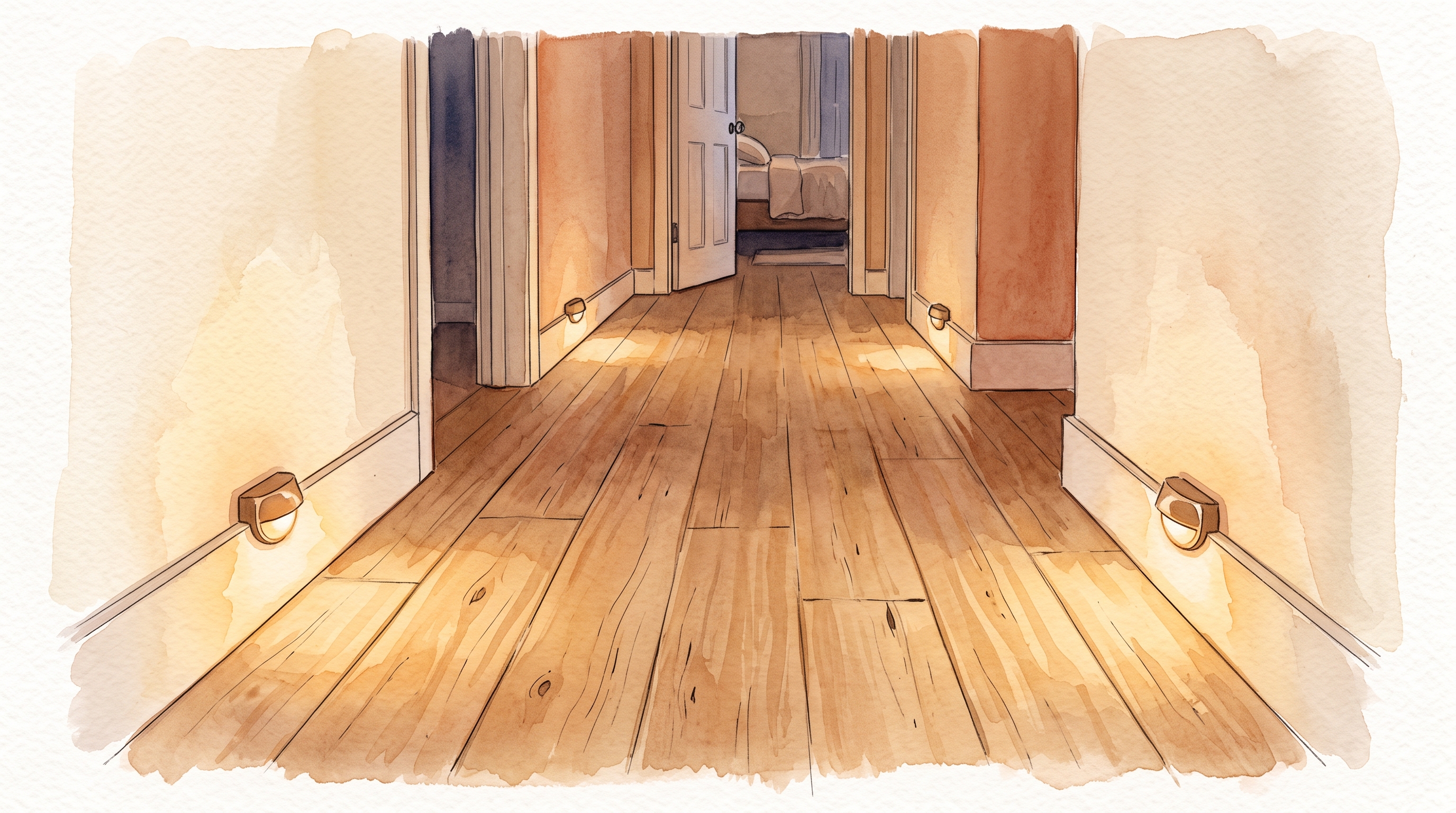
A night light sits at outlet height and points straight up the hall. So the first thing you see at two in the morning is the bulb. Everything past it reads as dark.
That is why a hallway can look worse with the light on than off.
It is not you. It is the house. The light is fine. It is pointed at the wrong thing.
Why a bright spot makes the rest of the hall disappear
Your eyes set their exposure by the brightest thing in view. Put a small glowing bulb at knee height, and your eyes tune to the bulb. The floor, the edge of the rug, the doorway threshold and the laundry basket all drop into shadow.
Older eyes feel this more. They take longer to adjust between light and dark, and glare scatters more inside the eye. So the same little light that looked cozy at forty can wash out the path at seventy-five.
A night light's job is not to be seen. Its job is to show you the floor.
Five fixes, most of them free
1. Turn it toward the baseboard. Many plug-in lights swivel. Aim the glow down and along the wall, not out into the hall. If yours does not turn, move it to an outlet where the wall blocks your direct view of the bulb as you walk.
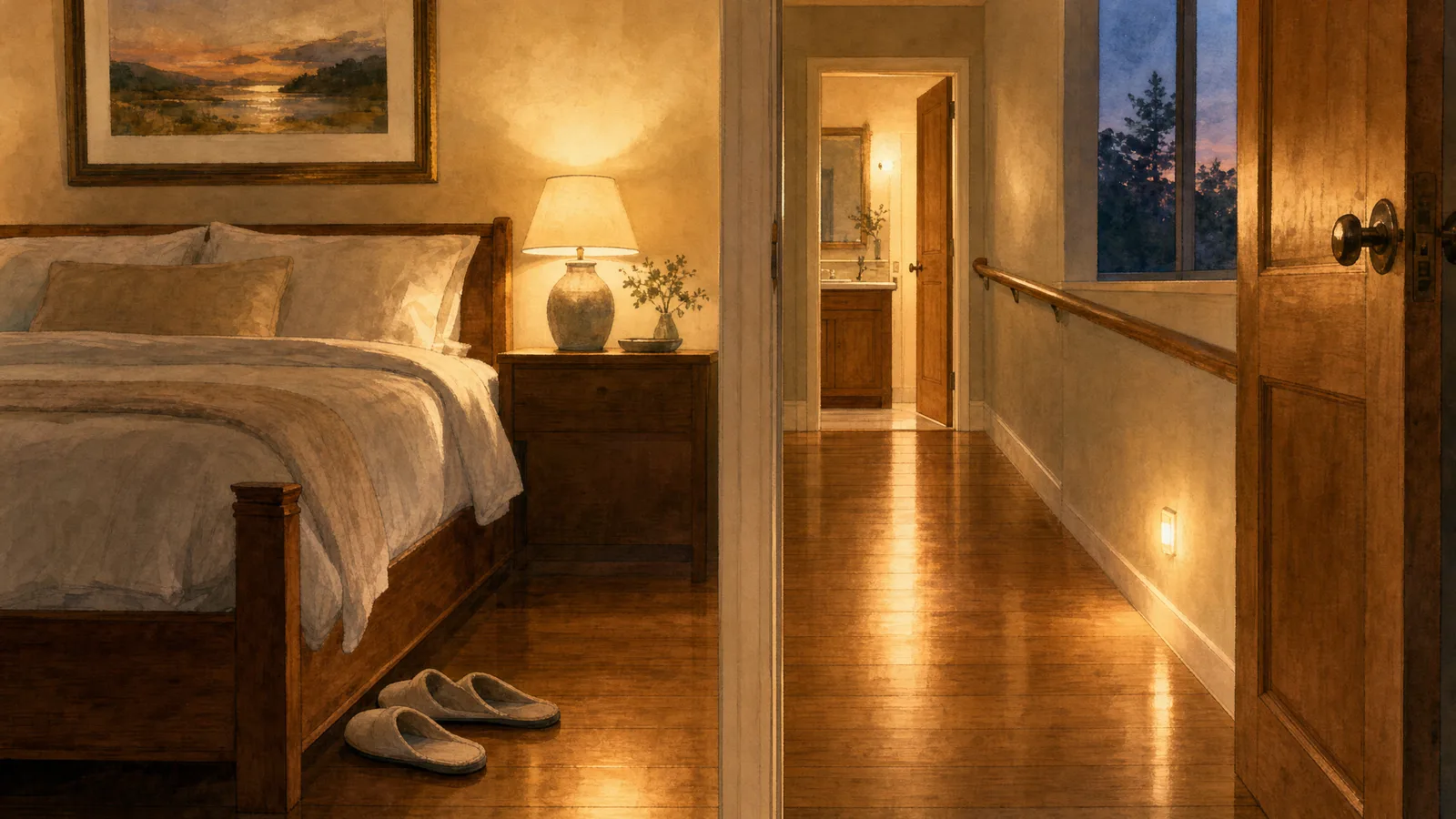
2. Light the path, not the room. You want a soft line of light along the route from the bed to the bathroom. That usually means one light near the bed, one partway down the hall, and one just inside the bathroom door. Three dim lights beat one bright one.
3. Choose warm and low. An amber or warm-white light is gentler on the eyes than a cold blue-white one. Look for lights described as low-glare or downward-facing. Low-mounted motion-sensor path lights that switch on when you step out of bed are a good upgrade, since nobody has to remember to turn anything on.
4. Show the edges. The places people catch a foot are changes: a threshold, a rug edge, the first step of a stair. Put light where the floor changes, not in the middle of an open stretch. We wrote about the three quarter inch step in your hallway for exactly this reason.
5. Stand where your parent stands. Do the check at night, lights off, from the edge of the bed. Walk the path slowly. Anywhere you see a bulb before you see the floor, move or turn that light. It takes about ten minutes.
What this does not fix
Better lighting helps you see the path. It does not fix dizziness when standing up, a new medication that makes nights foggy, or a need to get to the bathroom quickly. If your parent is getting up more often at night, feels unsteady, or has had a fall, even a small one, call their doctor. Those are worth a conversation, not just a new light.
Start with the room you walk at two in the morning
Most home safety fixes are not renovations. They are small corrections to things the house was never designed to get right, like a light that shows off its bulb instead of the floor.
SeniorThrive goes room by room and tells you what is actually worth fixing, and what can wait. Some of it, like this, costs nothing. For more on the bedroom end of the path, read our guide to bedroom fall hazards.