Garage Fall Hazards: The Step Down, the Clutter, and the Thing on the Top Shelf
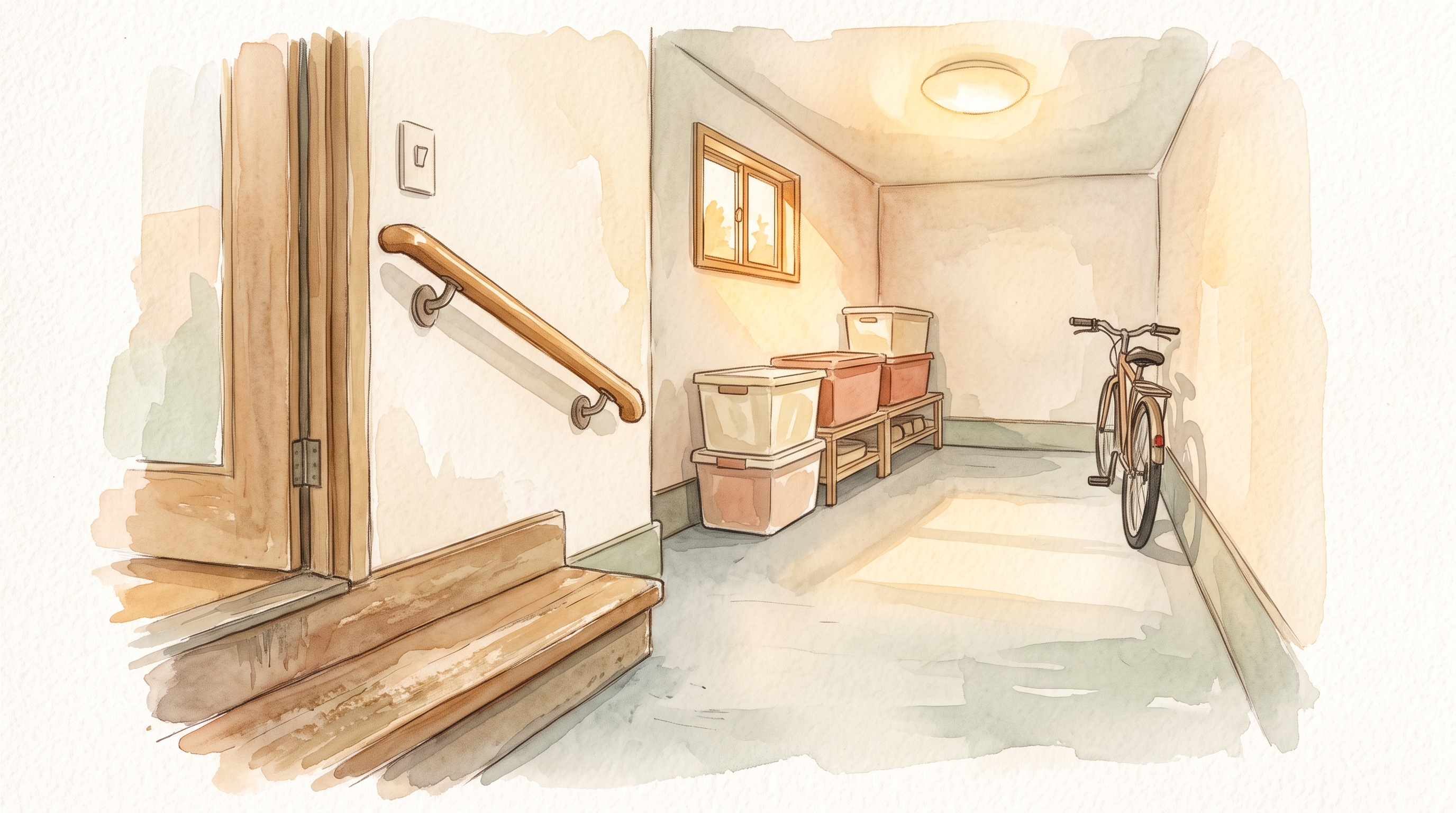
Every room-by-room safety list stops at the door to the garage. That is a strange place to stop. The garage holds the tallest single step in most houses, the dimmest light, and the heaviest objects stored on the highest shelves. Your parent walks through it every time they go anywhere.
The garage is not a room your parent lives in. It is a room they pass through carrying something. That is exactly what makes it worth an honest look.
The step down is taller than it feels
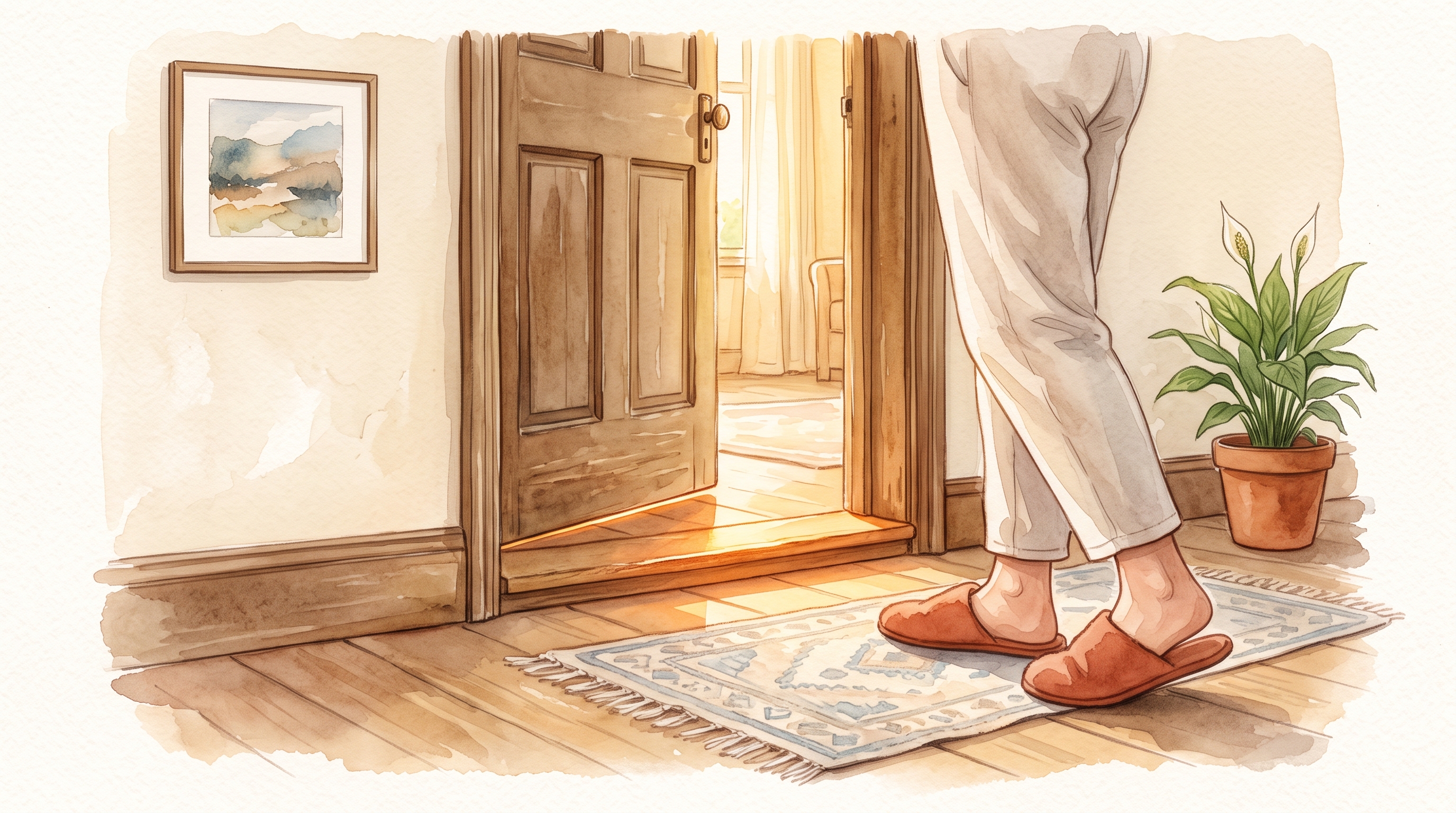
Most interior steps in a house are about seven inches. The step from the house into the garage is often eight or nine, because the garage slab sits lower so fuel and water drain out instead of in. Two extra inches does not sound like much. It is enough that a foot expecting seven inches lands late, and a person carrying a grocery bag with both hands has nothing to catch themselves with.
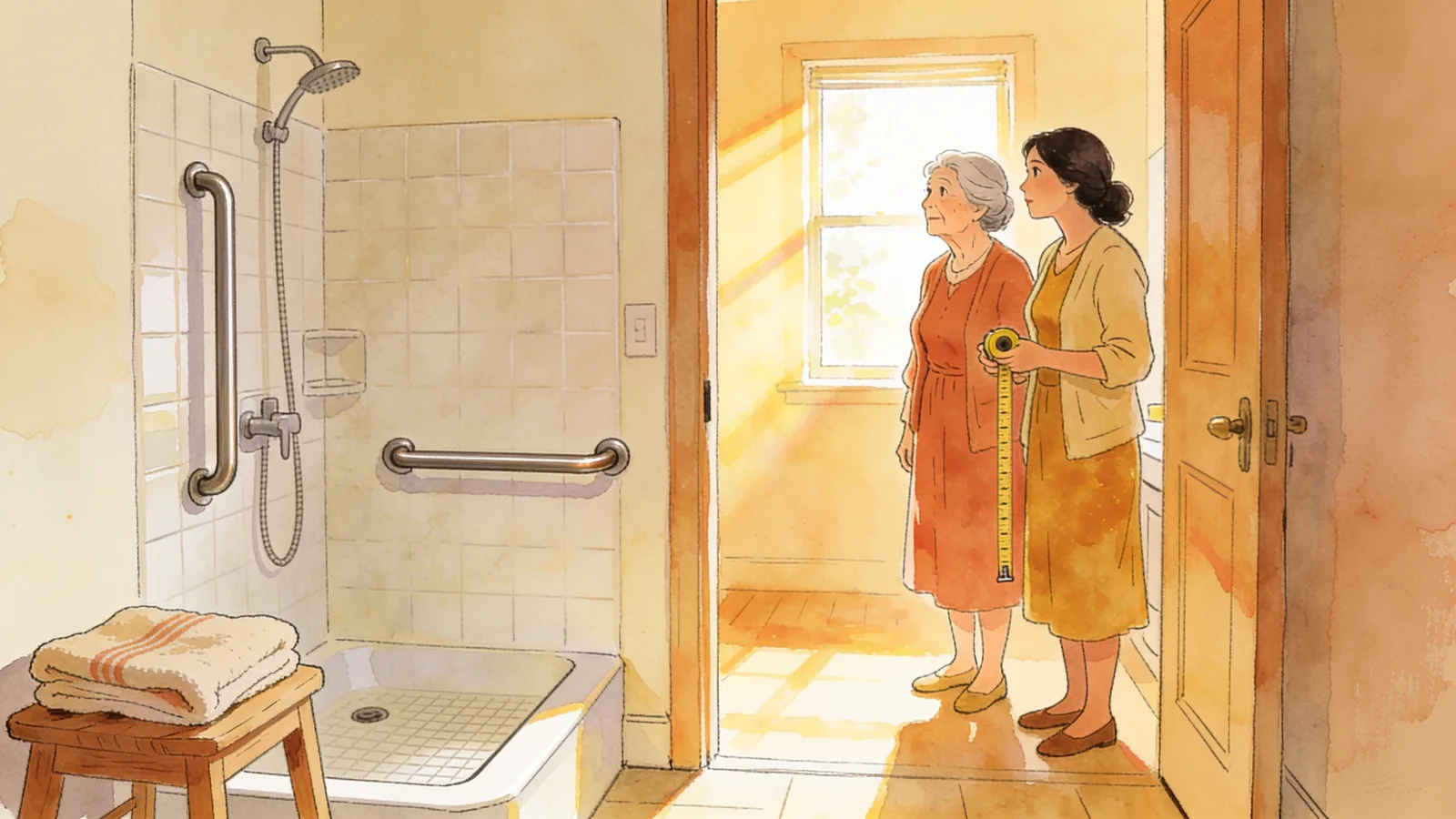
Stand at that doorway and look for a handrail. Most garages do not have one. A single sturdy grab rail mounted on the house side of the door frame, at the height of a comfortable reach, changes that step from a guess into a known quantity. If the step is tall enough that it needs two movements to manage, that is a sign to talk to a contractor about a landing or a short ramp rather than living with it.
The light is worse than you think
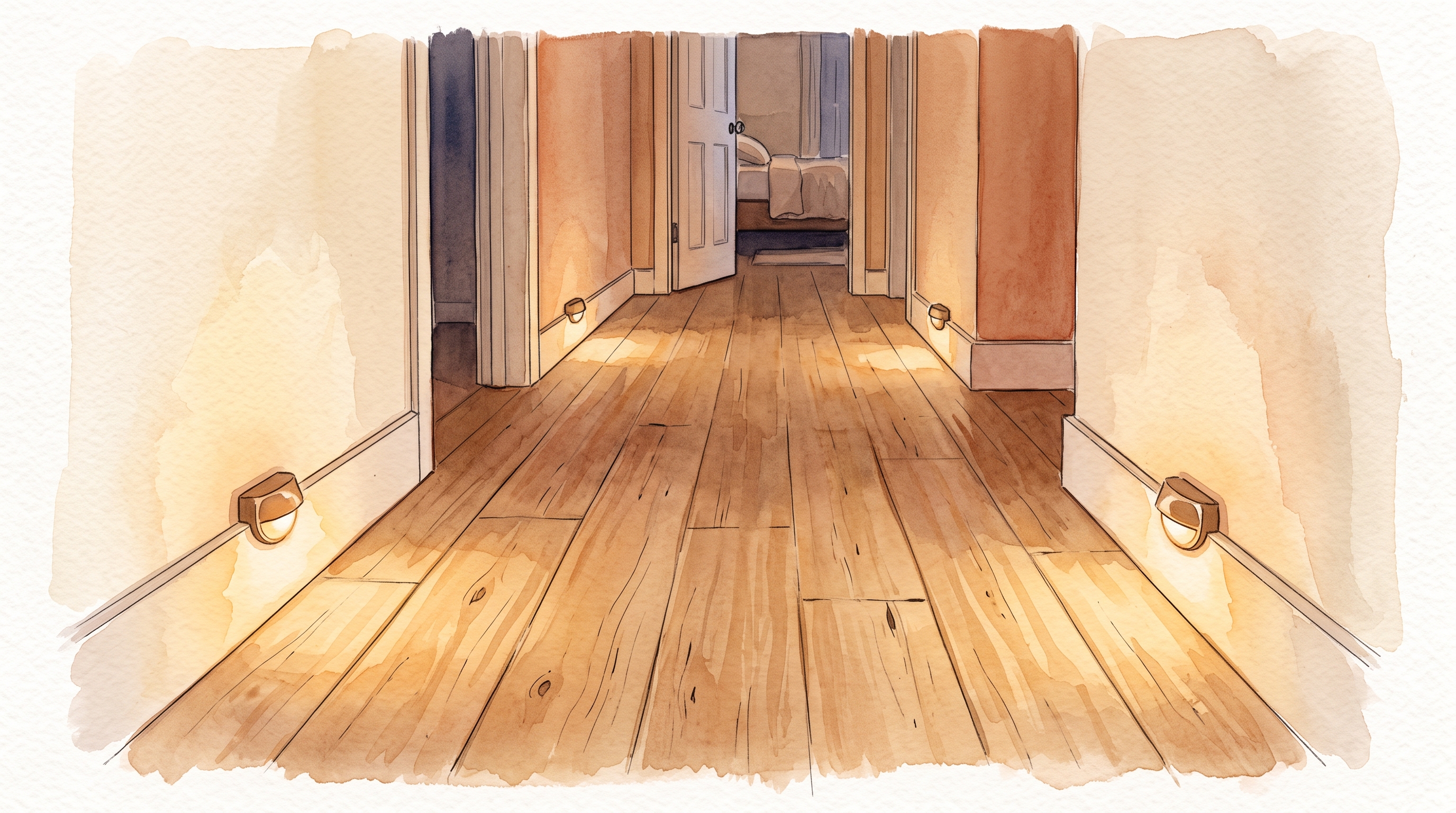
Garage lighting is usually one bare fixture in the middle of the ceiling, and the car parks directly under it. That means the walking path beside the car, where your parent actually walks, sits in the car's shadow. Add a winter afternoon and you are asking someone to navigate a tall step into a dark room.
Put the light where the feet are, not where the car is. Motion-sensing LED fixtures mounted along the wall your parent walks beside cost very little and need no wiring if you buy the battery kind. The test is simple: walk the path they walk, in the evening, with your hands full. If you cannot see the floor clearly, neither can they.
The heaviest things are stored the highest
Garages accumulate a specific kind of danger: the holiday bins, the paint cans, the cooler, all of it lifted onto a high shelf years ago by someone with more shoulder strength than they have now. Reaching overhead shifts your weight backward. Reaching overhead for something heavy shifts it backward fast.
The fix costs nothing. Move anything heavy or used more than twice a year down to between knee and shoulder height. Put the rarely-used, lightweight things up top. If a step stool is the only way to reach something, that item is in the wrong place. And if there is a step ladder in the garage that your parent still uses alone, that is a conversation worth having before the first cold snap, not after.
The floor tells on itself
Concrete gets slick when wet, and a car that has been out in the rain drips for twenty minutes after it parks. Oil spots are worse. Look at the walking path, not the whole floor, and look for three things: standing water, oil stains, and anything stored on the ground that narrows the path to less than the width of a walker.
Extension cords running across the floor are the quiet one. They look temporary. They have been there for four years.
Where to start
If you only do one thing this month, put a handrail at the door to the garage. It is the cheapest fix with the largest effect, because it turns the single biggest step in the house into a step with something to hold.
Then walk the path once, at night, carrying a bag. What you notice in that thirty seconds is usually the real list.
If your parent has been unsteady, has had a near-miss, or if something about how they move has changed recently, that is worth raising with their doctor rather than solving with shelving. A home fix and a medical question are different problems, and the garage cannot tell you which one you have.