Why EAPs Fall Short on Elder Care, and How to Evaluate Caregiver Benefits
EAPs fall short on elder care because they were built for short-term counseling and referrals, not for a parent's house or a family's long plan. Caregiver benefits fill different gaps. Evaluate them by when they start, whether they reach the home, and who controls the data.
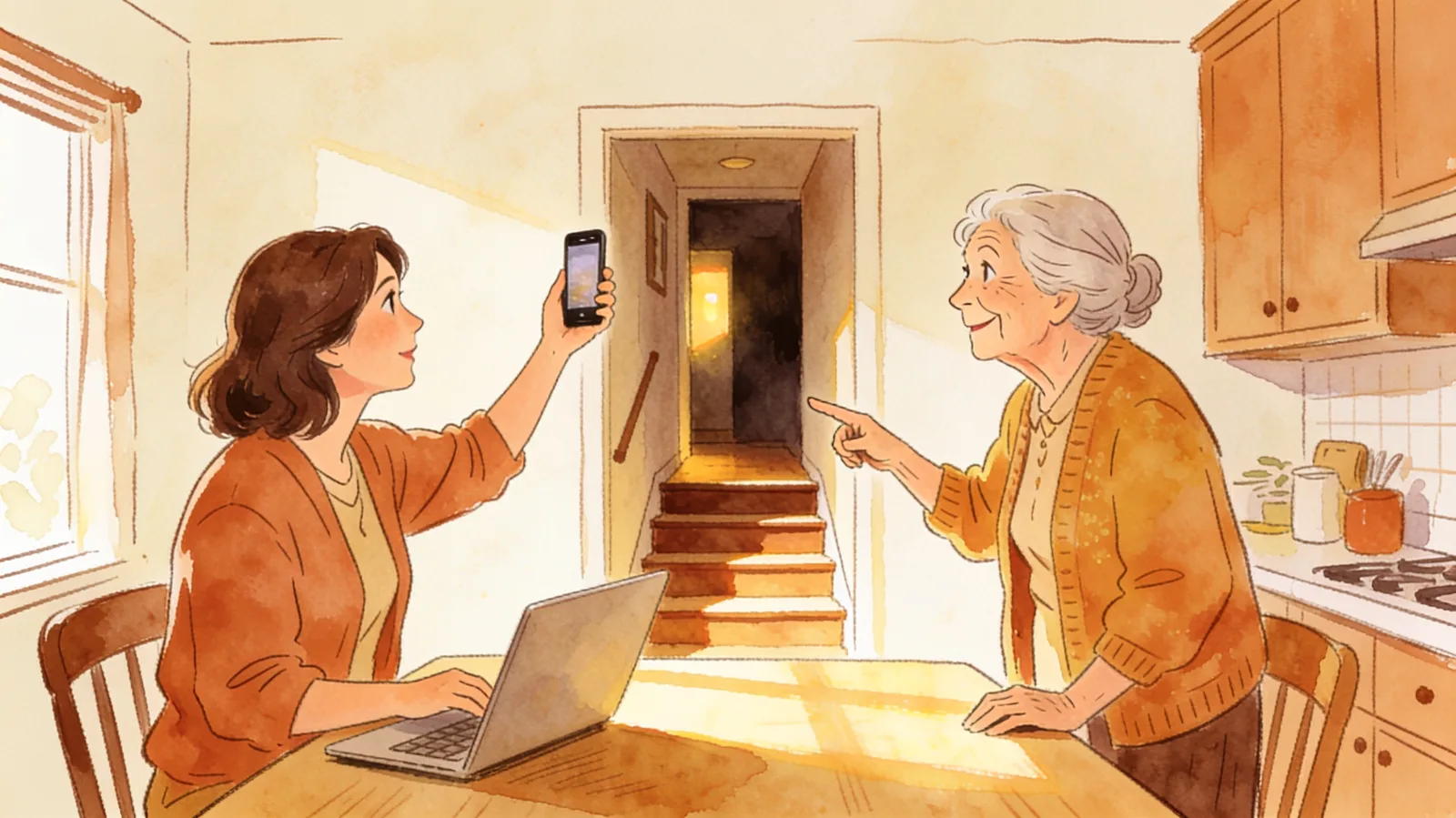
An employee who never missed a deadline starts stepping out for calls. A manager mentions she has been working from her mother's kitchen table two days a week. Nobody files a ticket about it. It shows up in your absence data, and sometimes in an exit interview.
This guide is for the HR benefits lead or broker who has heard "we already cover eldercare through the EAP" and suspects that is not the whole answer. It is not. Here is where the EAP stops, what the major caregiver benefits actually offer today, and the questions that separate them.
Why elder care is now a workforce issue
Caregiving for older parents is a workforce condition, not a rare life event. Most family caregivers are employed, many hide it from their managers, and HR leaders report the cost in absenteeism and retention while still ranking eldercare near the bottom of their priorities.
- 63 million Americans are family caregivers, up from 43.5 million in 2015 (AARP and NAC, Caregiving in the US 2025).
- 6 in 10 family caregivers are employed, and only 49% of working caregivers say their supervisor knows about their caregiving role (Caregiving in the US 2025: Working While Caregiving).
- 43% of full-time workers juggle caregiving, up from 38% in 2019 (Guardian, From Workforce to Careforce).
- 53% of employees have missed work due to caregiving challenges, and 23% have left a job for an employer with better family care benefits (Care.com 2026 Future of Benefits Report).
- In a LegalShield survey of more than 1,000 HR executives, 86% said caregiving hurts absenteeism and productivity and 77% said it hurts retention, yet eldercare ranked 10th of 12 benefit priorities (LegalShield, September 2026).
The gap between what HR sees and what HR has funded is where the EAP gets asked to do a job it was not designed for.
What an EAP does well
An EAP is a good benefit. It is confidential, usually already paid for, and it gives an overwhelmed employee someone to talk to this week. Many EAPs add work-life referral services, including eldercare; one benchmarking study found 75% of EAP vendors offered work-life services (Attridge et al., NBC Benchmarking Study). Keep it.
Where EAPs fall short on elder care and home safety
EAPs support the employee's own well-being in a moment of stress. Elder care runs for years, involves a whole family, and happens inside a parent's house. That mismatch shows up in five places, from low use to the home nobody examines.
1. Built for the moment of stress, not the years before it
Counseling helps an employee carry the weight. It does not change what causes it. Caring for a parent is years of small decisions about medicines, appointments, the house and who in the family does what. A few sessions cannot build that plan.
2. A referral list is not a plan
A good eldercare line hands the employee names and numbers. The employee still makes the calls, compares options and briefs siblings, usually during work hours. The work lands back on the same person.
3. Use stays low
A survey of 82 EAP providers found a median of about 3.5% of employees use EAP services in a year (SHRM, citing the National Behavioral Consortium). And only 37% of employees identify as caregivers (Care.com). People rarely use a benefit for a problem they do not name as their own.
4. Nobody looks at the house
Home is where parents want to be, and where everyday risk lives. The CDC reports that about 1 in 4 adults 65 and older report a fall each year, and falls are the leading cause of injury in that age group (CDC Older Adult Falls Data).
Most homes were not built for a slick tub, a low sofa or a 2 a.m. walk to the bathroom. A step down into the living room is a feature of the house, not a failure of the person living in it. Blame the house, not the person. A rail or a brighter bulb is a small fix. An EAP never sees any of it, because it was never meant to.
5. The family is not in the room
There is a brother two states away, a sister who handles the bills, and a parent with opinions and every right to them. EAPs serve one employee. Elder care is a family project.
Calendars and task lists are half the job
Shared calendars, task lists and medication trackers help families coordinate care. That is half the job. The other half is the physical home: the stairs, the bathroom, the lighting. Room safety belongs inside caregiving, not beside it.
Most caregiver tools are excellent at logistics: who drives Dad to the cardiologist, which pharmacy, what the insurer said. That work matters. But a perfectly coordinated calendar does not move the bath mat or add a grab bar. If the benefit you choose never looks at the rooms a parent lives in, the most common everyday risk stays off the plan.
What today's caregiver benefits actually offer
The major caregiver benefits are strong at human-led navigation, finding care and backup care. They differ in how much they rely on experts versus digital tools, whether they cover child care too, and whether anyone looks at the parent's home.
Descriptions below come from each company's public pages as of October 12, 2026. Confirm current scope with each vendor before you buy.
- Wellthy pairs families with care partners from a team it describes as 200+ experts in social work, nursing, patient advocacy and more, plus a care dashboard, peer community and Backup Care, across life stages from parenting to eldercare to end of life (wellthy.com).
- Cariloop offers its Caregiver Support Platform, coaching from licensed professionals with stated average response times under 2 hours, help finding providers, tools for coordinating tasks and tracking medications, and Backup Care. It reports supporting over 2 million employees (cariloop.com).
- Homethrive is a digital-first platform with Care Guides, aging and complex care roadmaps, backup care, estate planning and loss support, and it can be embedded or white-labeled (homethrive.com). It also powers Bright Horizons Care Advising (Bright Horizons).
- Torchlight Parenting and Caregiving, a LifeSpeak product, combines digital content with more than 90 advisors and concierge help with forms and documents, across child and elder care (torchlight.care).
- Bright Horizons combines Care Advising with its Back-Up Care network for children, adults and seniors. Its Elder Care program lists Care Coach consultations, in-home assessments and customized care plans, in-home back-up care, and attorney and financial consultations (Bright Horizons Elder Care; Back-Up Care).
- Care.com CareBenefits offers a caregiver marketplace membership, subsidized adult backup care, 1:1 senior care specialists, Care Talks and LifeMart discounts (Care.com senior care benefits).
- SeniorThrive works earlier and starts with the home: a photo-based Room Safety Check with a ranked fix list and Home Safety Score, an Emergency Card, My Medicines, and daily check-ins. The employee, their parents and family work one plan together in the Circle (SeniorThrive for Employers).
These are not all substitutes. Navigation and backup care are built for the moment care is active. SeniorThrive is built for the larger group who are not there yet. Many employers will layer more than one.
Comparison: EAP vs caregiver benefits vs SeniorThrive
| Traditional EAP | Expert navigation (Wellthy, Cariloop, Homethrive, Torchlight) | Care delivery and backup care (Bright Horizons, Care.com) | SeniorThrive | |
|---|---|---|---|---|
| Core job | Confidential short-term counseling and referrals | Expert guidance, coordination and finding care | Arranging and subsidizing care, plus advising | A shared household plan that starts with the parent's home |
| Best moment | Employee is stressed now | A care need is active or complex | A care gap, or arranging ongoing care | The day an employee has a parent over 65, and every month after |
| Covers child care too | Often, via referrals | Yes, for most listed | Yes | No. Focused on older parents |
| Looks at the parent's home | No | Not a core feature on public pages | Bright Horizons lists in-home assessments in its Elder Care program | Yes. Photo-based Room Safety Check, room by room |
| Family access | Employee only | Care dashboards or care circles vary by vendor | Varies | The employee, their parents and family work one plan together in the Circle. |
| Parent's control of data | Not involved | Varies | Varies | Parent joins by invitation and shapes what is shared; emergency details are always visible to the Circle |
| Human experts | Counselors | Core strength | Core strength | Software first; points families to professionals such as occupational therapists |
| Fits alongside an EAP | Already in place | Yes | Yes | Yes |
How to evaluate a caregiver benefit: seven questions
Ask when the benefit starts, whether it reaches the home, who in the family can join, who controls the parent's data, what the employer sees, how hard launch is, and how employees will hear about it.
- Does it start before a crisis? Most employees with older parents are not in one yet.
- Does it reach the home? If nothing in the benefit looks at the house, the most common everyday risk is unaddressed.
- Does it include the family? Look for real shared access for siblings and the parent.
- Does the parent keep control? A parent is the author of their own life, not a case file.
- What does the employer see? Aggregate counts, never a household.
- How hard is launch? Ask about eligibility files, SSO, IT tickets and timeline.
- Will employees know it exists? Ask for the launch kit and comms plan, not just the feature list.
Where SeniorThrive fits
SeniorThrive supports thriving at home in three parts.
The home. Take a photo of the room. The Room Safety Check returns a ranked fix list and a Home Safety Score the same day. It talks about a floor, a light or a rail, never about the parent as a person. That changes the kitchen-table conversation from "Mom, I'm worried about you" to "Let's look at the bathroom together."
The person. An Emergency Card with health details and who to call, free to keep. My Medicines, listed once. Daily check-ins, so family knows the day started and nobody has to hover.
The connection. The employee, their parents and family work one plan together in the Circle. It comes with a family hub and shared calendar. Each parent joins by invitation and has a say in what is shared, while emergency details are always visible to the Circle. Employers receive a counts-only report, never a name, address or photo, and any count from 1 to 4 shows as 'Fewer than 5.'
It is not a clinical assessment. Diagnosis and clinical evaluation stay with professionals. For a clinical home safety evaluation, the app points families to an occupational therapist. It sits outside the group health plan. Employees enroll with a work email or an employer code, with no eligibility file (SeniorThrive for Employers).
The bottom line
Your EAP is doing its job. That job stops at the employee's own well-being. Navigation services and backup care do valuable work once care is under way. The earlier stretch, the house and the family plan, is usually where nobody is looking.
If you are a broker with a client renewal coming, or an HR lead who wants to see a Room Safety Check on a real room, book 20 minutes with Brian.
Frequently asked questions
Does an EAP cover elder care?
Many EAPs include an eldercare referral line as part of work-life services, plus short-term counseling for the employee. That usually means information and referrals, not anything in the parent's home or a shared family plan.
What is the difference between Cariloop and Wellthy?
Both are human-led caregiving benefits with expert support and backup care. Wellthy emphasizes care partners who take tasks off families' plates. Cariloop emphasizes coaching from licensed professionals and its Caregiver Support Platform. Compare current scope directly with each.
Are there employer benefits for aging in place?
Yes, though most focus on navigation and finding care. While many families start by searching for aging in place solutions, the true goal is thriving at home on your own terms, which means the home itself needs attention. SeniorThrive starts with a Room Safety Check.
Can SeniorThrive sit alongside an EAP or a care concierge?
Yes. SeniorThrive works earlier, on the home, health basics and family coordination. EAPs and navigation services support different moments, and many employers offer more than one.
Does the employer see an employee's family information?
No. Employers receive a counts-only report, never a name, address or photo, and any count from 1 to 4 shows as 'Fewer than 5.'
Is SeniorThrive insurance?
No. It is a software benefit that sits outside the group health plan.
Sources
- AARP and NAC, Caregiving in the US 2025. https://www.aarp.org/press/releases/2025-07-24-new-report-reveals-crisis-point-for-americas-63-million-family-caregivers.html
- NAC and AARP, Working While Caregiving. https://www.caregivingintheus.org/wp-content/uploads/2025/12/NAC_CGUS25_Working-While-Caregiving.pdf
- Guardian, From Workforce to Careforce. https://www.guardianlife.com/news/release/number-of-full-time-workers-who-are-juggling-caregiving-responsibilities-has-increased-by-double-digits-even-as-more-women-leave-the-workforce
- Care.com, 2026 Future of Benefits Report. https://www.care.com/about/press/new-care-com-research-reveals-a-critical-visibility-gap-in-a-modern-workforce-that-runs-on-caregiving/
- LegalShield, Open Enrollment 2026, Sept. 2026. https://www.legalshield.com/blog/open-enrollment-2026-why-eldercare-benefits-still-rank-last-on-most-companies-lists
- SHRM, Solving the EAP Under-Use Puzzle. https://www.shrm.org/topics-tools/news/benefits-compensation/solving-eap-use-puzzle
- Attridge et al., NBC Benchmarking Study. https://archive.hshsl.umaryland.edu/server/api/core/bitstreams/7e314d6d-2154-4529-ba1b-e7c87d2e3d5b/content
- CDC, Older Adult Falls Data. https://www.cdc.gov/falls/data-research/index.html
- Wellthy homepage (fetched Oct 12, 2026). https://wellthy.com/
- Cariloop homepage (fetched Oct 12, 2026). https://www.cariloop.com/
- Homethrive homepage (fetched Oct 12, 2026). https://www.homethrive.com/
- Torchlight homepage (fetched Oct 12, 2026). https://www.torchlight.care/
- Bright Horizons Care Advising, Elder Care, Back-Up Care. https://www.brighthorizons.com/employers/care-advising , https://www.brighthorizons.com/employers/elder-care , https://www.brighthorizons.com/employers/back-up-care
- Care.com CareBenefits, Senior Care. https://www.care.com/benefits/senior-care/
- SeniorThrive for Employers and For Professionals. https://seniorthrive.com/work , https://seniorthrive.com/for-professionals