Living Room Fall Hazards: Low Sofas, Cord Clutter, and Rug Edges
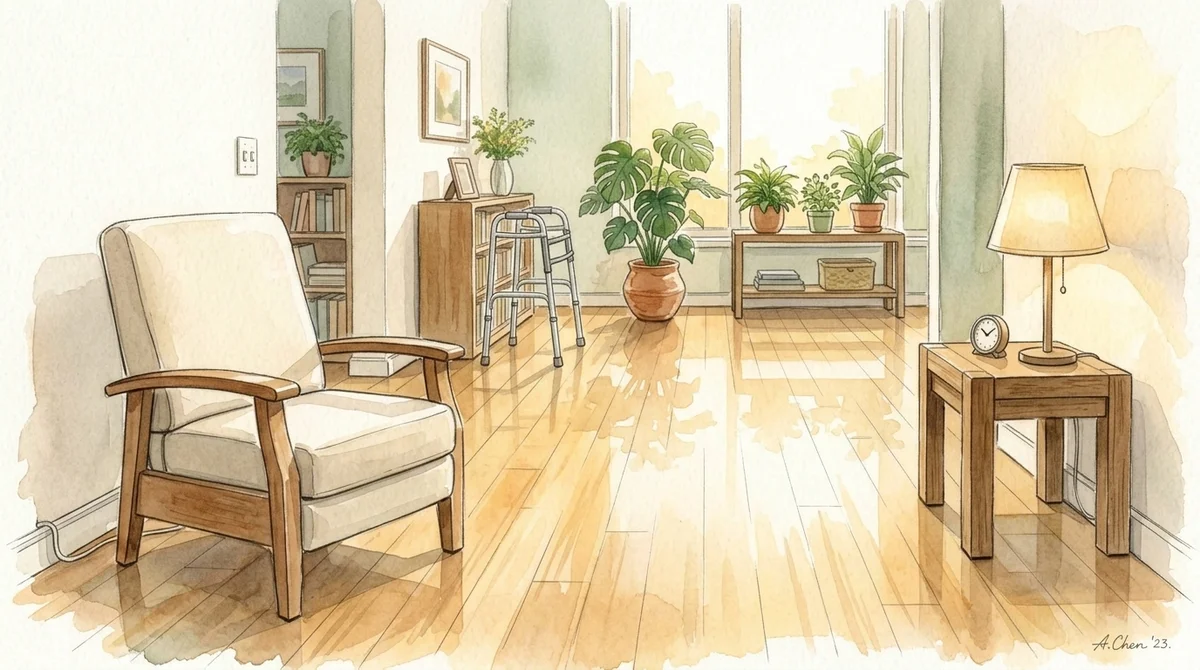
The living room is where older adults spend the majority of their waking hours, yet it is often filled with hidden mobility traps: low plush sofas that swallow hips, trailing lamp cords, cluttered low coffee tables, and decorative throw rugs that curl at the edges.
Under the Home Safety Score system, living room safety focuses on seated-to-standing transfer mechanics and unencumbered 36-inch navigation paths. Below are the five primary living room hazards, how to score them, and practical modifications that preserve comfort while eliminating falls.
The 5 Living Room Hazards Ranked by Severity
| Hazard Finding | Severity Tier | Safety Score Deduction | Standard Clinical Fix | Estimated Cost |
|---|---|---|---|---|
| 1. Deep, Low, Soft Seating (Under 18" Height) | Critical | -25 Points | Add dense firm foam seat insert, install chair risers, or upgrade to a firm armchair (19"–21" height with solid armrests) | $30 – $450 |
| 2. Constricted Walkways (Under 36 Inches) | High | -15 Points | Reposition or remove central low coffee tables to create continuous 36" clearance for natural gait or walkers | $0 (Free) |
| 3. Trailing Power & Oxygen Cords | High | -15 Points | Route cords along baseboards using adhesive clips; install rubber over-floor cord protector ramps | $15 – $30 |
| 4. Curled Area Rug Edges & Runners | High | -15 Points | Remove throw rugs; secure essential room-sized rugs with perimeter non-skid underlayment | $20 – $50 |
| 5. Glare Blindness on Polished Floors | Moderate | -10 Points | Install sheer curtains or light-filtering blinds to diffuse harsh sunlight glare on wood/tile | $25 – $60 |
1. The Chair Dilemma: Firm Armchairs vs. Rockers and Recliners
When older adults lose leg strength, getting up from a sofa becomes an exhausting ordeal of rocking back and forth to gain momentum. Soft cushions compress under body weight, sinking hips 3 to 4 inches lower than knees.
What Makes a Chair Senior-Safe?
- Seat Height: 18 to 21 inches from floor to top of cushion.
- Cushion Firmness: Dense high-resiliency foam that supports hips without sinking.
- Solid Armrests: Must extend all the way to the front edge of the seat cushion, offering a stable grip when pushing up.
- Stability: Swivel chairs, traditional rocking chairs, and gliders move unpredictably when weight is applied to the arms, triggering falls. If your parent loves a recliner, consider a motorized power-lift chair that gently tilts forward to assist standing.
Frequently Asked Questions
What is the best type of chair for an elderly person to get out of easily?
The easiest chair for an older adult to exit has: (1) a firm seat height between 19 and 21 inches from the floor; (2) sturdy, non-padded wooden or structured armrests that extend fully to the front of the seat; and (3) a relatively shallow seat depth (20 to 22 inches) so the back is supported without slouching. Power lift recliner chairs are ideal for individuals with severe arthritis or Parkinson's.
How wide should walkways be in a living room for a senior?
Primary pathways connecting doorways, seating, and hallways should maintain a minimum clear width of 36 inches. This provides sufficient room for shuffling gait patterns, canes, rollator walkers, or wheelchairs without clipping furniture corners.