Kitchen Fall Hazards: Step Stool Dangers, Spills, and Smart Storage
The kitchen is the heart of the home, but for older adults aging in place, it combines three distinct risks: burns, cuts, and fall hazards. Reaching on tiptoes for canned goods, carrying hot pots across slick linoleum, and climbing rickety step stools are leading triggers for emergency room visits.
Under the Home Safety Score doctrine, kitchen safety is governed by the Golden Reach Zone: eliminating overhead stretches and bending strain so cooking remains safe, manageable, and dignified.
The 5 Kitchen Hazards Ranked by Severity
| Hazard Finding | Severity Tier | Safety Score Deduction | Standard Clinical Fix | Estimated Cost |
|---|---|---|---|---|
| 1. Overhead Storage (Step Stool Climbing) | Critical | -25 Points | Reorganize daily pantry items into the "Golden Zone" (waist-to-shoulder); remove all stools | $0 (Free) |
| 2. Unattended Stove / Burner Hazard | Critical | -25 Points | Install smart automatic stove shut-off device (e.g. FireAvert or iGuardStove) or induction cooktop | $120 – $380 |
| 3. Wet-Zone Spills Near Sink / Refrigerator | High | -15 Points | Beveled-edge anti-fatigue gel mat with high-grip rubber bottom; remove cloth rugs | $30 – $55 |
| 4. Shadowed Work Surfaces (Under-Cabinet Glare) | High | -15 Points | Stick-on LED under-cabinet task lighting strips (minimum 300 lumens on prep areas) | $20 – $45 |
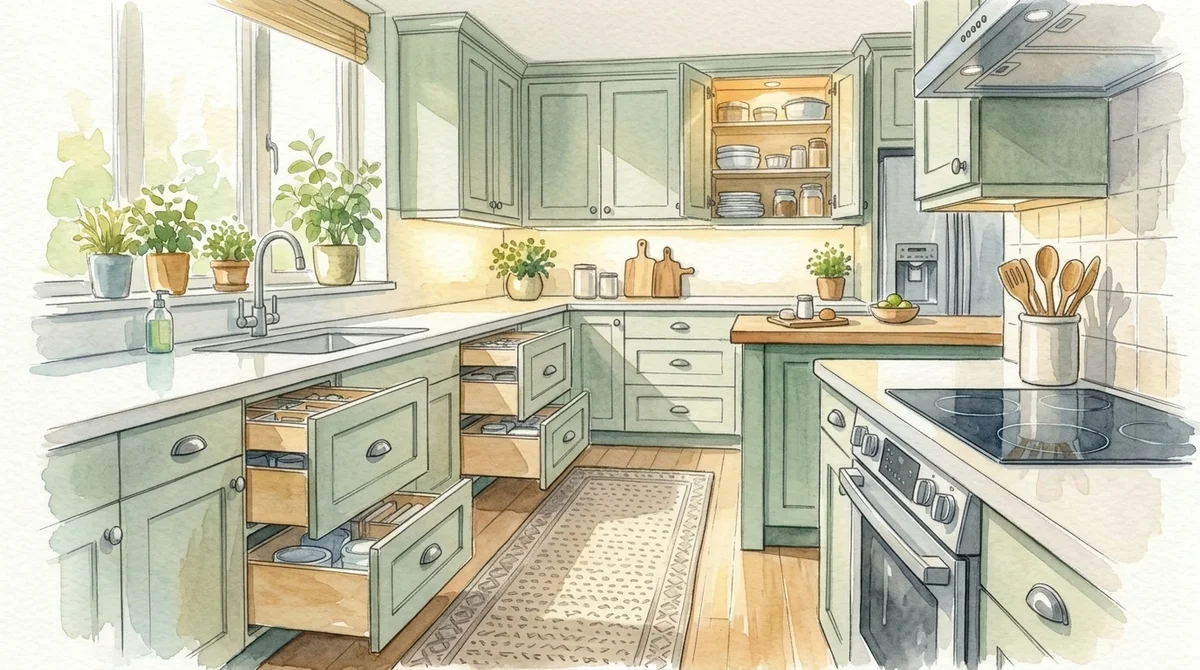
| 5. Heavy Bottom-Cabinet Bending | Moderate | -10 Points | Install sliding pull-out wire drawers in lower cabinets to eliminate squatting | $35 – $75 per shelf |
1. The "Golden Reach Zone": Banish the Step Stool Forever
Every occupational therapist and geriatrician agrees on one strict rule: step stools have no place in an older adult's home. Balancing on a small metal step with two hands overhead holding a glass dish is an accident waiting to happen.
Reorganizing for the Golden Reach Zone
- The Golden Zone (Waist to Eye Level): Store 100% of daily dishes, glassware, coffee cups, vitamins, and primary dry goods between 30 and 52 inches from the floor.
- Upper Cabinets (Above 52 Inches): Reserve strictly for lightweight seasonal items (paper plates, holiday napkins) that are retrieved only when family members visit.
- Lower Cabinets (Below 30 Inches): Install slide-out roll-out shelves so pots and small appliances glide out effortlessly without forcing deep knee bends.
2. Stove Safety & Automatic Shut-Off Tech
Burners left on after cooking are a primary cause of senior residential fires. Smart safety devices provide passive, automatic protection:
- Motion-Activated Shut-Offs: Devices like iGuardStove or FireAvert monitor the kitchen. If no movement is detected in the room after 5 or 10 minutes, power to the stove is automatically cut.
- Induction Burners: Induction hot plates only generate heat when magnetic cookware is touching the surface. If a pot is removed, or a burner is touched with bare hands, no burn occurs.
Frequently Asked Questions
How do you make a kitchen safe for an elderly parent with memory loss?
Key kitchen safety interventions for cognitive decline include: (1) installing an automatic stove shut-off device or removing stove knobs when unsupervised; (2) storing daily items on open shelving or clear glass cabinets; (3) installing anti-scald faucet aerators; and (4) keeping walkways completely clear of loose mats and step stools.
What height should kitchen items be stored for seniors?
All daily-use items (plates, bowls, medications, canned food, cooking oils) should be stored in the "Golden Reach Zone," which sits between 30 and 52 inches off the finished floor. This eliminates the need to reach overhead or bend down to the floor, protecting balance and reducing spine strain.