When There Is No Housing Team: Bringing the Home-Health Connection to Everyone
By Jon Warner, CEO, CareAxis, and Brian Fluhr, Founder & Chief Thriving Officer, SeniorThrive
In Part 1, Jon Warner made a relatively simple argument: the home is where much of health is created, maintained, or lost. Connecting housing and healthcare can give us a much richer understanding of people's lives, help identify emerging risks earlier, and allow families, communities and healthcare teams to intervene before relatively small problems become major ones. But there is an important limitation to that argument that we wanted to address in Part 2.
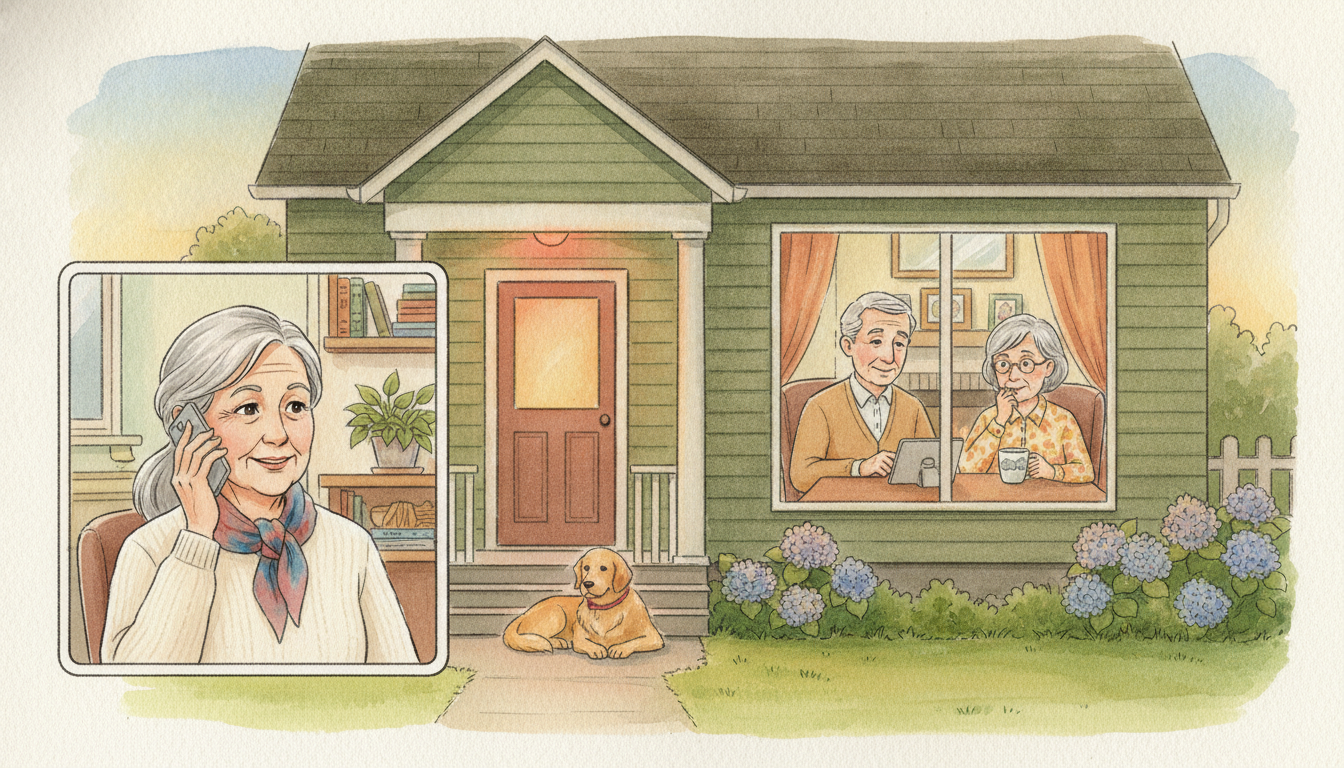
Most older adults do not live in affordable housing, assisted living, senior communities or other settings where service coordinators, property managers or care teams regularly see them. They live in ordinary homes. And in those homes, there may be nobody "walking the halls." The frontline worker might instead be a 52-year-old daughter living 800 miles away, trying to work out from a Sunday telephone call whether her mother sounds a little different this week.
That changes the challenge, but it doesn't change the fundamental opportunity. In fact, it may make connecting the home and health even more important. Most homes themselves have barely changed in years. The same rugs. The same lighting. The same bathroom the family stopped noticing long ago. But people change, and the home can often provide some of our earliest clues.
The House Is a Signal
We tend to think about health information as something generated by healthcare: blood pressure, laboratory results, diagnoses, prescriptions, claims and hospitalizations. But another category of information may tell us something much earlier: changes in everyday life.
Consider an older man living independently in the home he has owned for thirty years. Once-pristine grass grows tall. Mail accumulates in the box. A burnt-out porch light stays dark. Fresh groceries dwindle in the refrigerator. Unopened bills stack up on the counter. He stops driving after dusk, quietly abandoning upstairs rooms. Visiting months later, his daughter finds the house unusually cold and her father visibly thinner.
None of these observations necessarily constitutes a medical problem. Together, however, they may tell a story. Perhaps mobility is declining. Perhaps money is becoming tight. Perhaps cognition is changing. Perhaps depression has followed bereavement. Perhaps arthritis makes maintaining the garden difficult. Perhaps driving has become frightening. Or perhaps there is nothing wrong at all. The point is not to turn every untidy garden into a health alert. It is to recognize that change from someone's normal pattern can be meaningful. A house that stops being maintained may sometimes tell us something before the medical chart does.
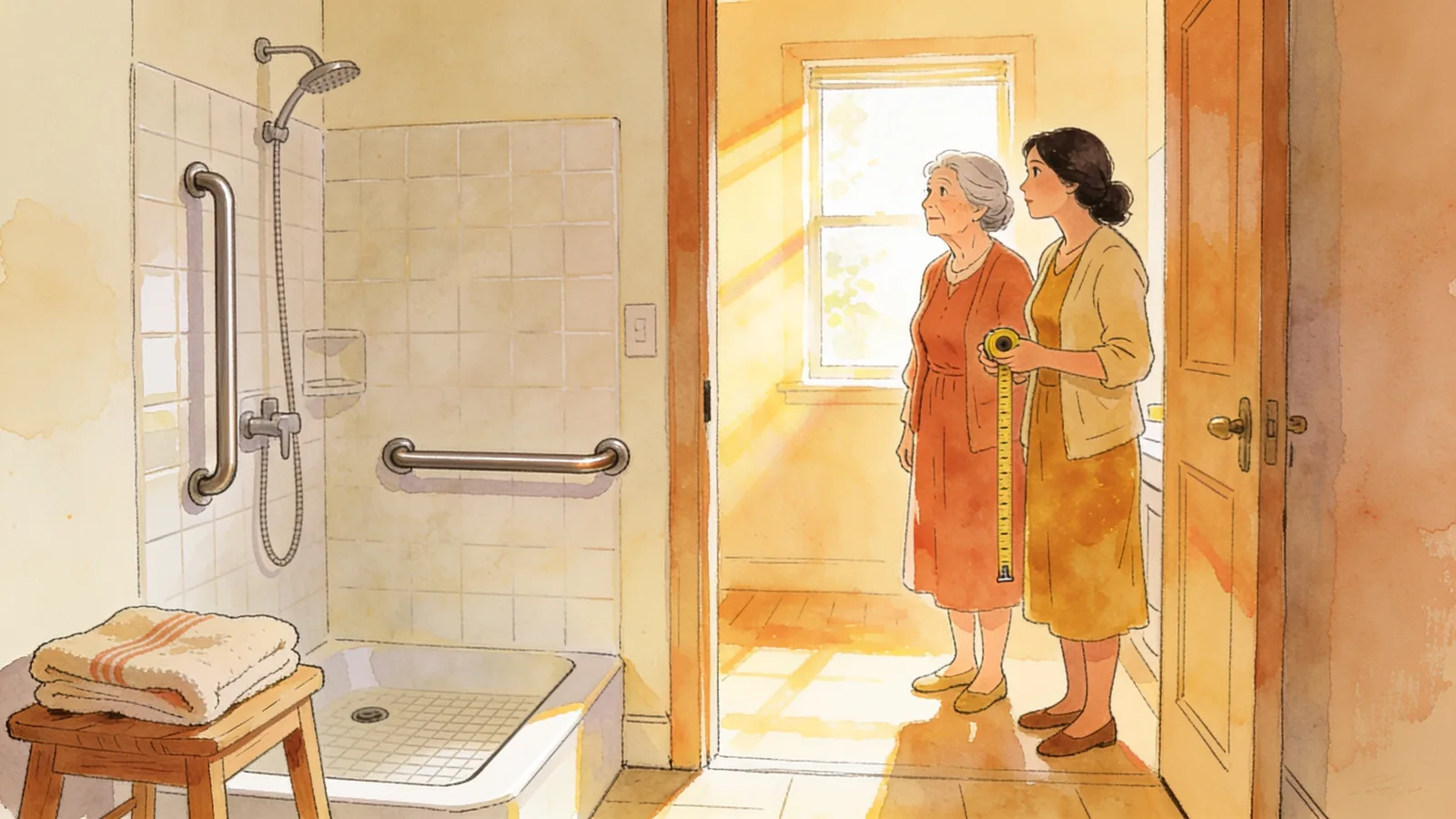
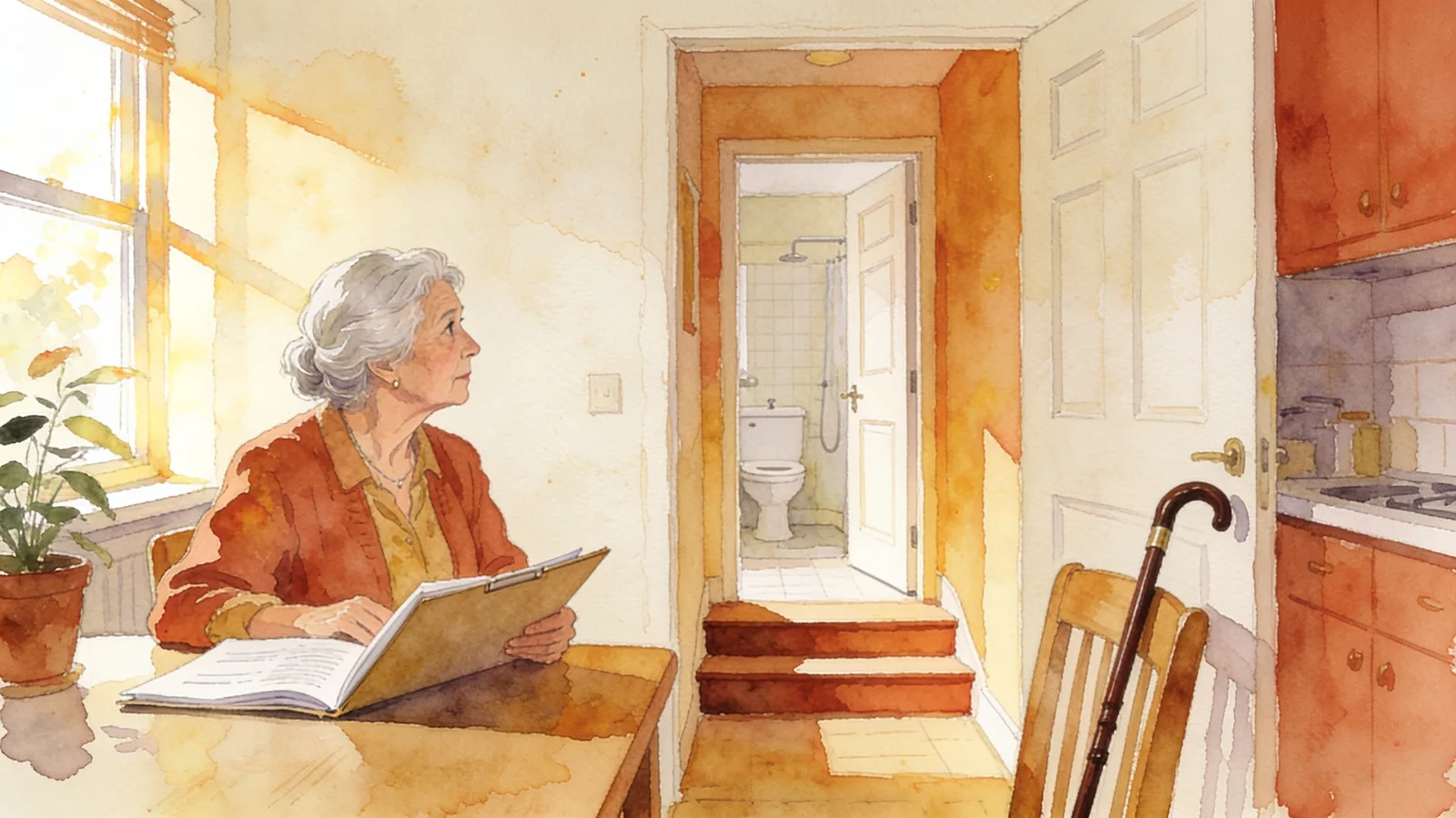
There is also something powerful about starting the conversation with the house rather than the person. Poor lighting, a high doorstep, a curled rug or an increasingly neglected garden can be discussed without immediately labeling someone as frail or declining. Blame the house, not the person. It preserves dignity and provides a much gentler starting point for conversations about safety, nutrition, mobility, falls prevention, mental wellbeing and social connection. And the older adult should be part of that conversation, not its subject. The best plan is one they help create.
From the Smart Home to the "Understanding Home"
Much of the conversation about aging at home has focused on smart-home technology. Sensors can detect falls. Wearables measure activity. Medication devices can identify missed doses. Smart meters can reveal changes in energy consumption. Connected appliances and environmental sensors can provide additional signals. These technologies can be valuable. But simply generating more data isn't the answer. And many of these tools are reactive. They are triggered after an event (e.g., a fall, a water leak, or a missed dose) has already occurred.
The bigger opportunity is to create an understanding home: an environment in which relevant signals contribute to a continuously evolving picture of how someone is doing. That picture might include health conditions and medications, but also mobility, nutrition, social connection, transportation, financial resilience, cognition, home safety, caregiving support, personal goals and, importantly, the individual's own perception of how life is going. An understanding home therefore isn't simply a home with more devices. It is a shared picture of what is normal, what has changed and what might need to happen next. Technology can contribute. But people still carry most of the meaning.
When the Family Becomes the Frontline Team
In managed housing, a service or care coordinator may notice changes because they encounter residents regularly. In owner-occupied housing, that role is often played informally by relatives, neighbors and friends.
A daughter notices that her mother is repeating herself more frequently but doesn't know whether it matters.
A son knows his father has stopped driving but doesn't realize this has also caused him to miss medical appointments and stop seeing friends.
Three siblings each possess different pieces of information without realizing that, collectively, they indicate an emerging problem.
The opportunity is therefore not simply to monitor older adults. It is to equip families to understand change.
Imagine a simple shared system through which an older adult, with appropriate consent, and the people supporting them gradually build a picture of their circumstances. Not surveillance. Not another medical record. A practical, longitudinal understanding of how life is changing. Families don't need a torrent of data. They need one shared picture they can keep current together, and a way of determining the next sensible step. Sometimes that might mean making a room safer. Sometimes improving food access, arranging transportation, addressing loneliness or supporting disease self-management. The goal is to keep the intervention proportionate to the signal.
The Difference Between an Event and a Trajectory
Healthcare is naturally organized around events. An appointment happens. A test is performed. A prescription is filled. An emergency department visit occurs. But aging often happens as a trajectory.
Walking becomes slightly harder.
Then shopping becomes harder.
Fewer fresh groceries enter the house.
Nutrition deteriorates.
Energy falls.
Social outings become less frequent.
Strength declines further.
Eventually there is a fall.
Healthcare sees the sudden fall; the family has watched the trajectory for six months.
The problem is that nobody had a way to connect the dots. This is where a whole-person model becomes particularly powerful. The objective is not to predict every possible adverse event. It is to identify meaningful change early enough for relatively small interventions to make a difference.
Transportation might be the answer, or it could be a home modification or meal support. In other cases, the family may need to arrange a primary-care visit, or loneliness, rather than disease, might be the most urgent issue. The intervention doesn't always need to be clinical. What we really need is a plan plus signals.
The plan establishes what normal looks like and what matters to the person. The signals tell us when something meaningful has changed: rooms being avoided, food thinning out, social plans disappearing, energy fading or appointments being missed. Without that baseline, every change can feel like a new crisis. With it, a signal becomes an update, and an opportunity to act.
A New Role for Healthcare
This also changes how healthcare organizations might think about aging populations. Today, healthcare has relatively little visibility into what happens between encounters. But imagine healthcare receiving, with permission, not a torrent of household data but useful signals:
- "Mobility has declined significantly over three months."
- "Three medical appointments have been missed."
- "Food access has become difficult."
- "Family reports increasing confusion."
- "Social activity has fallen sharply."
These signals direct human attention where it matters most: a vital capability for value-based care, where proactive support benefits both the individual and the organization. Healthcare commands clinical moments, but older adults and their families own the days in between.
The objective should be to connect the two intelligently. Useful signals should arrive as meaning, not as an indiscriminate raw feed from someone's house. The home then becomes not another clinical setting, but an early-warning environment.
One Model, Two Different Infrastructures
This leads to a broader way of thinking about connecting housing and health. There are really two versions of the same model.
In affordable and other managed housing, much of the infrastructure already exists. Service coordinators, property teams, community health workers and other staff can provide the human sensing layer. The opportunity is to give them better assessment, case-management, coordination and intelligence capabilities.
In owner-occupied homes, the infrastructure is distributed. It consists of the older adult, family members, friends, neighbors, primary-care teams, community organizations and, increasingly, technology. The architecture is different. The underlying idea is the same:
Understand the person continuously. Notice meaningful change. Determine what matters. Connect the right support. Follow through. Learn from what happens next.
In managed housing, professional staff can provide much of the sensing and coordination layer.
In ordinary homes, the older adult and family become that layer.
Same model. Different infrastructure.
Age Is Not a Place: Framing Matters
For too long, remaining in one's home has been labeled as "aging in place." However, that phrase fails to capture the true intent of older adults and their families.
The goal should not merely be extending time within four walls or anchoring someone to a physical structure; true success lies in fostering holistic well-being, dignity, and independence. It means helping people thrive wherever it is right for them, whether that is the family home, affordable housing, or an independent or assisted living community. Eventually, it may be another setting entirely. What should travel with the individual is a clear understanding of their circumstances, preferences, risks, relationships, goals, and history, ensuring they never have to start over simply because their setting changes.
Words matter. Few people say they are "aging in place"; people talk about staying in the home they love. And when a family supports a parent moving to assisted living, it's not said as, "Here is your new place to age in place." They say, "Welcome to your new home."
Aging is not a location. It is something our bodies naturally experience, constantly sending subtle signals along the way. Ultimately, our aim should be to align the body, environment, and support system to enable healthy longevity, wherever life takes us.
The Home May Be Our Greatest Untapped Health Platform
For decades, healthcare has invested enormously in understanding what happens inside hospitals, clinics and laboratories. The next frontier may be understanding, with appropriate consent and safeguards, what happens during the other 99% of people's lives. Not because every aspect of life should become medicalized. Precisely the opposite. If we understand people's circumstances earlier, many problems may be addressed before they require medical intervention at all. The home is not simply the place someone returns to after healthcare has finished its work. It is where people eat, sleep, move, connect, struggle, recover, adapt and age.
In managed housing, service coordinators provide this sensing layer. In individual homes, the signals emerge from daily life: a daughter's phone call, an attentive neighbor, or the home itself. Grounded in trust, the older adult determines what gets shared and when. By connecting these subtle insights without resorting to invasive surveillance, we can address emerging needs before they become medical emergencies. Because if health is created or lost at home, the future of healthcare will not begin in the hospital at all.
It will begin by learning to listen to the home.