What Is a Home Safety Assessment? Complete 2026 Guide
When an older adult begins to show signs of frailty, unsteady gait, or near-miss stumbles, family members often jump straight to catastrophic conclusions: "Mom can't live here anymore. We have to look at assisted living." Yet in the majority of cases, the person's physical health isn't what failed—it was the house.
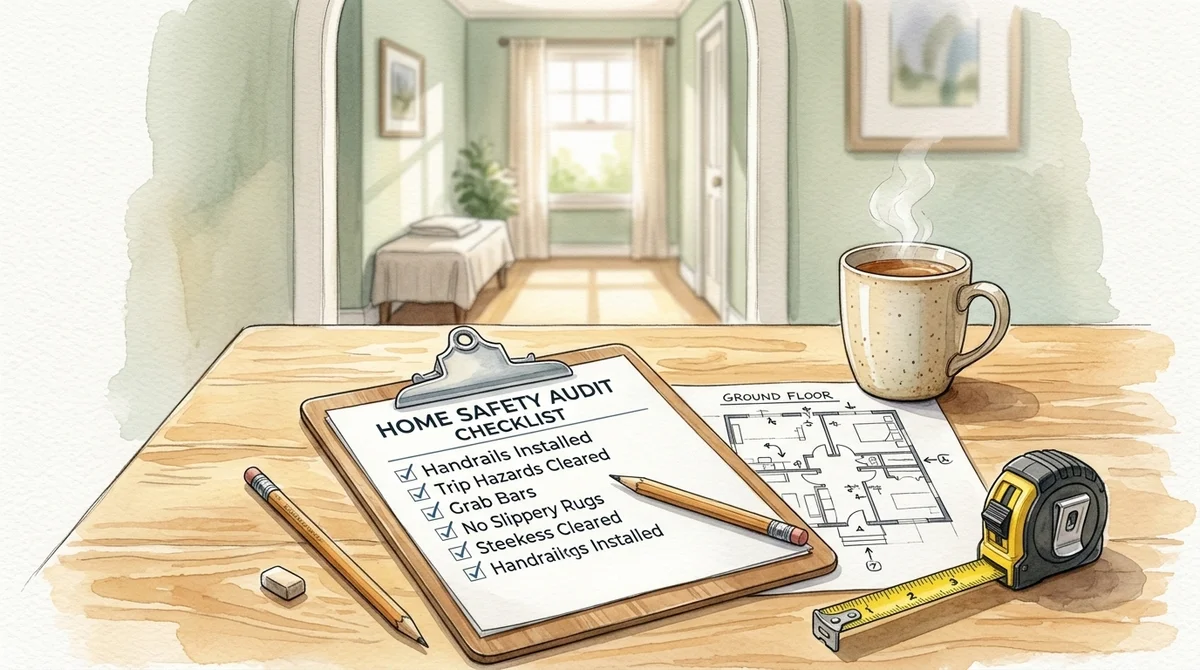
Most American single-family homes were built for able-bodied 30-year-olds. They feature sunken living rooms, high tub aprons, narrow 28-inch doorways, dimly lit hallways, and steep entrance steps. A Home Safety Assessment is a systematic, clinical evaluation that identifies these environmental barriers and creates a prioritized blueprint to eliminate them, allowing older adults to remain independent, dignified, and safe at home.
Below is the complete guide to how home safety assessments work, who conducts them, what they cost, how they interface with the Home Safety Score methodology, and how to prepare before an evaluator walks through your front door.
Clinical Definition: What Is a Home Safety Assessment?
A Home Safety Assessment (HSA) is a structured evaluation that analyzes the three-way interaction between an individual's functional capacity, their daily behavioral routines, and the physical architecture of their home. Unlike a standard home inspection that checks foundations and plumbing, a safety assessment evaluates biomechanics: how a specific person transfers onto a toilet, negotiates stairs in dim light, or retrieves food from a refrigerator.
The 4 Professionals Qualified to Assess Home Safety
Not all home reviews are created equal. Depending on whether your priority is medical rehabilitation or structural construction, four types of professionals perform assessments:
| Professional Role | Primary Credential | Assessment Focus | Typical In-Person Cost |
|---|---|---|---|
| Occupational Therapist (OT) | OTR/L, ECHPC (Environmental Modification) | Evaluates functional task performance, cognition, sensory perception, and dynamic balance | $250 – $600 (MD order may bill Medicare Part B) |
| Certified Aging-in-Place Specialist | CAPS (National Association of Home Builders) | Evaluates architectural modifications, barrier removal, universal design, and construction feasibility | $150 – $400 (often credited toward remodel work) |
| Physical Therapist (PT) | PT, DPT, GCS (Geriatric Certified Specialist) | Evaluates gross motor mobility, assistive device navigation (walkers/canes), and stair ascent/descent | $200 – $500 |
| Environmental Access Consultant | CEAC (Accessible Home Improvement) | Specializes in ramps, vertical platform lifts, stair glides, and ADA residential compliance | $150 – $350 |
Tip: The gold standard for aging in place is an OT-CAPS collaboration: an Occupational Therapist determines what the senior's body needs, and a CAPS-certified contractor engineers the structural modification.
---The 5 Phases of a Comprehensive In-Home Assessment
When an evaluator visits your parent's home, the process takes between 90 minutes and 2.5 hours. It follows five structured clinical phases:
Phase 1: Functional & Daily Routine Intake
The evaluator begins with a conversational interview sitting at the kitchen table. They evaluate:
- Medical History & Medications: Reviewing prescription side effects (blood pressure drops, sedatives, diuretics) causing urgency.
- Fall History: Details of previous falls, near-misses, or "furniture walking" (clinging to walls and tables while moving).
- Daily Activity Patterns: Where does your parent spend their morning? Who cooks? What time do they wake up to use the bathroom?
Phase 2: Exterior Approach & Transition Review
The evaluation begins outside at the driveway or curb:
- Walkway grade, cracking, heaving roots, and non-slip traction.
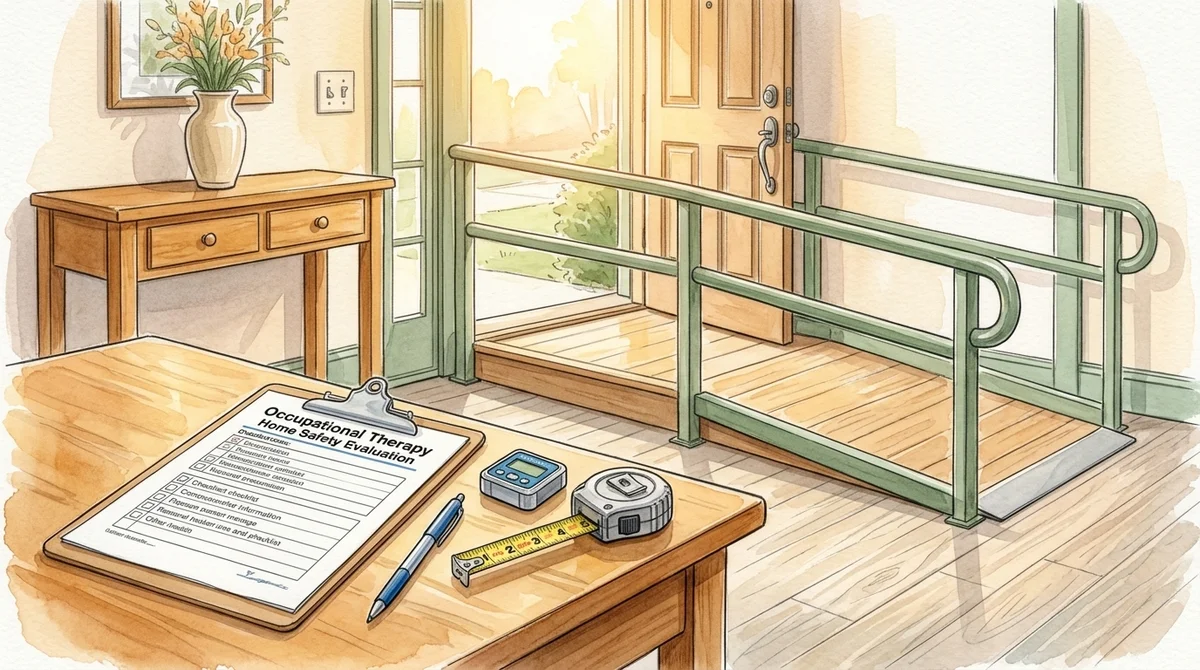
- Porch step riser heights, landing dimensions, and weather protection.
- Exterior illumination from vehicle parking to the primary doorway.
- Doorway threshold heights (transition lips exceeding 0.5 inches).
Phase 3: The Room-by-Room Environmental Audit
Using standardized protocols like the Home Safety Score, the evaluator systematically inspects each room:
- Bathrooms: Grab bar stud anchoring, tub transfer heights, commode elevation, and non-slip floor friction.
- Stairways: Dual continuous handrails, 12-inch landing extensions, step nosing contrast, and illumination levels.
- Bedrooms: Mattress height (sitting 90-degree knee check), under-bed lighting, and nighttime pathway clearances.
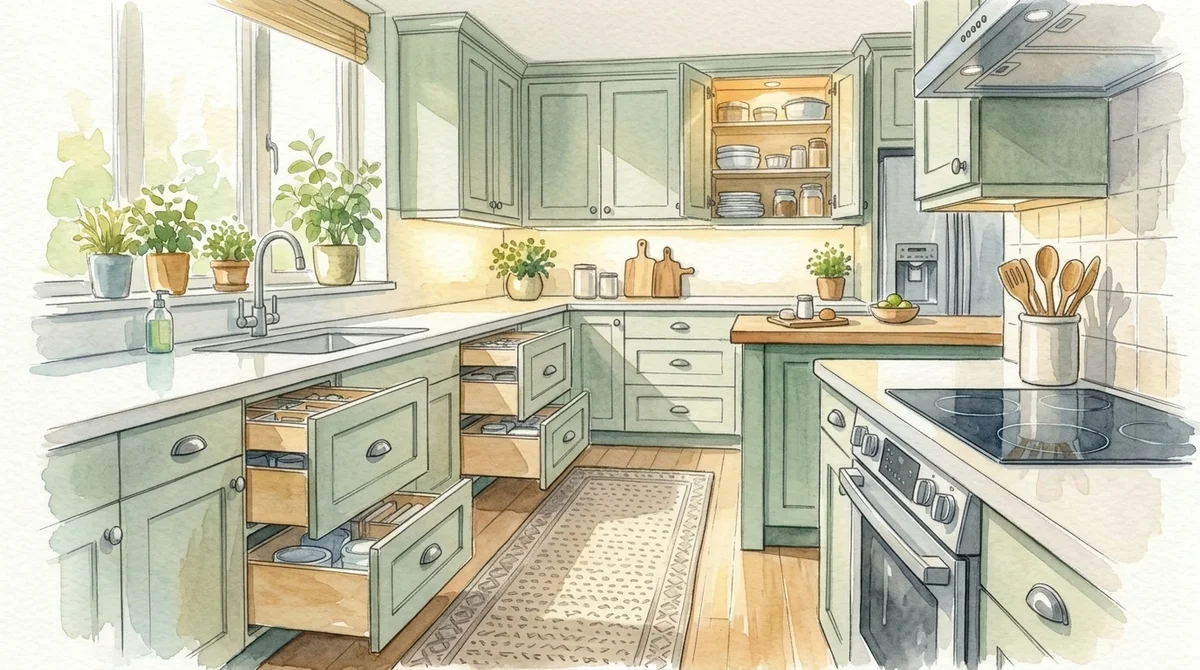
- Kitchens: Golden Reach Zone (waist-to-shoulder storage), stove safety cutoffs, and task lighting.
Phase 4: Dynamic Movement Observation
Unlike a home appraisal, an HSA requires the older adult to actively demonstrate daily movements:
- Getting out of their favorite armchair without using their hands.
- Walking down the main corridor while holding a cup of water.
- Stepping into and out of the shower stall.
- Reaching for a commonly used dish in the pantry.
Phase 5: The Prioritized Action Report (Punch List)
Within 3 to 7 days, the evaluator delivers a written clinical report dividing recommendations into three practical tiers:
- Immediate Low-Cost Fixes (Under $100): Remove throw rugs, install plug-in motion nightlights, reposition daily pantry goods.
- Essential Functional Hardware ($200 – $800): Stud-anchored bathroom grab bars, ADA toilet seat risers, dual stair handrails.
- Structural / Long-Term Modifications ($1,500 – $8,000+): Modular entrance ramps, tub-cut conversions, curbless walk-in showers, or stair lifts.
Assessment Cost & Insurance Coverage Reality
Does Medicare Pay for a Home Safety Assessment?
Traditional Medicare Part B will cover an in-home evaluation conducted by an Occupational Therapist only when ordered by a physician as part of a formal outpatient therapy plan of care (typically following a hospital discharge, fall injury, or neurological diagnosis like stroke or Parkinson's). Under this medical order, Medicare pays 80% of the therapy fee after the Part B deductible.
What Medicare Does NOT Pay For: While Medicare may cover the therapist's evaluation time, Medicare strictly classifies physical modifications (grab bars, ramps, stair lifts, walk-in tubs) as "convenience modifications" and will not pay for the hardware or carpentry labor.
Alternative Funding Sources
- Medicaid HCBS Waivers: Nearly all states offer Environmental Accessibility Adaptation (EAA) funds covering $2,500 to $10,000+ in home modifications for qualifying Medicaid recipients.
- VA HISA Grants: Home Improvements and Structural Alterations grants provide up to $6,800 for service-connected veterans and $2,000 for non-service-connected veterans to modify bathrooms and entryways.
- Long-Term Care Insurance (LTCI): Modern policies often include a care coordination or home modification benefit ($1,000 to $5,000) that reimburses safety assessments and hardware installation.
Preliminary Screening vs. Full Clinical Assessment
Scheduling an in-person OT assessment can take four to eight weeks, and private-pay consults cost hundreds of dollars. What should families do in the interim?
The recommended protocol is a two-stage screening approach:
- Stage 1: Preliminary Digital Screening (Today): Use a digital screening tool like SeniorThrive's free 2-minute Home Safety Check-In or run room photo scans with Room Check. This instantly surfaces obvious red flags (throw rugs, dark hallways, missing grab bars) that you can fix immediately for under $50.
- Stage 2: Comprehensive In-Person Assessment (When Warranted): Bring in an OT or CAPS specialist when mobility declines, after a hospital stay, or when complex structural work (stair lifts, roll-in showers, exterior ramps) is required. Browse vetted specialists in our Professional Directory.
To evaluate the long-term economics of home modifications against the staggering costs of post-fall nursing home care ($9,000+/month), run the numbers in our interactive Value Calculator.
---Frequently Asked Questions
How much does a home safety assessment cost?
A professional in-person home safety assessment typically costs between $200 and $500 when conducted by an independent Occupational Therapist or Certified Aging-in-Place Specialist (CAPS). If ordered by a physician under Medicare Part B, the therapy evaluation fee is largely covered by insurance, though the physical modifications themselves are out-of-pocket.
Who should get a home safety assessment?
An assessment is recommended for any older adult planning to age in place, and is especially critical for individuals who: (1) have experienced a fall or stumble in the past 12 months; (2) are returning home following surgery or hospitalization; (3) have been diagnosed with balance impairments, neuropathy, vision changes, or Parkinson's; or (4) live in a home with multiple floor transitions and stairs.
How long does a home safety assessment take?
A comprehensive residential evaluation typically takes 90 minutes to two hours on-site. The evaluator inspects the exterior, all primary living spaces, lighting levels, and observes the senior performing routine daily transfers (standing from a chair, stepping into the shower, climbing steps).
What is the difference between a home safety assessment and a home inspection?
A real estate home inspection evaluates the physical condition of the building itself (roof, electrical panel, plumbing, foundation). A home safety assessment evaluates the functional interaction between a specific human body and the living environment, focusing on fall prevention, ergonomics, lighting lux, and accessibility barriers.
Can families perform their own home safety assessment?
Yes. Families can conduct an effective preliminary review using structured checklists or digital tools like SeniorThrive's Home Safety Score and Room Check scan. While clinical therapists are needed for complex biomechanical modifications, families can independently identify and resolve 80% of common fall risks like throw rugs, poor night lighting, and step stool hazards.