The Quiet Risk: Helping a Rural Senior Who Lives Alone Stay Connected

Rural older adults are often described as resilient, and they are. A lifetime of long winters and long distances builds something sturdy. But resilience can hide a real risk, and isolation is the one families miss most.
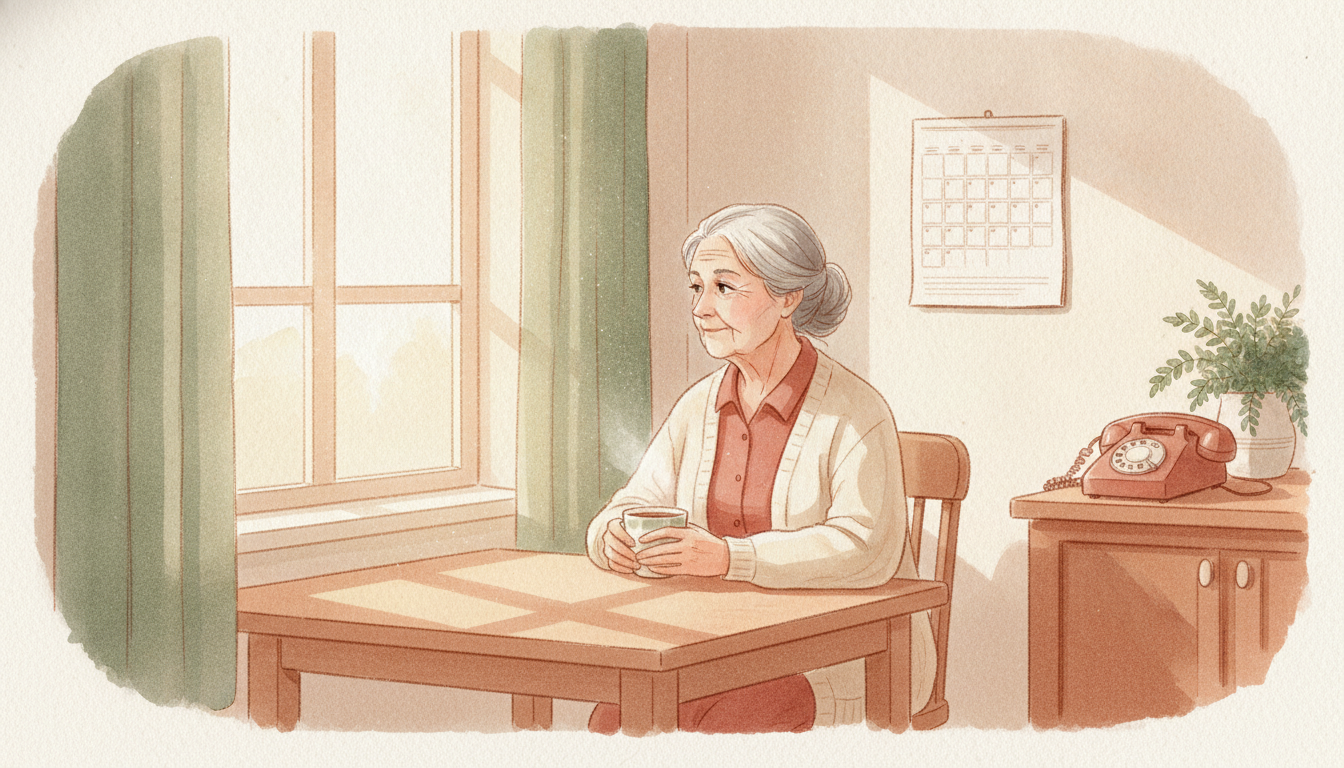
It does not announce itself. A parent who has always been private, always content with their own company, can drift from solitude into something heavier without anyone noticing. The visits get shorter. The phone calls get briefer. The world narrows to a few rooms and a long view out the window.
This guide covers what isolation actually looks like for a rural senior, why it matters for their health, and the practical, low-effort ways families help.
What does isolation actually look like for a rural senior?
It rarely looks dramatic. It looks like a parent who has stopped going to church because driving at dusk got hard. A friend group that has thinned through moves and loss. A daughter's calls answered with "I'm fine, nothing new." Days that pass with the television as the only voice in the house.
Rural isolation has a particular shape. The distances that make a rural home peaceful also make it hard to reach. A bad winter, a stopped car, a sore hip, any of these can quietly shrink a person's world to the walls of one house.
Why is isolation a health risk, not just a sad fact?
Because the body keeps score. The U.S. Centers for Disease Control and Prevention reports that social isolation is associated with about a 50 percent higher risk of dementia. Poor social connection is also linked to a roughly 29 percent higher risk of heart disease and a 32 percent higher risk of stroke. Researchers have compared the health toll of chronic isolation to that of smoking.
That reframes loneliness. It is not only an emotional hardship to feel bad about. It is a measurable health risk, which means connection is not a nicety. It is part of care.
What are the warning signs families miss from a distance?
- Phone calls that get shorter and vaguer, with "I'm fine" closing every subject.
- A parent who has dropped regular activities, church, cards, a club, without a clear reason.
- Days and nights blurring together, with sleep and meals losing their shape.
- Less interest in things they used to care about, from the garden to the grandchildren's news.
- A house that sounds quiet in the background of every call.
None of these is proof on its own. Together, over weeks, they are a signal worth acting on.
How can families help a rural parent stay connected?
The good news is that connection does not require moving anyone anywhere. It requires a rhythm and a little structure.
- Set a predictable rhythm of contact. A short call at the same time on the same days is worth more than a long call once a month. Predictability gives a parent something to anticipate and gives the family a baseline to notice changes against.
- Use technology that is genuinely simple. A video call only helps if it works without stress. Pick the simplest possible setup and get it right once.
- Lean on existing community. Faith communities, senior centers, and neighbors are often the strongest rural connection of all. A standing ride to church can do more than any app.
- Bring more than one person in. When connection depends on a single relative, it is fragile. A small circle that takes turns is steadier for everyone.
What role does a daily check-in play?
A daily check-in turns "I hope Mom is alright" into "I know Mom is alright." It is a small, steady touchpoint that catches a hard day early, before a quiet week becomes a missed problem. It also gives a rural parent a sense that someone is paying attention, which is its own kind of comfort. This is part of how SeniorThrive helps rural families stay close across distance.
How do you tell solitude apart from harmful isolation?
Many rural seniors genuinely love their quiet, and that is not a problem to fix. The difference is direction. Solitude a person chooses tends to sit alongside things they still enjoy and look forward to. Isolation that is hurting them tends to come with withdrawal, low mood, and a shrinking interest in life. Watch the trend, not the snapshot.
Frequently asked questions
Is social isolation really a health risk for older adults?
Yes. The CDC links social isolation to a roughly 50 percent higher risk of dementia and to higher risk of heart disease and stroke. It is a genuine health factor, not only an emotional one.
How can I tell if my rural parent is isolated?
Watch for shorter calls, dropped activities, blurred routines, and fading interest in things they used to enjoy. Look at the trend over weeks rather than any single day.
What helps a rural senior who lives alone stay connected?
A predictable rhythm of contact, simple technology, existing community ties like faith groups and senior centers, and a small circle of people who share the work rather than one person carrying it.
My parent says they like being alone. Should I worry?
Not necessarily. Chosen solitude alongside genuine enjoyment of life is healthy. Concern is warranted when you also see withdrawal, low mood, and shrinking interest. That pattern is worth a gentle, direct conversation.
This is one piece of rural senior care. Read the full guide for the bigger picture.