Chair Rocker vs. Slider: Pros, Cons, and Recommendations for Older Adults
Why Chair Choice Matters
When we talk about thriving at home as we age, comfort and safety are at the top of the list. The right chair isn't just about relaxation, it can relieve sore joints, offer a cozy place for a nap, and, importantly, reduce the risk of falls or strains. For many older adults and their families, picking between an old-school rocking chair and a modern glider (slider) isn't just about looks, it's about mobility, ease of use, and peace of mind.
You might be helping a parent downsize, remodeling your own living room, or just want to make life a little easier and more comfortable. Either way, understanding the pros and cons behind these seats empowers you to make a choice that supports both independence and wellbeing.
Rocking Chairs vs. Gliders: What's the Difference?
Let's clear things up right away:
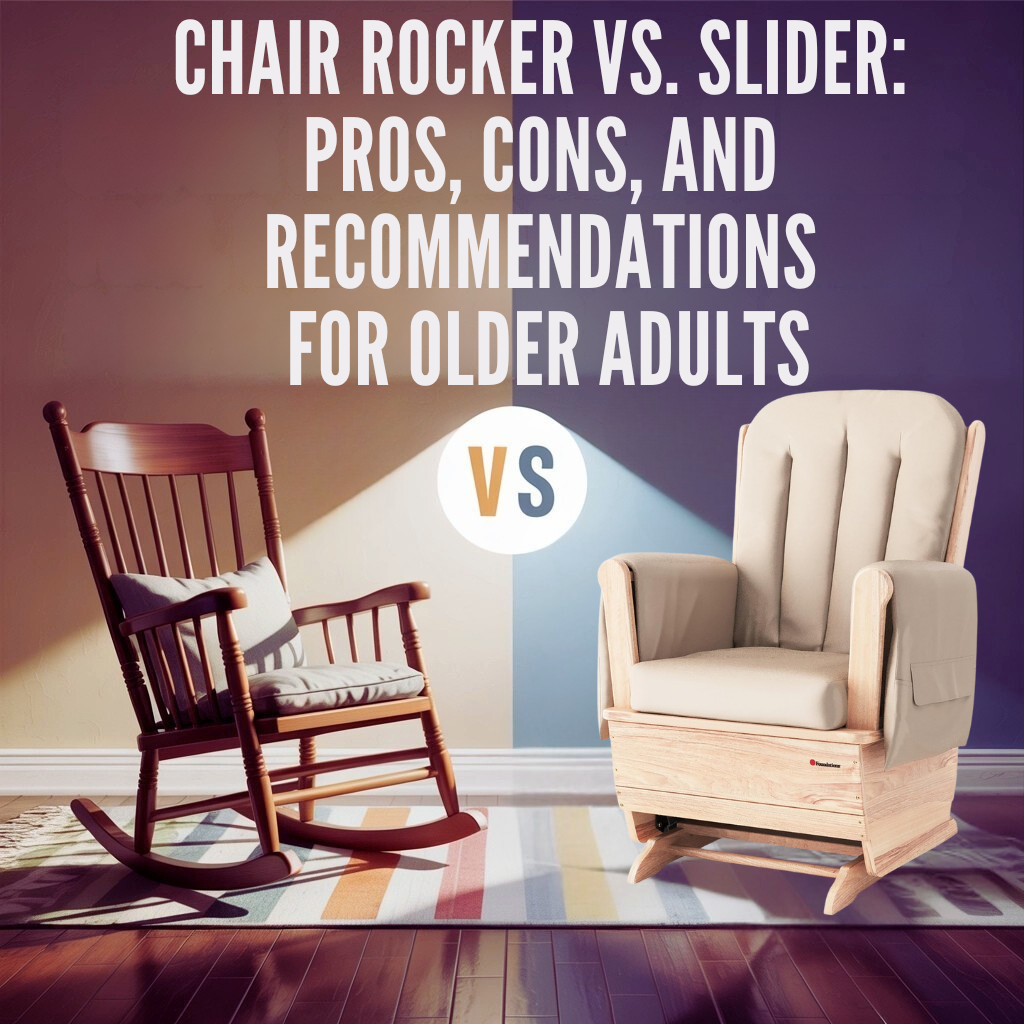
- Rocking chairs move in an arc, thanks to their curved legs, think classic grandma's porch rocker.
- Gliders (sliders) glide back and forth on a fixed track, making their movement linear, quiet, and silky-smooth.
Both can feel soothing, but they shine in different settings and for different needs.

The Rocking Chair: Pros, Cons & Best Fits
Strengths & Highlights
A rocking chair offers a sense of nostalgia and tradition. For many, that gentle rhythmic sway brings back memories and quiets the mind. The arc motion is simple, familiar, and surprisingly therapeutic.
Pros
- Lightweight and Portable: Move them from room to room with ease; helpful if you're frequenting the living room, patio, or bedroom.
- Usually Budget-Friendly: Traditional rockers are often less expensive than modern gliders, so you can get quality comfort without a big price tag.
- Compact when Idle: Not in use, these chairs don't hog floor space, handy for smaller homes and apartments.
- Therapeutic Motion: The gentle rocking can ease stress, calm anxiety, and sometimes even offer relief for sore joints or restless legs.
- Classic Aesthetic: For those who cherish a timeless look, they easily fit into traditional spaces.
Cons
- Needs More Arc Clearance: The rocking motion means you'll need ample space behind and in front, watch out for walls, tables, or people!
- Risk of Tipping: Because the seat arcs so far back and forth, there's a greater risk of tipping, especially if someone tries to stand up quickly or leans too far.
- Toe Hazards: Moving rockers can catch toes or pet tails, especially if there are kids or grandkids in the mix.
- Limited Comfort for Long Sits: Seats and armrests can be on the narrow side, and the upright posture may not suit those with back issues.
- Can Be Noisy: Depending on the floor and construction, some rockers squeak or creak more than gliders.
Real Life Example
"My mom always loved her porch rocker. But after her hip replacement, she found it tricky to get momentum without pushing with her feet, and the tipping made us nervous every time the grandkids visited."
The Glider (Slider): Pros, Cons & Best Fits
Strengths & Highlights
Gliders are the evolution of the rocking chair, a modern take designed for a smoother, more stable ride. Their linear motion feels relaxing without needing much physical effort.
Pros
- Smooth, Quiet Operation: The fixed track eliminates squeaks and sudden jerks, gliding gently with just a nudge.
- Extra Comfort: Wider seats, plush cushions, and broader armrests make these chairs inviting for longer periods, many even recline!
- Easy for Limited Mobility: No need to push off the ground, making them safe and accessible for people with joint pain or low strength.
- Versatile Features: Many gliders come with ottomans, recline functions, and even swivel bases.
- Safe for Shared Spaces: No pinched toes or sudden rocking swings; motion is predictable and contained.
Cons
- Price Point: With all those extra features, expect to pay more than you would for a basic rocker.
- Larger Footprint: The frame and mechanism mean gliders need a bigger patch of floor.
- Heavy and Bulky: Not the kind of chair you'll shuffle from room to room, pick your spot and plan to leave it there.
Real Life Example
"After his knee surgery, my dad switched to a glider with a built-in recliner. The glide was so effortless, he could enjoy the back-and-forth without pushing. We added a non-slip mat underneath, and now it's his favorite spot for reading (and napping)."What Does This Mean for Older Adults?
Thriving at home is all about thoughtful choices. Here's where each chair shines:
When a Rocker Makes Sense:
- Tight budget or small living space
- You prefer to shift the chair around for sun, shade, or visitors
- Classic styling is a must-have
- You have decent mobility and balance
When a Glider Wins Out:
- Mobility is limited (arthritis, joint pain, balance concerns)
- You want a stable seat to get in and out of safely
- Comfort for long periods is your priority (think reading, TV, or afternoon catnaps)
- It's okay for the chair to stay put in one room
- You value quiet movement and modern features
Practical Steps Before Choosing
- Assess Your Space: Measure the area where your chair will go. Think about traffic flow and how you'll get in/out of the seat.
- Try Before You Buy: Sit in both options at a store, if possible. Notice ease of standing up, comfort while seated, and how the motion feels.
- Consider Safety Add-Ons: Place a non-slip mat beneath either chair if it's on hard floors. For rockers, check the arc clearance, and for gliders, ensure there's nothing obstructing the glide path.
- Think About Cleanability: For older adults with pets or grandkids, washable covers or stain-resistant fabrics make cleanup less stressful.
- Budget Smartly: Aim for quality over bells and whistles, a stable, well-made chair is always worth the investment.
Your Next Step: Choose Confidence
The right chair isn't just a piece of furniture; it's a daily retreat and often, let's be real, a necessity for endurance and happiness at home. Gliders get high marks for safety and comfort, especially for those with mobility challenges. But for folks who relish tradition, have plenty of pep, or love moving things around, a classic rocker might be just right.
Ready to Help Your Loved One Thrive at Home?
Don't wait for a crisis. SeniorThrive gives you the tools to support safety, wellness, and connection, without the overwhelm.
✅ Scan rooms for fall risks
✅ Track wellness with simple daily check-ins
✅ Stay connected with your whole care circle
Aging is inevitable. Thriving is a choice. Ready to choose?
👉 Join SeniorThrive today and take the first step toward confident care at home.
Have a chair story or tip for fellow readers? Drop it in the comments, or share this blog with someone you care about.