What Your Family Calls Decline, You Might Call Freedom

Somewhere around 75, the things that used to look ordinary start getting read as symptoms. You stay up late with a book, and someone wonders if your sleep is off. You skip the big family dinner, and someone wonders if you are pulling away. You take the stairs slowly, and someone wonders if you should still be taking them at all.
Here is what the people watching often miss. A lot of what looks like decline is not decline at all. It is a person who has earned the right to live on their own terms, finally taking it. After decades of schedules built around work, children, and everyone else, a quiet morning alone is not a warning sign. It is the reward.
That does not mean nothing ever changes, or that family worry is never warranted. It means the people who love you owe you one thing before they step in: they have to tell the difference between a real concern and their own need to feel in control. Here is how to tell, from both sides of it.
1. A bedtime is not a vital sign
A 78-year-old who is up until 2 a.m. with a novel, and asleep by 9:30 the next night, is not slipping. She is setting her own hours, which is one of the oldest privileges of getting this far. Irregular is not the same as unwell. Before you read a late night as a problem, ask whether it is actually causing harm, or just breaking a pattern that was never yours to set.
2. Choosing fewer things is still choosing
The world sometimes reads a smaller social calendar as withdrawal. Often it is the opposite. People who are thriving in their 70s and 80s tend to spend their time with the people who matter and skip the rest. That is not pulling away. That is finally being honest about what is worth the effort.
3. A slower pace is a preference, not a verdict
Moving deliberately through your own home is not a decline you should apologize for. Sometimes slow is caution earned by experience. Sometimes it is simply the speed you prefer now. The goal of staying home is not to move like you are forty. It is to move like yourself, in a home that fits you.
4. How to tell concern from control
Here is the honest test for the family. Real concern points at a specific change with a real consequence: a new unsteadiness on the stairs, a stove left on twice in a week, a medication missed three days running. A need for control points at a feeling: I would feel better if I could see. The first deserves a calm conversation and maybe a change to the home. The second is yours to manage, not hers to absorb.
5. Trust without going blind
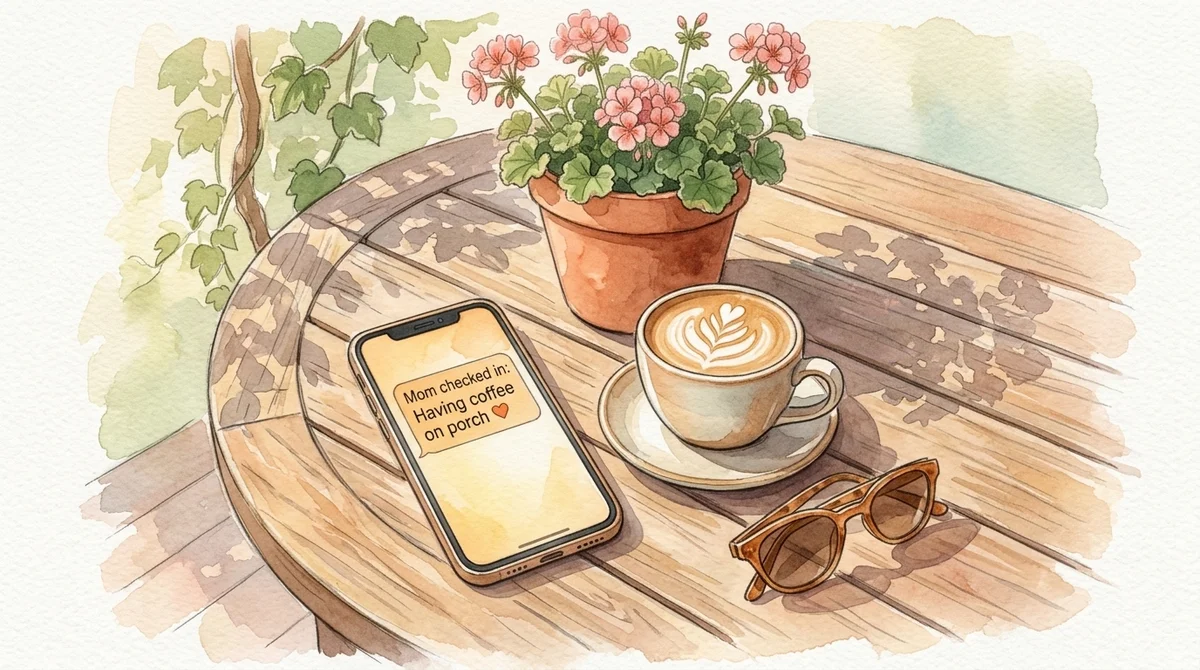
The thing nobody tells families is that trust and visibility are not opposites. You can respect someone completely and still want to know they are alright. The answer is not a camera in the living room, which tells a capable adult that the way she moves through her own home is now data. The answer is a shared picture that she controls: what she chooses to share, with whom, on her terms. That is the idea behind ThriveCircle. The older adult stays the protagonist. The family gets peace of mind without taking anything away.
If you are the one being watched a little too closely, you are allowed to say so. You are not a problem to be solved. You are a person who got this far on your own judgment, and that judgment did not expire on a birthday. And if you are the one watching, the kindest thing you can do is ask before you act. Most of the time, what looks like decline is a life finally lived on its owner's terms.
SeniorThrive is built so families can stay close without taking over. One shared place, controlled by the person it is about, so everyone can help and nobody has to hover. Start free, today.
Independence at home. Strength together. seniorthrive.com