Your Parent Comes Home From the Hospital Thursday. Here Is What to Do Today.

The call usually comes on a Tuesday. She is doing well, they are talking about discharge Thursday, and everyone breathes out. Then somebody remembers the stairs.
Here is the part nobody says at the nurses' station. The hospital changed your parent. It did not change the house. She is coming back to the same rug, the same bathmat, the same dim hallway, with less strength than she left with and a bag of new instructions. The gap between those two things is where the second trip to the emergency room lives.
You probably have one or two days. That is enough, if you spend them on the right things.
Walk the route she will actually walk
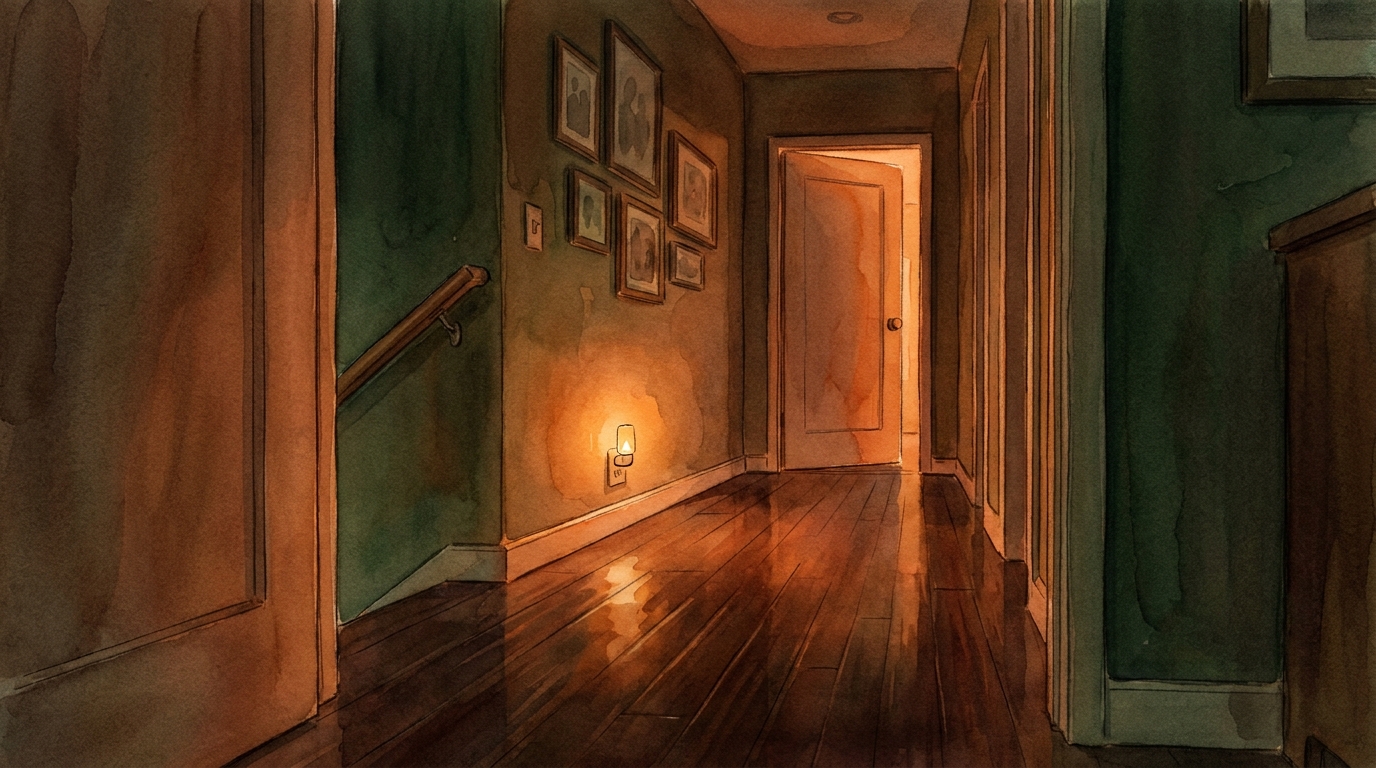
Not a tour of the house. One specific route: from the bed to the bathroom, in the dark, at two in the morning. Walk it yourself with the lights off and count what you touch to stay steady. If you reach for a doorframe, a dresser, or a towel bar, that is not furniture. That is a handhold, and it needs to be something built to be grabbed.
Then do the second route: the chair to the kitchen. Then the front door to the chair, because that is the first trip she will make, tired, probably with a bag in someone's hands.
Fix the floor before you buy anything. Throw rugs come up. Cords go behind furniture. The laundry basket on the stair landing goes somewhere else permanently. That costs nothing and it is the single highest-value hour you will spend this week.
Set up the ground floor like she will stay there
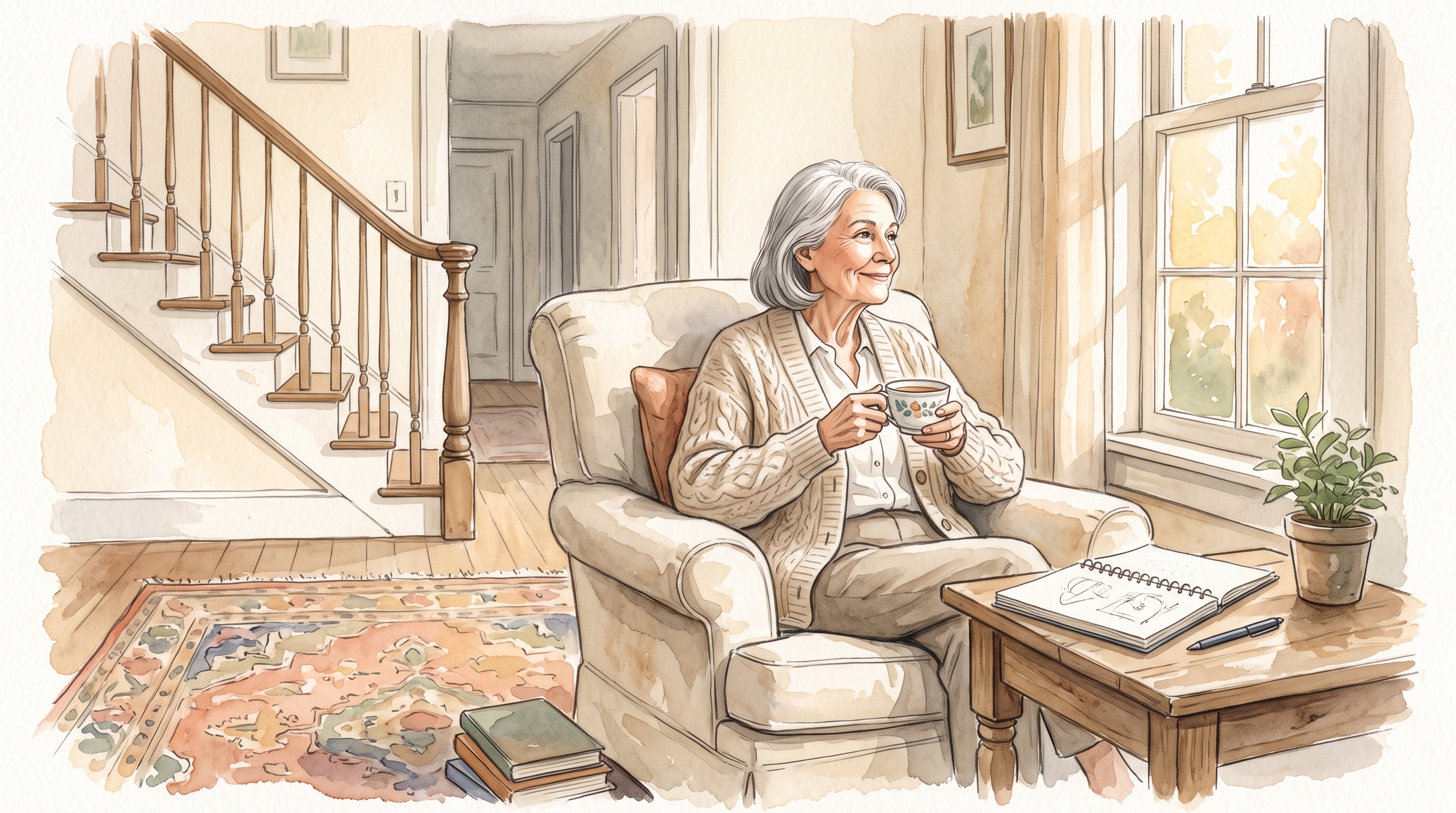
If there are stairs, assume for the first two weeks that she is not doing them more than once a day. A comfortable chair she can get out of without pushing off with both arms. A lamp she can reach from that chair. Water within arm's length. A phone that stays with her, not the one on the kitchen wall.
Chair height matters more than people expect. If she sinks into it, she cannot get out of it alone, and she will either wait for help she does not want to ask for or she will lunge. Firm and higher is safer than soft and low.
Get the paperwork into one place, in her own words
Before you leave the hospital, ask for a printed discharge summary and a printed list of every medicine she is supposed to take at home, including the ones she was already taking. Ask the discharge nurse or her pharmacist to read that list against the bottles in her cabinet, out loud, one at a time. Hospital stays are one of the most common moments for a medicine to be started, stopped, or changed in dose, and the bottle at home will not know that.
Write down three things while you are still standing there: who to call for a question about the medicines, who to call for a question about the surgery or condition, and what specifically should make you call rather than wait. Get that last one in their words, not yours.
If something feels wrong in the first weeks, do not wait for the follow-up appointment. New confusion, a fall, a fever, breathing that changed, a wound that looks different, sudden dizziness on standing. Call the clinician. It is a five minute phone call, and the people on the other end would far rather hear from you early.
Then write down who is doing what
This is the part that quietly falls apart. On day one there are six people in the group chat and everyone is available. By day nine there is one person driving to every appointment and answering every call, and the rest of the family genuinely believes it is being shared, because nobody ever wrote it down.
So write it down. The follow-up appointment on the 14th, and who is driving. The prescription pickup, and who is picking it up. The grab bar in the shower, and who is installing it or calling someone who will. Not a conversation about fairness. Just a list with names on it.
A list is not a fight. It is the only thing that makes invisible work visible, and it is the difference between a family that shares this and a family that finds out in March that one person has been carrying it since September.
SeniorThrive goes room by room with you and turns what you find into a shared list your whole family can see, so the person who noticed the loose stair rail is not also the only person who fixes it. Start your list. Free to try.