Bathroom Safety for Older Adults: The Room That Matters Most
If you are going to make one room in your home safer for aging in place, make it the bathroom.
This is not opinion. It is data. The bathroom is where the most serious home injuries happen for older adults. Wet surfaces, hard edges, awkward transfers in and out of the tub, low toilets that require significant effort to stand up from. It is a small space with an outsized impact on safety and independence.
The good news: most bathroom safety upgrades are simple, affordable, and can be done in a weekend.
Grab Bars: The Non-Negotiable
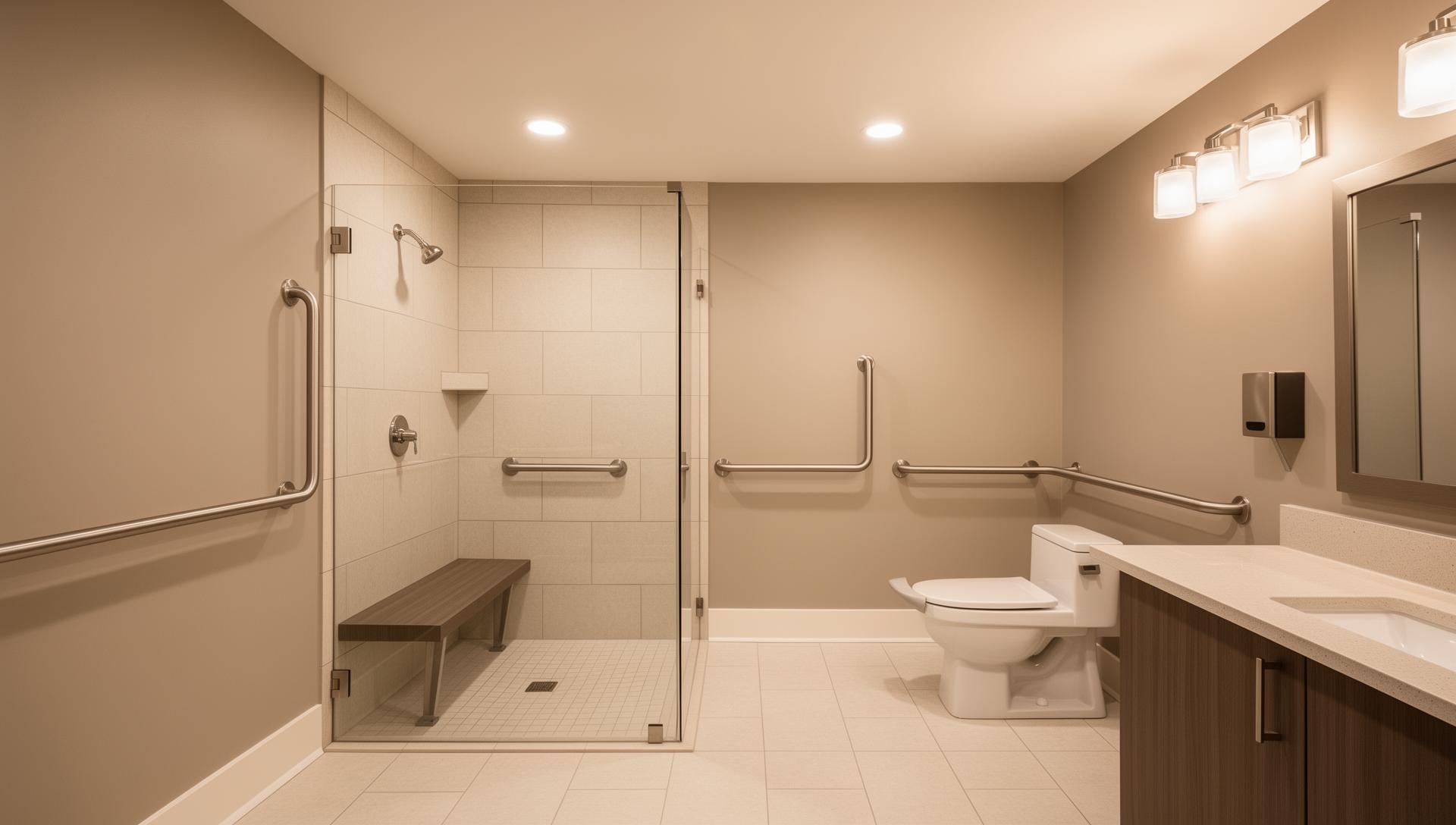
Every bathroom used by an older adult should have grab bars. Near the toilet. Inside the shower or tub. Period.
Wall-mounted, professionally installed bars are far safer than suction-cup models. Suction cups can fail without warning, which means they give you confidence right up until the moment they do not. That is worse than having nothing at all.
And here is the part that surprises people: grab bars do not have to look like hospital equipment. Companies now make them in brushed nickel, matte black, and oil-rubbed bronze. Some double as towel bars or shelf brackets. You can make your bathroom safer and better-looking at the same time.
If you install grab bars before you need them, they are just hardware. If you install them after a fall, they are a reminder. Start early.
The Shower Situation
Getting in and out of a bathtub is one of the highest-risk activities in daily life for anyone over 65. The combination of a wet surface, a high step-over, and a standing-to-sitting (or sitting-to-standing) transition is exactly the scenario that produces falls.
Walk-in showers eliminate the step-over entirely. If you are remodeling, this is the single best investment you can make. Shower benches or chairs let you sit while bathing. This is not about frailty. It is about eliminating unnecessary risk. Sitting in the shower is like wearing a seatbelt. It is not a sign you are a bad driver. It is a smart default. Handheld showerheads pair perfectly with a bench. They let you direct water where you need it without standing, reaching, or twisting. Non-slip strips or a textured mat on the shower floor add grip where it matters most. Replace any bath mat outside the shower that does not have rubber backing.Toilet Height
Standard toilets sit about 15 inches off the ground. For someone with limited knee or hip mobility, that is too low. Getting up requires significant leg strength, and the effort creates instability.
A comfort-height toilet sits 17 to 19 inches, which makes standing up dramatically easier. If replacing the toilet is not in the budget, a toilet seat riser achieves the same effect for $30-50.
Lighting
You should never walk into a dark bathroom. At any hour.
A motion-sensor nightlight in the bathroom and along the path from the bedroom costs less than $15 and eliminates one of the most common fall scenarios: the 2 AM trip to the bathroom in the dark.
The Bigger Picture
Every change in this list serves the same goal: keeping you confident and independent in your own home. A safe bathroom is not a medical intervention. It is a freedom multiplier. When you trust the space, you use it without hesitation. When you hesitate, you start limiting yourself. And limitation is the beginning of losing independence.
ThriveVision can assess your bathroom (and every other room) with a single photo. It is a good way to see what you might be missing after years of familiarity.Read our complete guide: The Complete Guide to Aging in Place Safely